Stand in the doorway and watch where a shower door would swing. In most older Fair Lawn baths it swings into the vanity, or into the towel bar, or into the two feet of floor you actually walk on. That single arc decides more than the glass does. A corner unit buys back the diagonal. A neo-angle takes the cut corner and hangs the door on the face of it. A walk-in panel leaves the wet end open and gives the swing back to the room. We settle which one your bathroom can carry while standing in it, then cut every panel in our own Lodi shop. Coming out to look costs nothing.
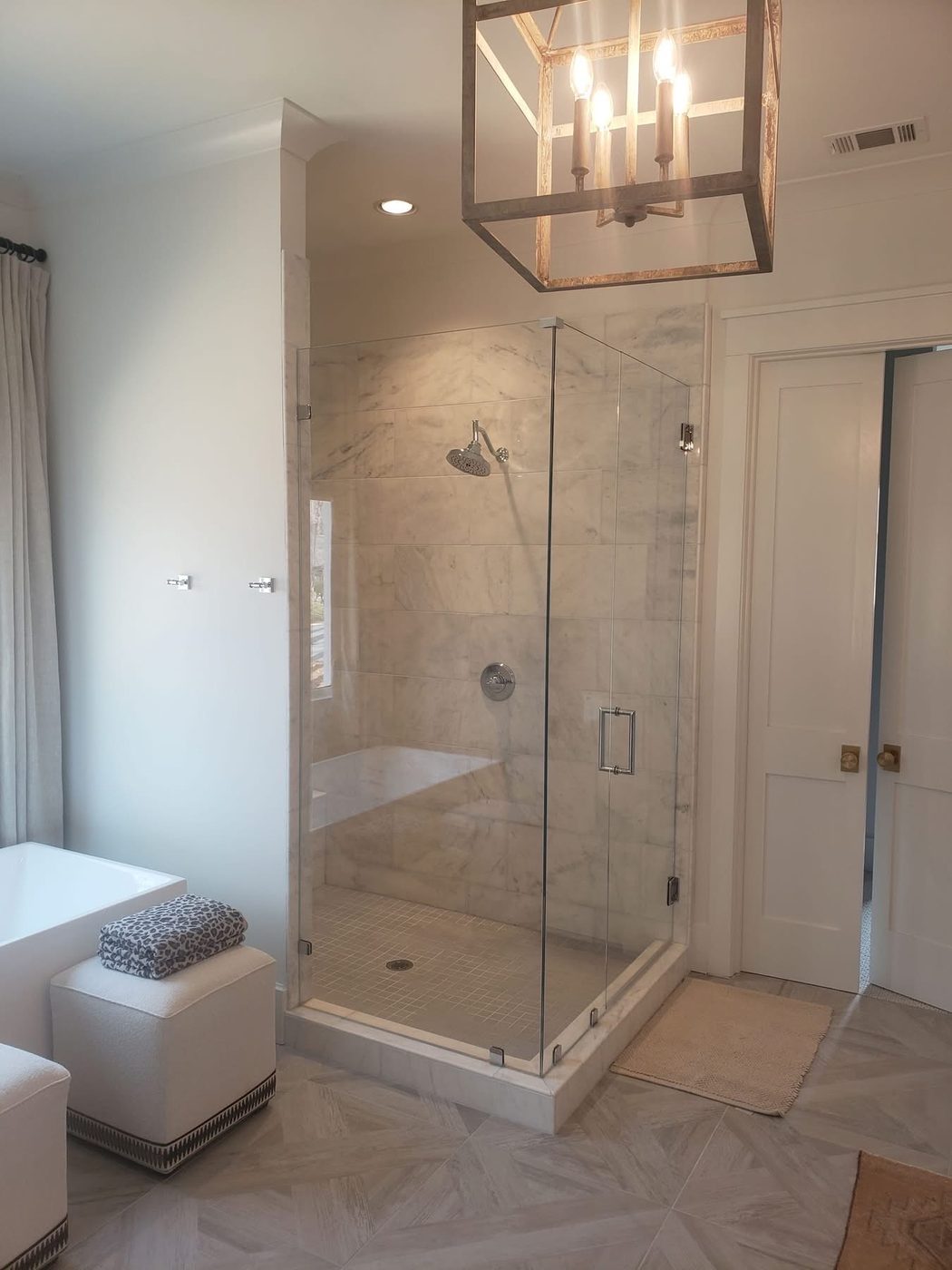
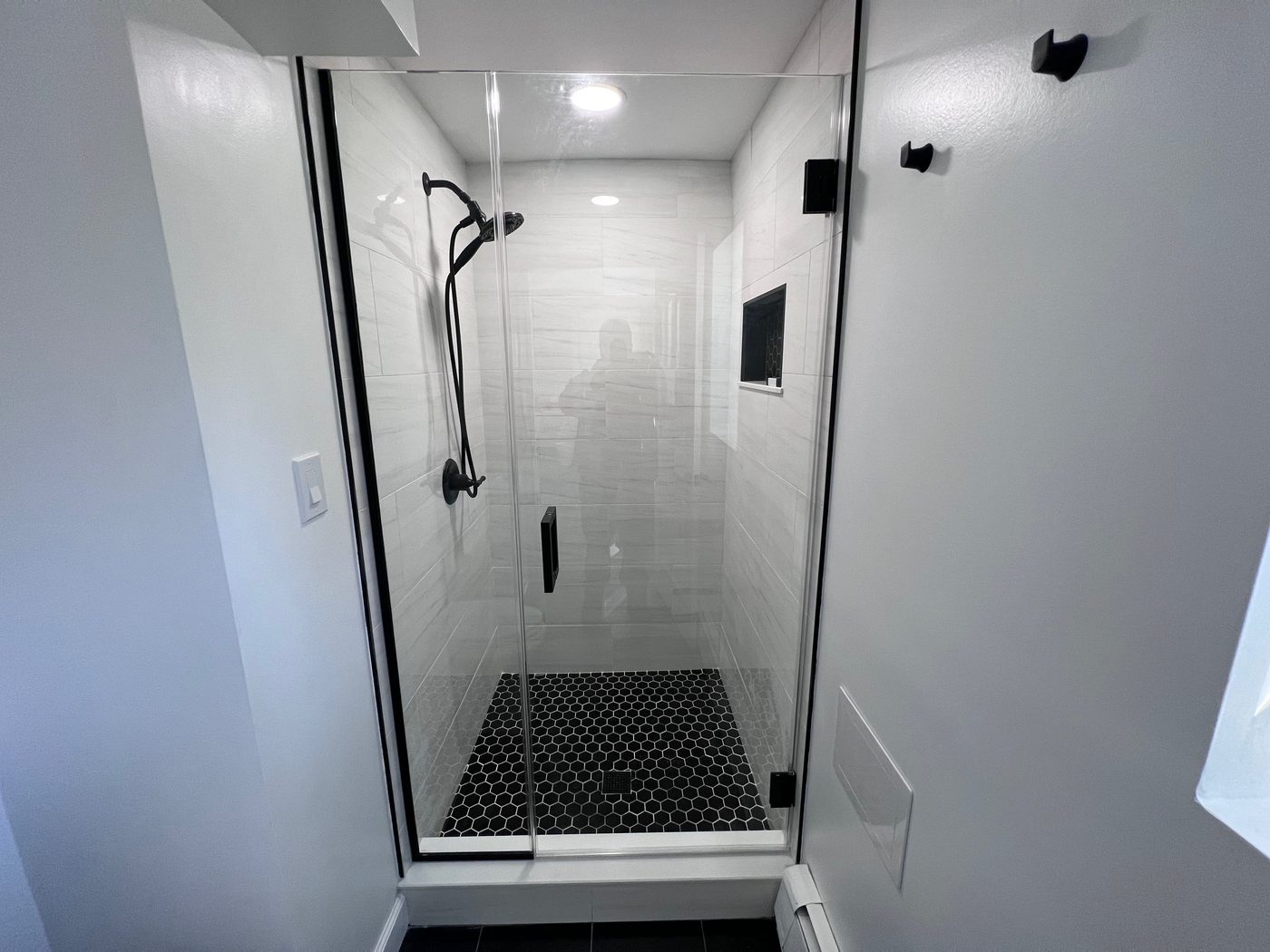
The measure is not one number. We take the width at the curb, again at mid height and again at the top, because walls lean and the three rarely agree. We check both jambs for plumb and read how far off each one sits. We put a level on the curb to see which way water will run. On a corner or a neo-angle we take the diagonal, since two walls that look square to the eye can be a half inch out across the opening. All of it goes on a template sheet along with the hinge side, the swing direction, the header line if there is one, and the finish you picked. Nothing is ordered from a chart. That sheet is the drawing the shop cuts from, and it belongs to your bathroom only.
Then the glass gets made, and the order of operations is not negotiable. Panels are cut to the template, the edges are ground and polished, and every hole and notch for hinges, clamps and handles is machined while the glass is still raw. Only after that does it go through the tempering oven. Once a panel is tempered it cannot be trimmed, drilled or notched, so a quarter inch of wishful thinking at the measure becomes a panel that goes back on the truck. That is the whole argument for hand templating. Install day is normally a single visit: the crew sets the fixed panels, hangs the door, adjusts the swing, seals the joints that need sealing and leaves alone the ones that need to drain.
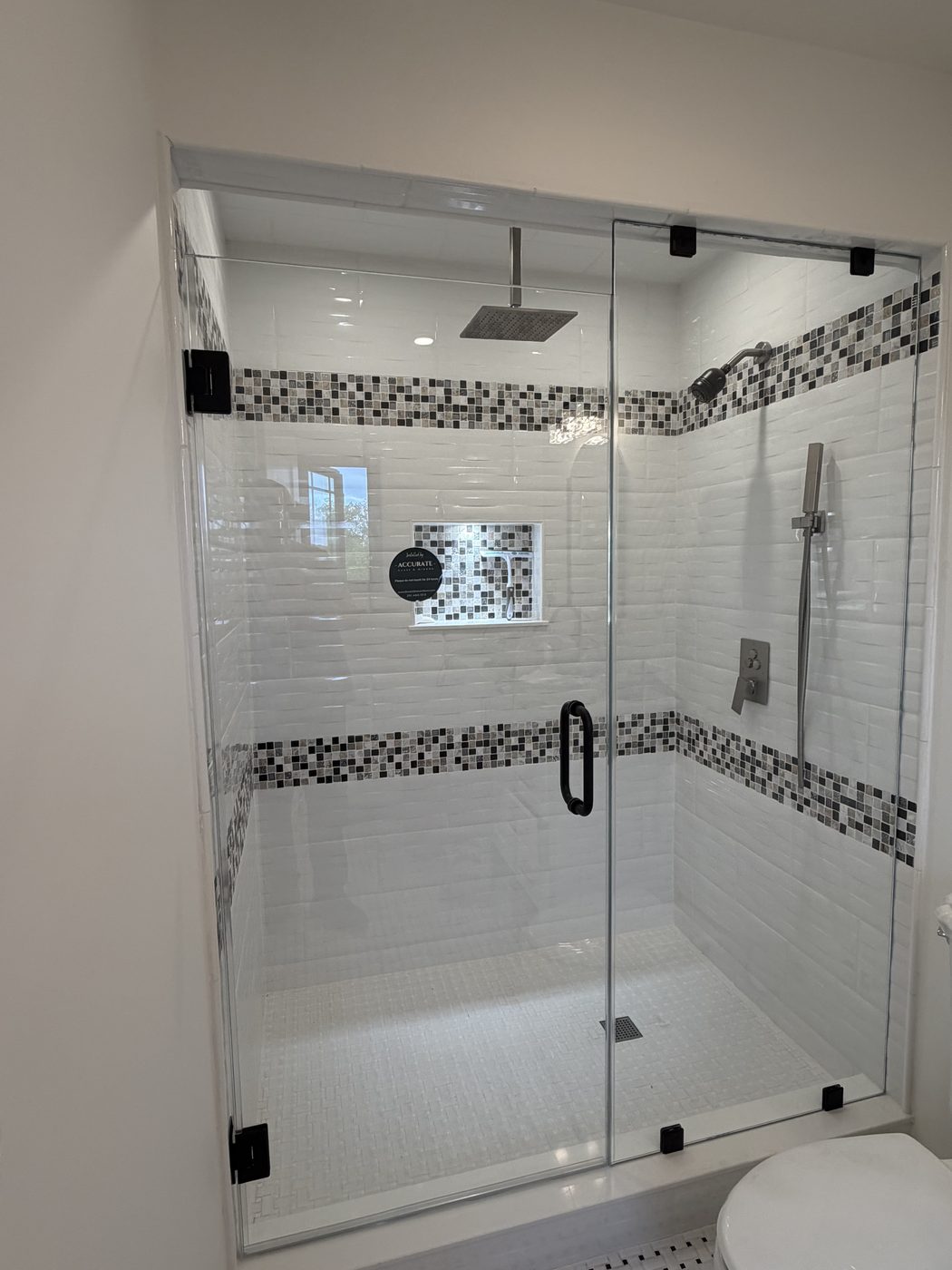
The bathrooms in these houses were small the day they were drawn, and nothing in ninety years has made them bigger. Radburn's pre-war colonials, then the Tudors, Cape Cods and split-levels filling out the rest of the borough's tree-lined streets: the fixtures came first and the shower got whatever was left over. So the real question in a room like that is not which glass you like. It is which direction the room can afford to give up. A door that swings out takes the floor in front of the vanity. A walk-in panel gives that floor back but moves the wet line, so the head has to point away from the opening. A corner unit trades footprint for a diagonal entry. We work that out on site, not from a photo.
The second thing an older Fair Lawn bath does is refuse to be square. A 1930s Radburn bathroom has settled, been retiled, and had a wall furred out at some point for pipes, so the opening ends up wider at the floor than at the ceiling or the other way around. None of that stops frameless glass. It changes how the panels are cut and where the tolerance goes: a fixed panel can be scribed to follow a wall that leans, a wall profile can take up the difference, and the door itself stays plumb so it does not drift open or drag on the curb. What you should not do is order a stock enclosure for a room like this and hope.
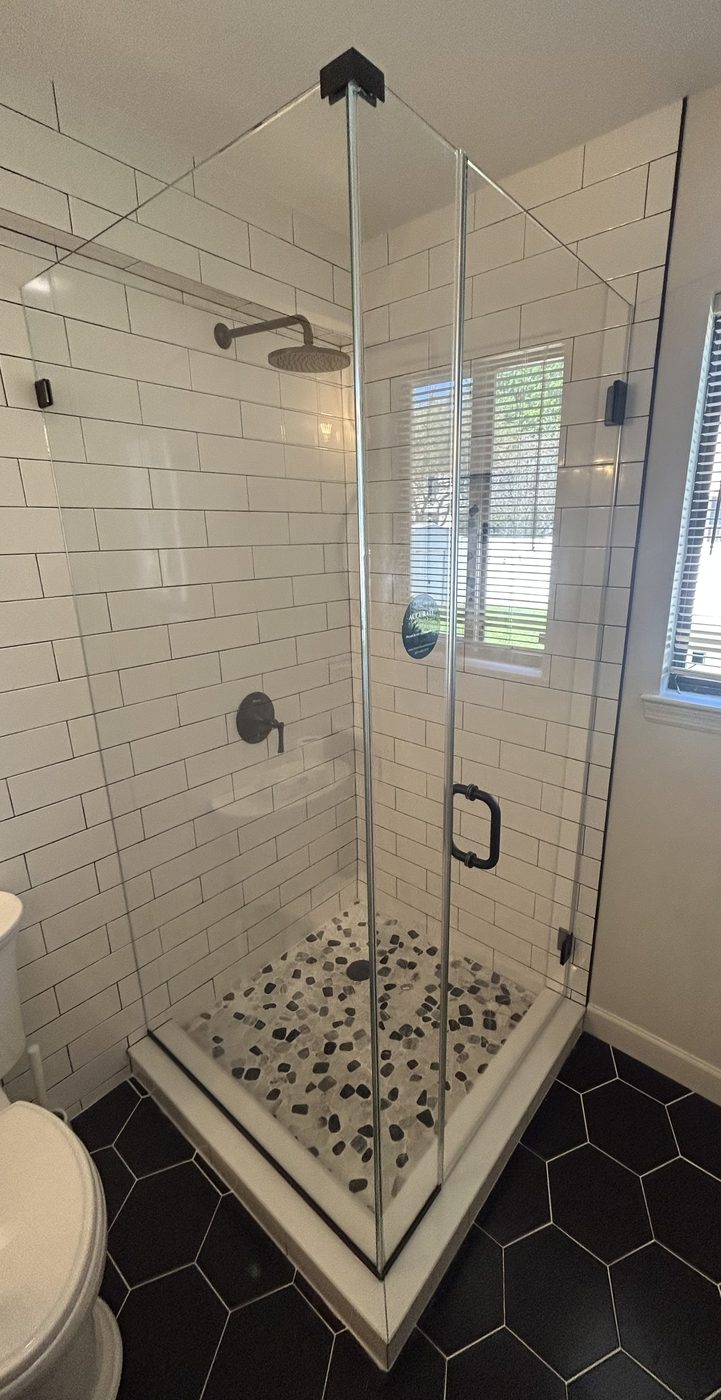
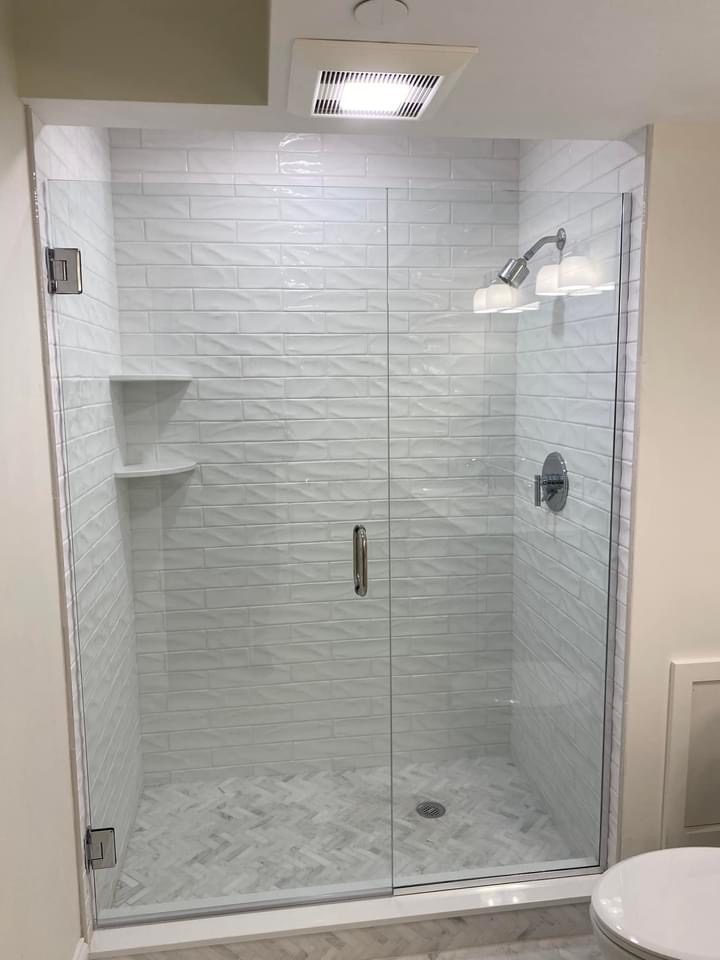
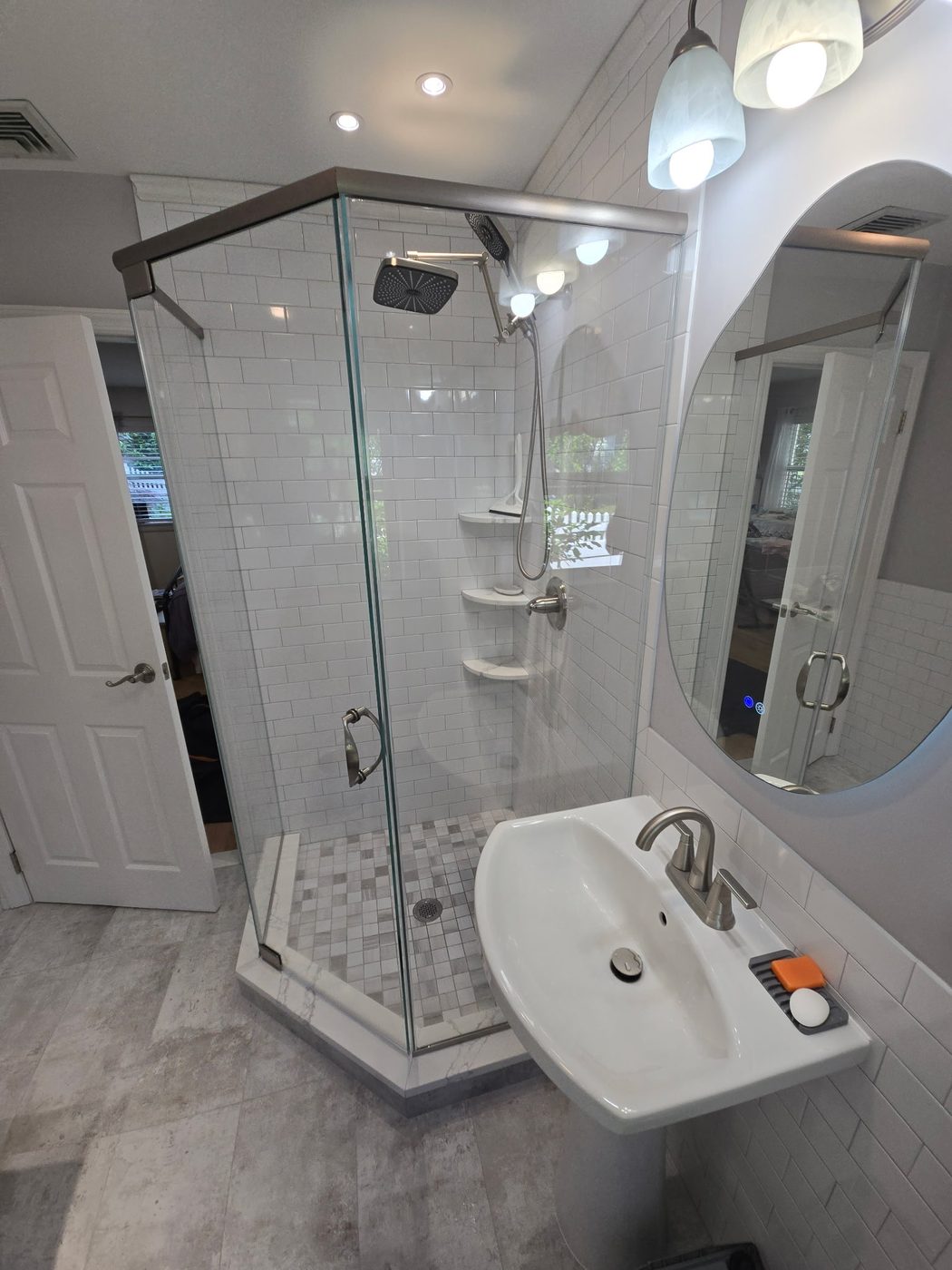
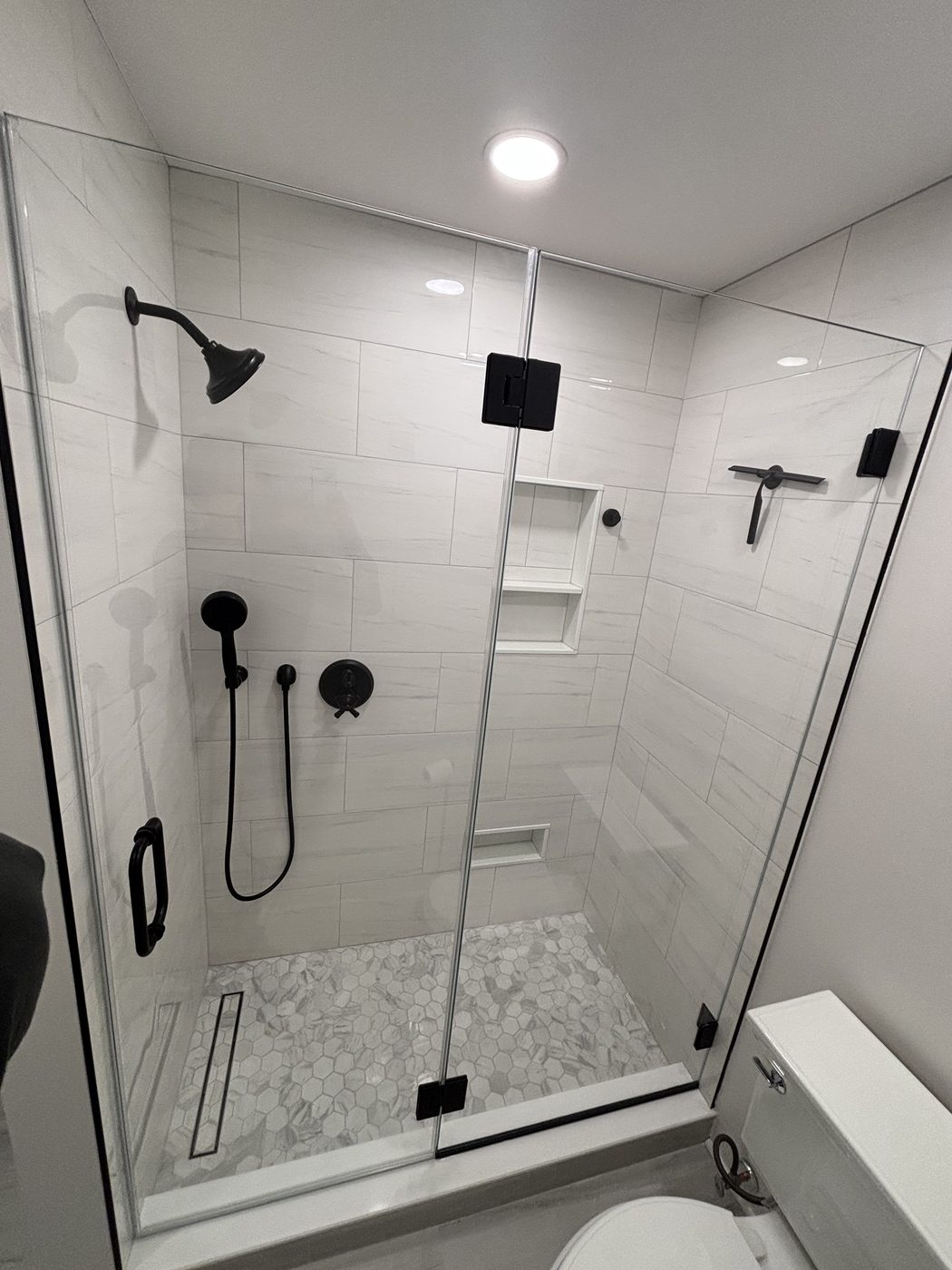
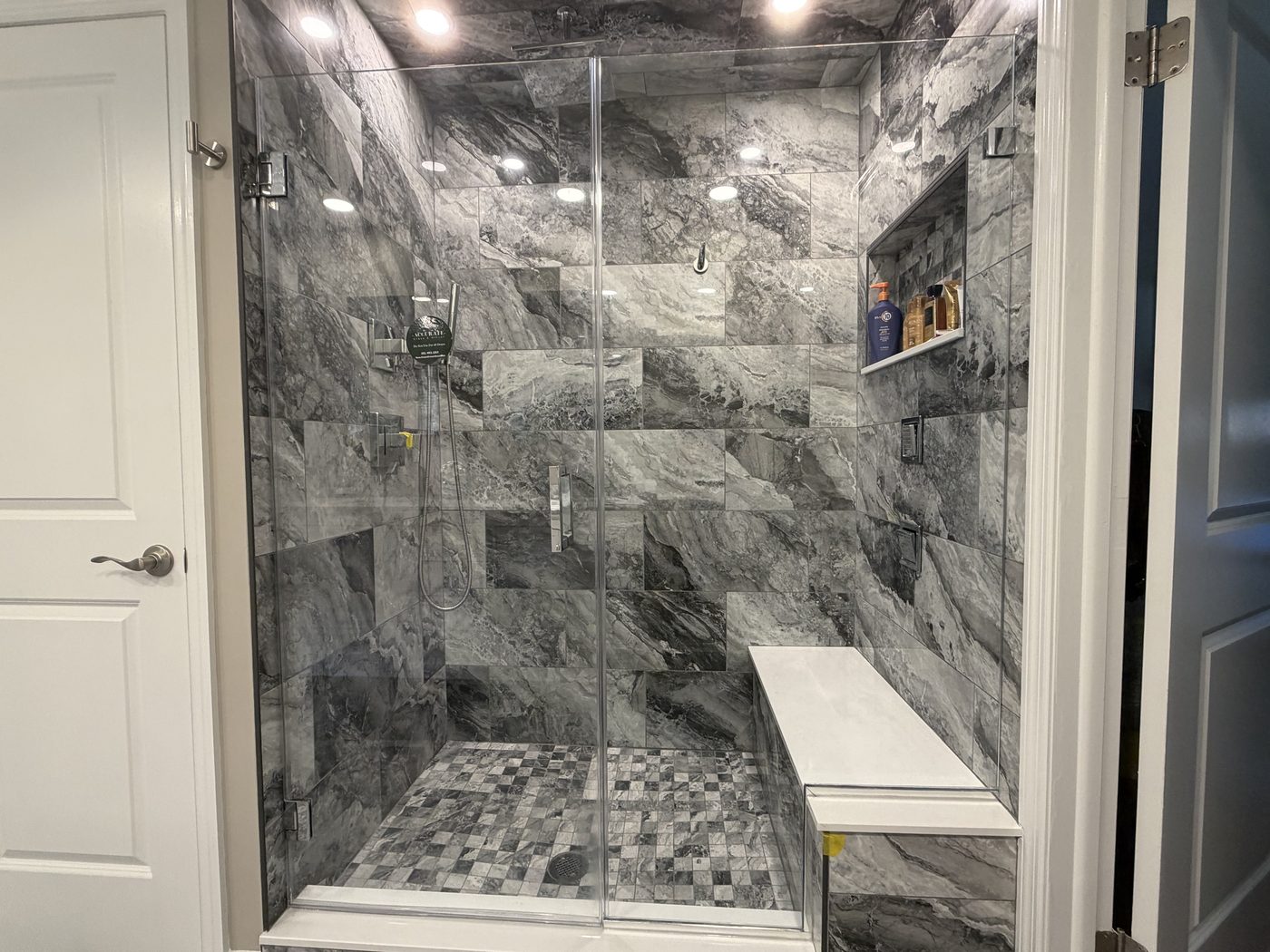
Corner units, neo-angles, inline runs and open walk-in panels from bathrooms near Fair Lawn and across Bergen County. Look for a footprint that resembles yours rather than a finish you like.
More custom glass in Fair Lawn: frameless shower doors, sliding & bypass shower doors, semi-frameless shower doors, shower door replacement, custom mirrors, steam shower enclosures, bathtub shower doors, glass railings, commercial glass. See everything on our Fair Lawn, NJ page. Custom Glass Shower Enclosures nearby: Paramus, Ridgewood, Hackensack, Fort Lee, Lodi, Midland Park, Englewood, Teaneck, Mahwah, Wyckoff, Tenafly, Franklin Lakes, Ramsey, Glen Rock, Montclair, Wayne. Learn more about our frameless shower enclosures across Bergen, Passaic and North Jersey, or read the The ultimate guide to custom shower doors and Shower glass thickness: 3/8″ vs 1/2″ guides.
The Lodi showroom, about nine minutes from Fair Lawn at 80 Industrial Rd. It is open Monday through Friday nine to five and Saturday nine to four, and you can walk in. The floor has full enclosure displays and a glass-and-finish selection wall. Put a hand on 3/8 inch and 1/2 inch glass, and see polished chrome, brushed nickel, matte black and oil-rubbed bronze next to each other. There is no showroom in Fair Lawn itself. Our other location, Midland Park, is roughly sixteen minutes north and runs by appointment.
Because a number given over the phone would be a guess, and you would find that out later when it changed. Start with the walls: a bathroom that has been moving for ninety years takes real work to close up cleanly, and that work is labor whatever the glass costs. Then height, because a tall panel wants thicker glass and hardware that can carry it. Finish is a smaller line than people expect. The biggest swing of all is the layout, since a walk-in panel, a corner unit and a neo-angle with three sides of glass are not the same amount of glass or the same amount of hardware. We measure at your house for free and hand back a written price with the pieces listed out.
We look at the path before we look at the shower. At the measure the crew walks the route the glass has to travel: the front door, the turn at the bottom of the stairs, the landing, the bathroom door. A half inch panel four feet wide is heavy and it does not bend, so if a turn is tight we plan the panel breaks around it rather than finding out on install day. Occasionally that means one more vertical seam than you were picturing. It is a better trade than a panel that cannot get up the stairs.
Two moments. Talk to us early, before the tile goes up, so we can flag anything that will make the glass awkward: a niche too close to a hinge line, a curb pitched the wrong way, a bench landing where a panel wants to sit. Then we template after the tile, the pan and the curb are finished and nothing else is moving. Measuring off unfinished walls is how enclosures end up with gaps. From the template, figure roughly a couple of weeks in the shop, then a single install visit.
There is no single number, and anybody who gives you one has not measured your bathroom. What matters is how the error is distributed. A wall that leans steadily over seven feet is easy, because the fixed panel gets scribed to follow it and the door still hangs plumb. A wall that bows in the middle is harder, since glass is flat and will not follow a curve, so we pick up the difference with a wall profile or move the panel break. We take the readings at the measure and tell you plainly what will show.
Yes, and it is easiest to see on an edge. Standard tempered glass carries a faint green cast from the iron in it, which you barely notice on a small panel and definitely notice on a tall one, especially against white tile or pale stone. Low-iron, ultra-clear glass drops that cast, so whites stay white and a dark tile stays dark. It does add to the cost, which is why it is worth putting the two samples side by side on the selection wall at Lodi and deciding with your own eyes.
One photo from the doorway and a rough width across the opening are enough to start. Call (201) 460-1313 or text Jessica, and we will come out to Fair Lawn, template the opening at no charge, and put the layout and the price in writing before any glass is cut.
One photo from the doorway and a rough width across the opening are enough to start. Call (201) 460-1313 or text Jessica, and we will come out to Fair Lawn, template the opening at no charge, and put the layout and the price in writing before any glass is cut.
Text Jessica directly with photos. To speed things up, include: