A Fair Lawn hall bath from the 1930s tells you what it needs the moment you walk in. Six feet of floor, a tub along the long wall, and a framed enclosure cutting the room into two smaller boxes. Pull the frame out of the picture and the space reads whole again. That is the case for frameless here: heavy tempered panels, a short list of hardware, and nothing else in the sightline. We template your opening by hand, cut and finish the glass in our own Lodi shop about nine minutes south, then set it with our own crew. No stock sizes, no guessing. There is no charge for the visit that starts it.
Here is the part most people never hear. Tempered glass cannot be cut, drilled or notched after it comes out of the oven. Every hinge hole, every clip notch, every eased corner is laid out and machined while the panel is still raw, and then the whole piece is heat treated and locked in for good. That is why a frameless job lives or dies on the template. We come out, take the opening apart with a level and a straightedge, and record where the wall leans, where the curb slopes and how much the tile bows between top and bottom. Those numbers become the cut sheet. Get them right and the door hangs plumb and closes against nothing but its own seal.
After the numbers, the look is up to you. Standard clear glass shows a faint green in the thickness. Low iron, often called ultra clear, drops that out so tile and stone read the way you chose them. A protective surface coating can be applied so hard water beads up and wipes off instead of etching itself in. Hardware comes in polished chrome, brushed nickel, matte black and oil rubbed bronze, and one finish carries across the hinges, the clips and the handle so the enclosure reads as a single piece. Three eighths inch glass covers most Fair Lawn openings. Half inch is the call when a panel runs tall or wide and you want that extra stiffness in the hand.
Fair Lawn is a borough of well kept older houses, and the bathrooms inside them were drawn small on purpose. Radburn's pre-war colonials, the Tudors and Cape Cods, the split-levels on tree lined streets: almost none of them were given a generous bath, and most still have the footprint they started with. What frameless does in a room like that is take away the visual wall. A framed enclosure draws a metal rectangle at eye level and stops the room right there. Clear glass lets the eye run all the way to the far tile, and six feet of floor starts behaving like eight.
There is a practical side to it as well. Houses that have been standing since the 1930s settle, so the wall beside the tub leans a little and the corner is rarely a true ninety degrees. Frameless gets assumed to be the fussy choice in that situation. It is not, as long as the glass is templated rather than ordered. We measure the lean, cut the panel to follow it, and let the hardware and the seal absorb whatever is left over. One more Fair Lawn detail worth raising early: those Radburn blocks are laced with pedestrian paths, so we talk through the carry in before install day and bring the panels in the way that suits the house.
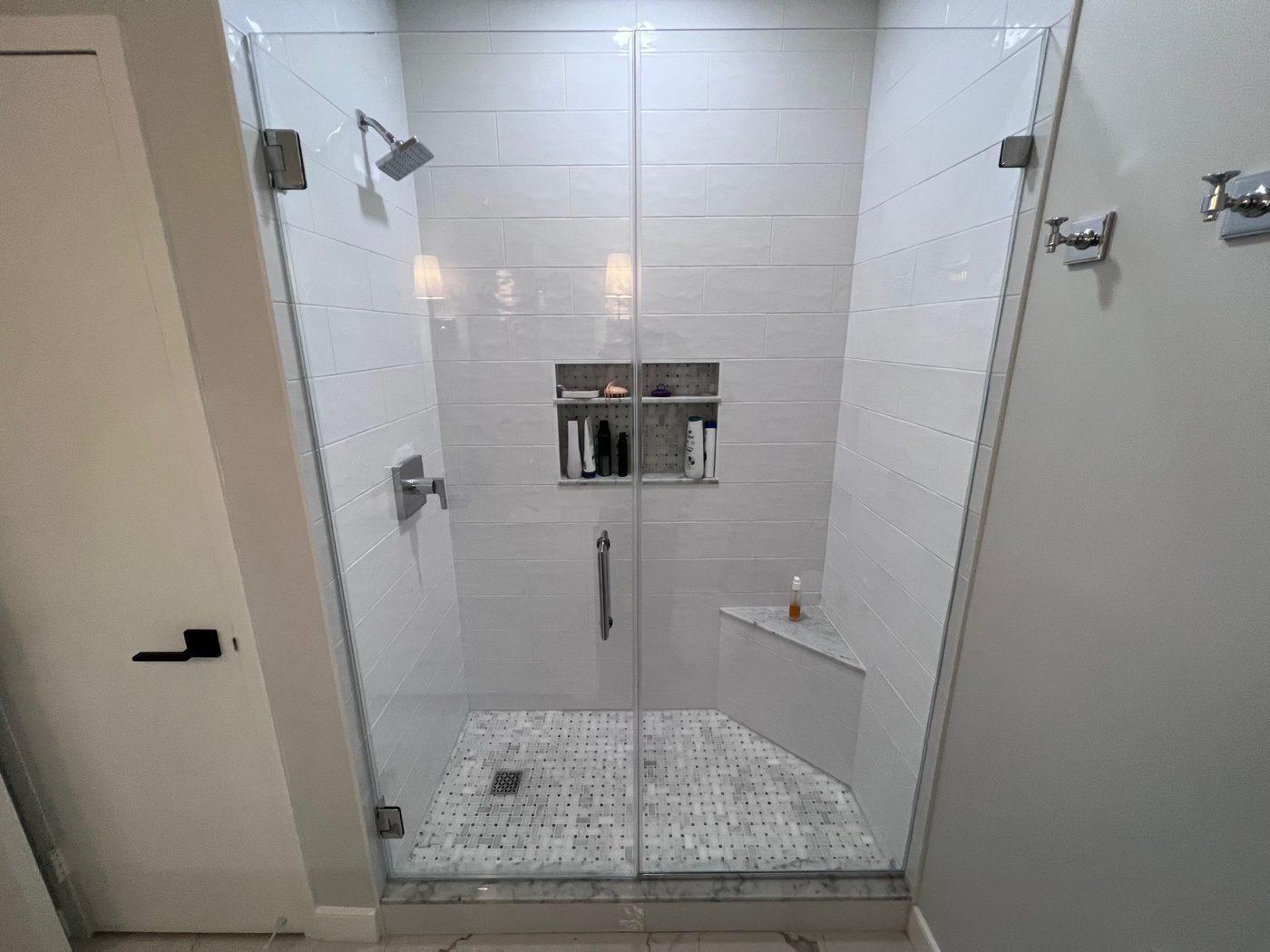
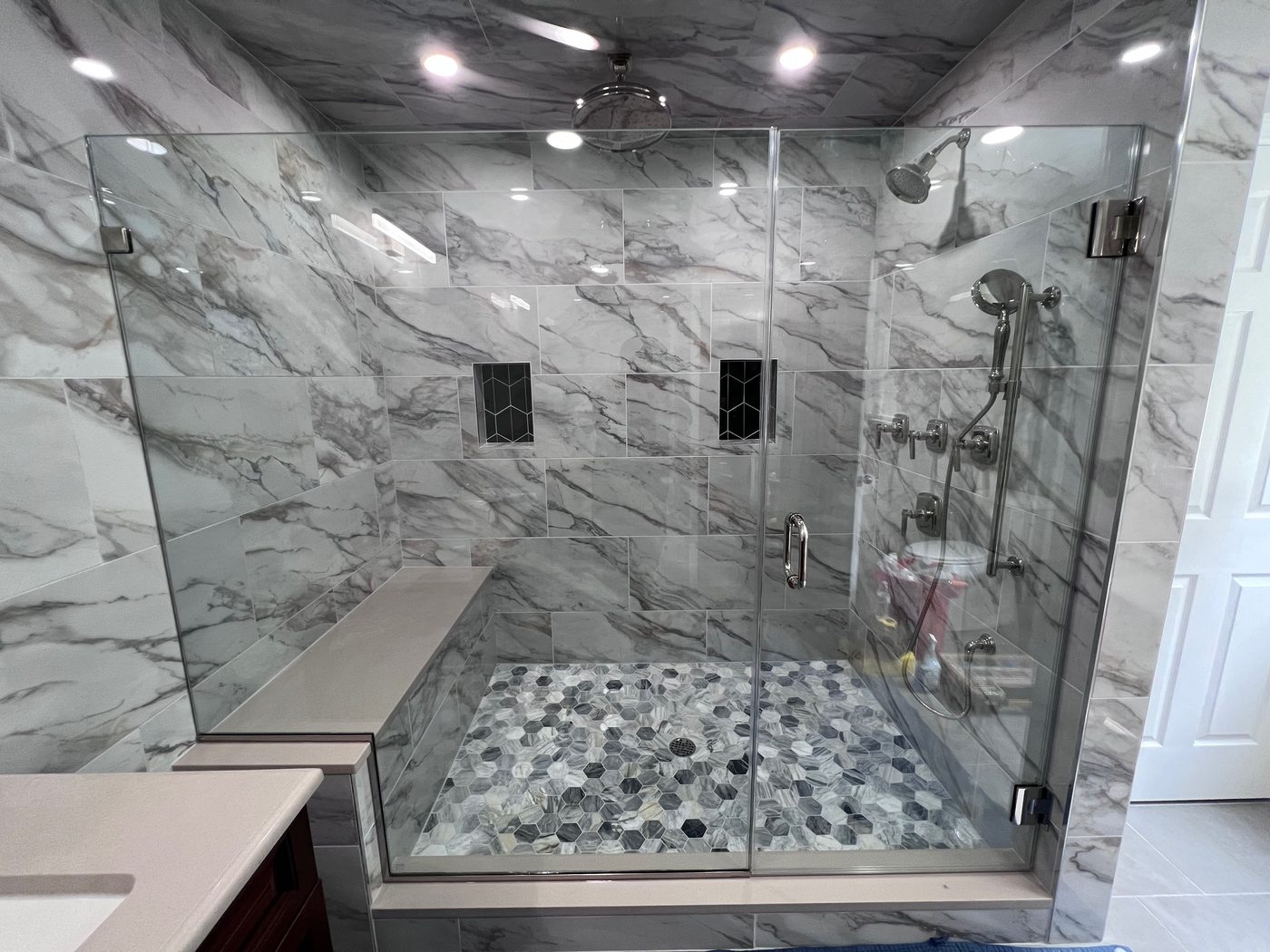
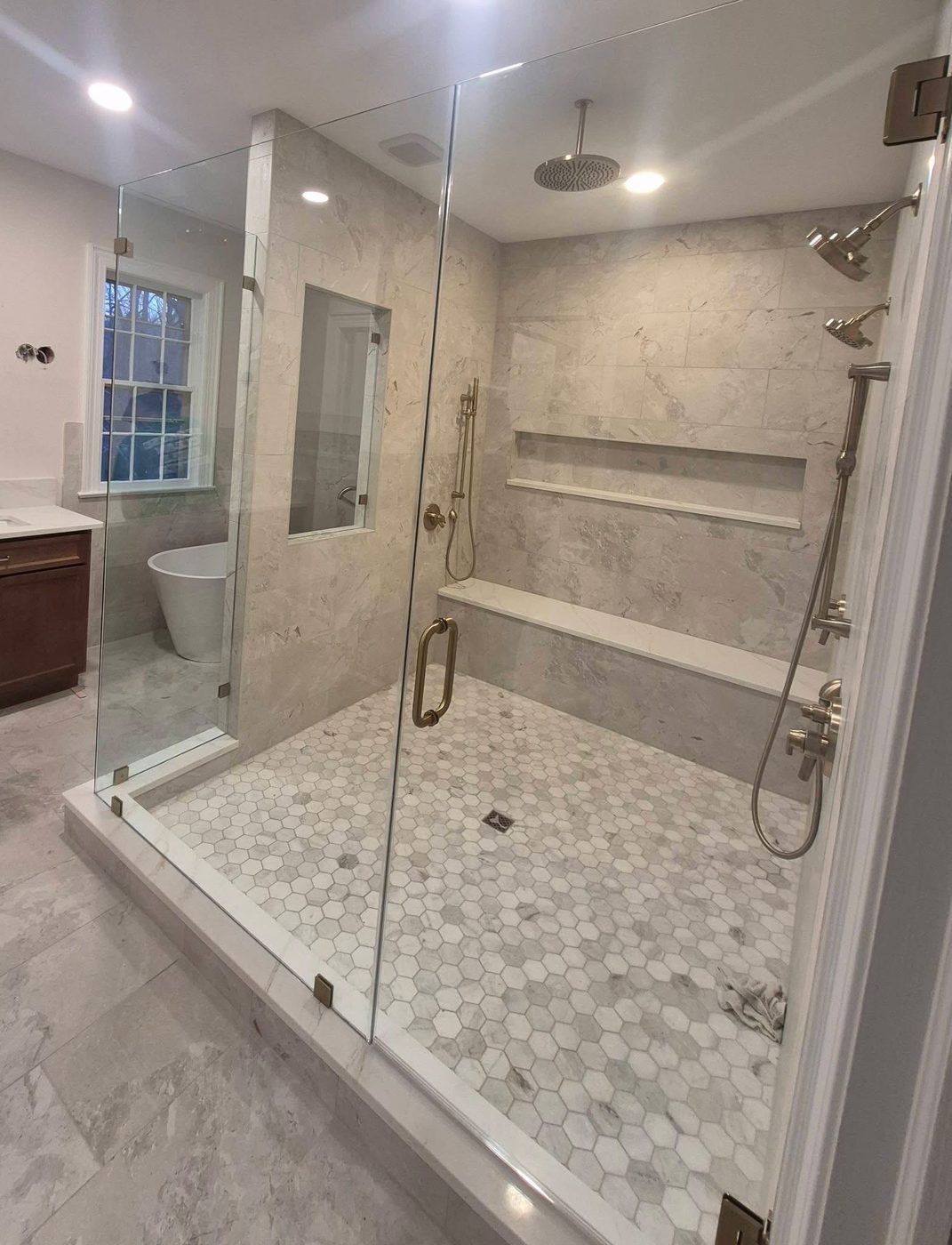
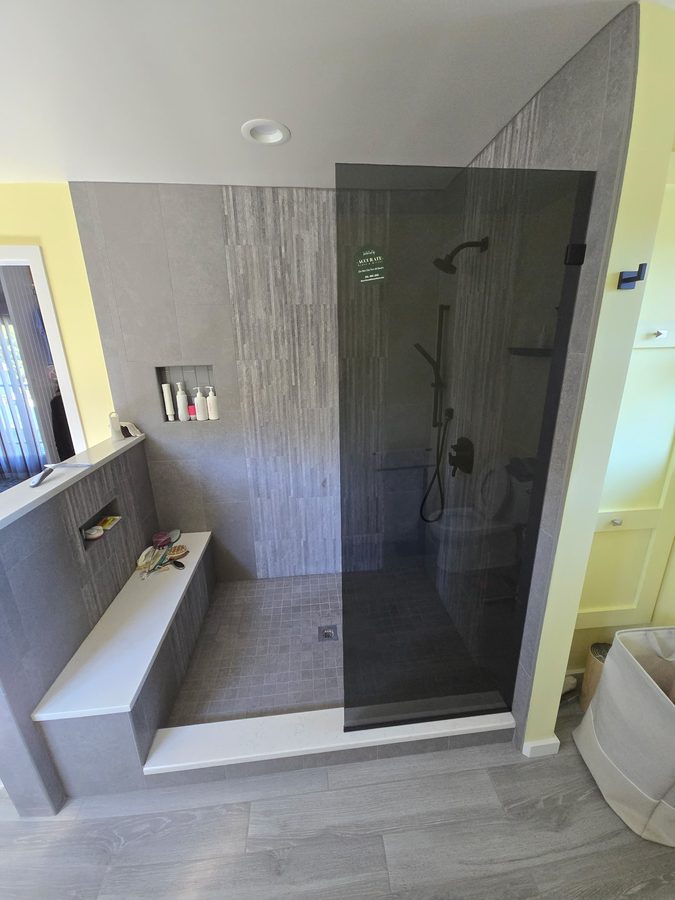
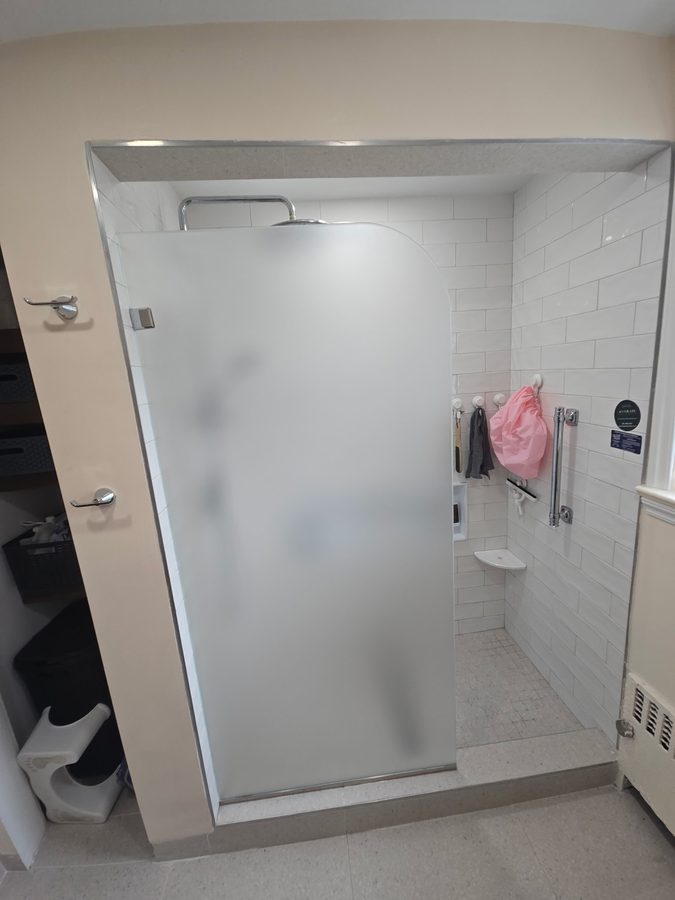
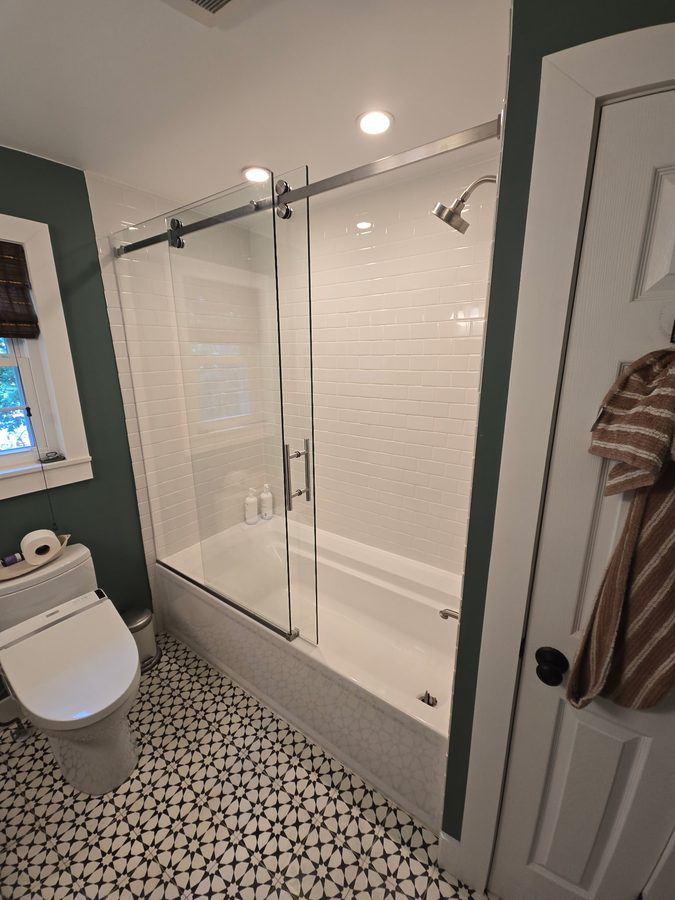
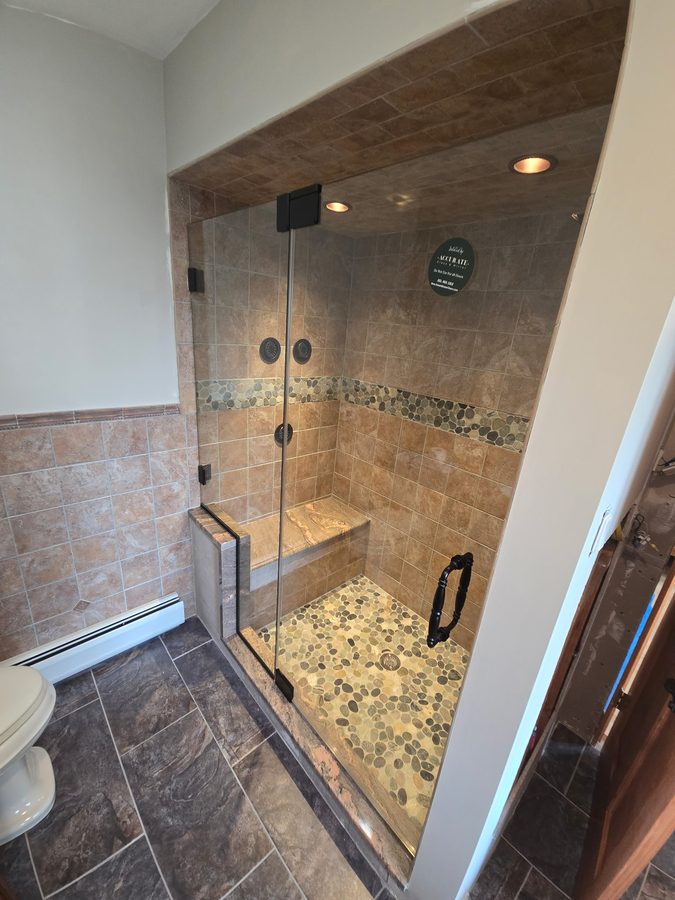
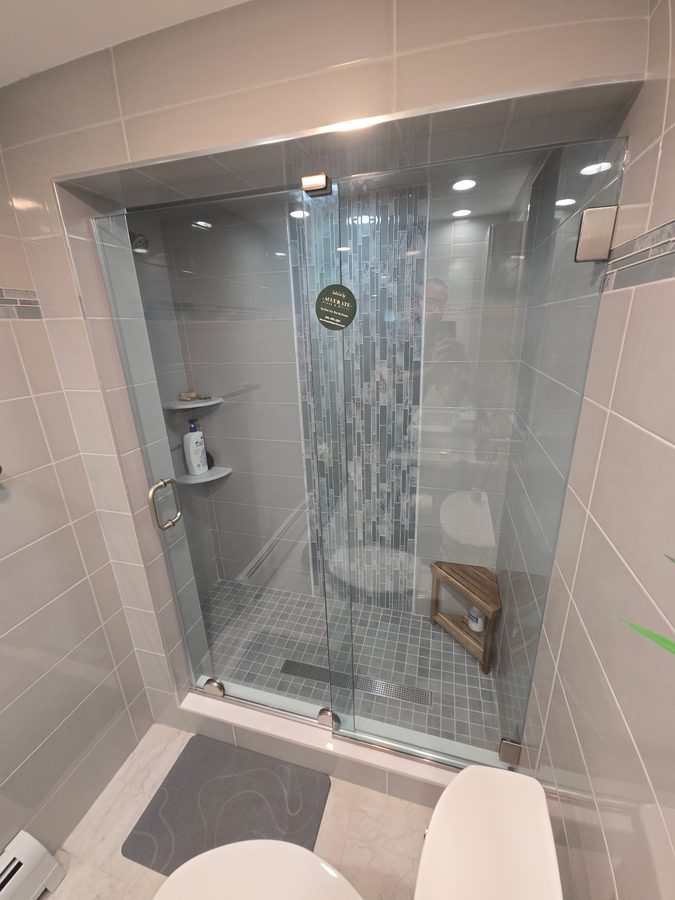
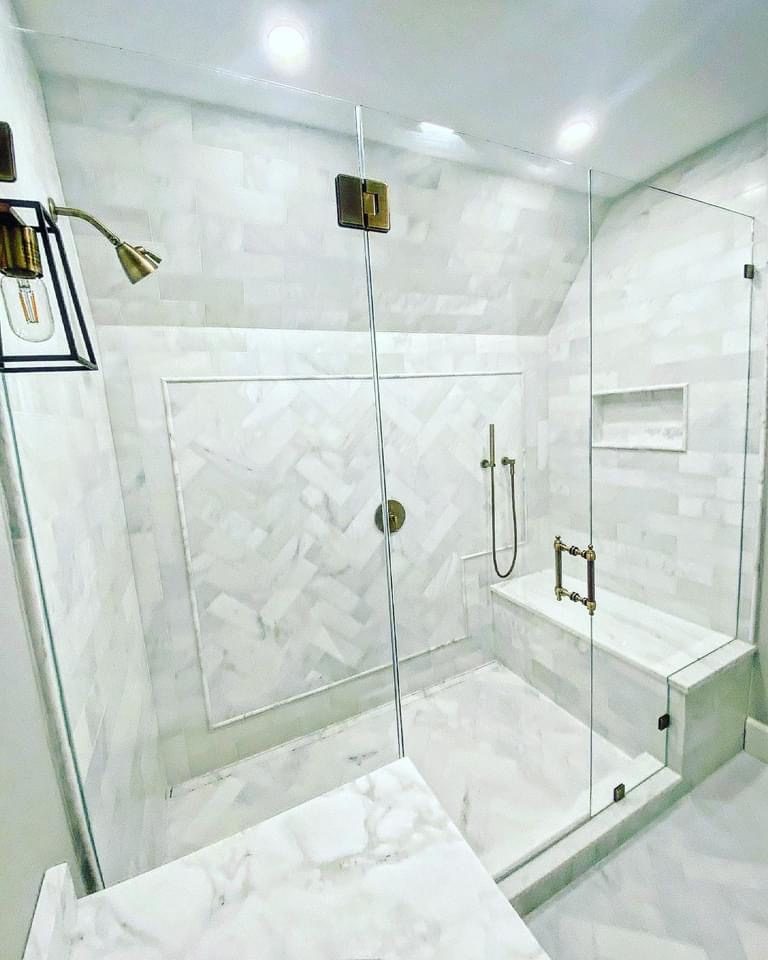
Recent frameless enclosures from Fair Lawn baths and nearby Bergen County homes. Click any photo to see the hardware and the glass up close.
More custom glass in Fair Lawn: sliding & bypass shower doors, semi-frameless shower doors, shower door replacement, custom mirrors, custom glass shower enclosures, steam shower enclosures, bathtub shower doors, glass railings, commercial glass. See everything on our Fair Lawn, NJ page. Frameless Shower Doors nearby: Paramus, Ridgewood, Hackensack, Fort Lee, Lodi, Midland Park, Englewood, Teaneck, Mahwah, Wyckoff, Tenafly, Franklin Lakes, Ramsey, Glen Rock, Montclair, Wayne, Carlstadt, Paterson. Learn more about our frameless shower enclosures across Bergen, Passaic and North Jersey, or read the How much do frameless shower doors cost in NJ? and Frameless vs. semi-frameless: which is right? guides.
Yes, and narrow rooms are where it does the most good. A frameless panel takes up no more room than its own thickness, so nothing is stolen from the floor the way a framed jamb and a header steal it. What we study on a small opening is the swing. If a hinged door would clip the vanity or the toilet, we can hang it to swing both ways, shorten the door and add a fixed return panel, or move to an inline layout instead. The measure decides which one your room actually wants.
Four things, mostly. Size, because glass is priced by what has to be cut, carried and set. Thickness, since half inch weighs and costs more than three eighths. Glass type, where low iron and a protective coating each add to the sheet. And hardware, both the finish and how much of it your layout needs. Out of square walls add labor, because the template takes longer and the cut has less room for error. All of it goes in writing after the free measure, so you can see which line is doing what.
They have to land on something solid, which is not always a stud. Frameless hinges carry real weight, and they anchor through the tile into whatever is behind it: framing, blocking, or a properly set anchor in solid backer. Part of the measure is finding out what is back there, because the answer can change the layout. If the hinge side is weak, we can move the door to the other jamb, put the fixed panel and its clips on the strong side, or hang the door off a header. Nobody should be improvising that on install day.
Expect the walls to be out of plumb, and expect that to be fine. A 1929 house has had almost a century to settle, and tile in an untouched Radburn bath was set to the wall as it stood at the time. We template rather than measure, so the glass is cut to follow the wall instead of fighting it. We also look hard at the curb and the tile edge before quoting, since those decide whether the panel sits on the curb or against a jamb. No wall gets opened. The glass works around what is already there.
After the tile and the pan are finished, not before. We do glass only, so your contractor handles demolition, the pan and the tile work, and we come in once those surfaces are set and cured. Templating an unfinished opening is how enclosures end up short. Once we template, fabrication generally runs a week and a half to two weeks depending on the glass and the hardware, so it is worth telling your contractor that the glass measure happens at the end. Install is normally a single visit.
Two things help. Low iron glass carries less green, so it stays visually clean as it ages rather than looking tinted next to white tile. A protective coating on the surface makes water bead and run instead of sitting and drying, and sitting and drying is what leaves the hard water haze no cleaner will lift later. Neither one is maintenance free. Both make a squeegee after a shower do far more work than it would on bare glass.
Tell us the rough width of the opening and whether the glass lands on a curb or on a tub, and we can talk through the layout that fits. When you want numbers, we come out to the house in Fair Lawn, template the opening properly, and put the price in writing line by line. Call or text (201) 460-1313.
Tell us the rough width of the opening and whether the glass lands on a curb or on a tub, and we can talk through the layout that fits. When you want numbers, we come out to the house in Fair Lawn, template the opening properly, and put the price in writing line by line. Call or text (201) 460-1313.
Text Jessica directly with photos. To speed things up, include: