Square is a specification, not a description. In the older houses here, walls lean a little, corners open past ninety degrees, and a curb can run downhill an eighth of an inch end to end. None of that stops a frameless enclosure in a Tenafly bathroom. It changes how the panels get cut, and it means the numbers have to come off the room rather than off a drawing. We template the opening itself, then fabricate to those readings in our Lodi shop.
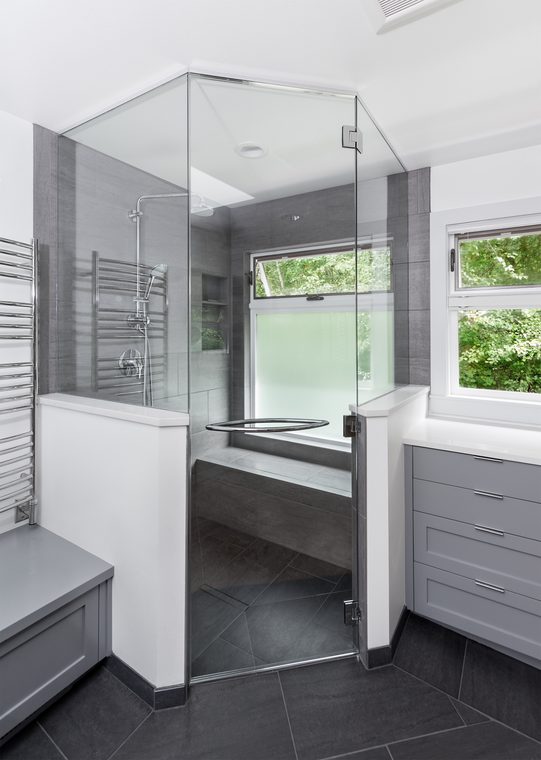
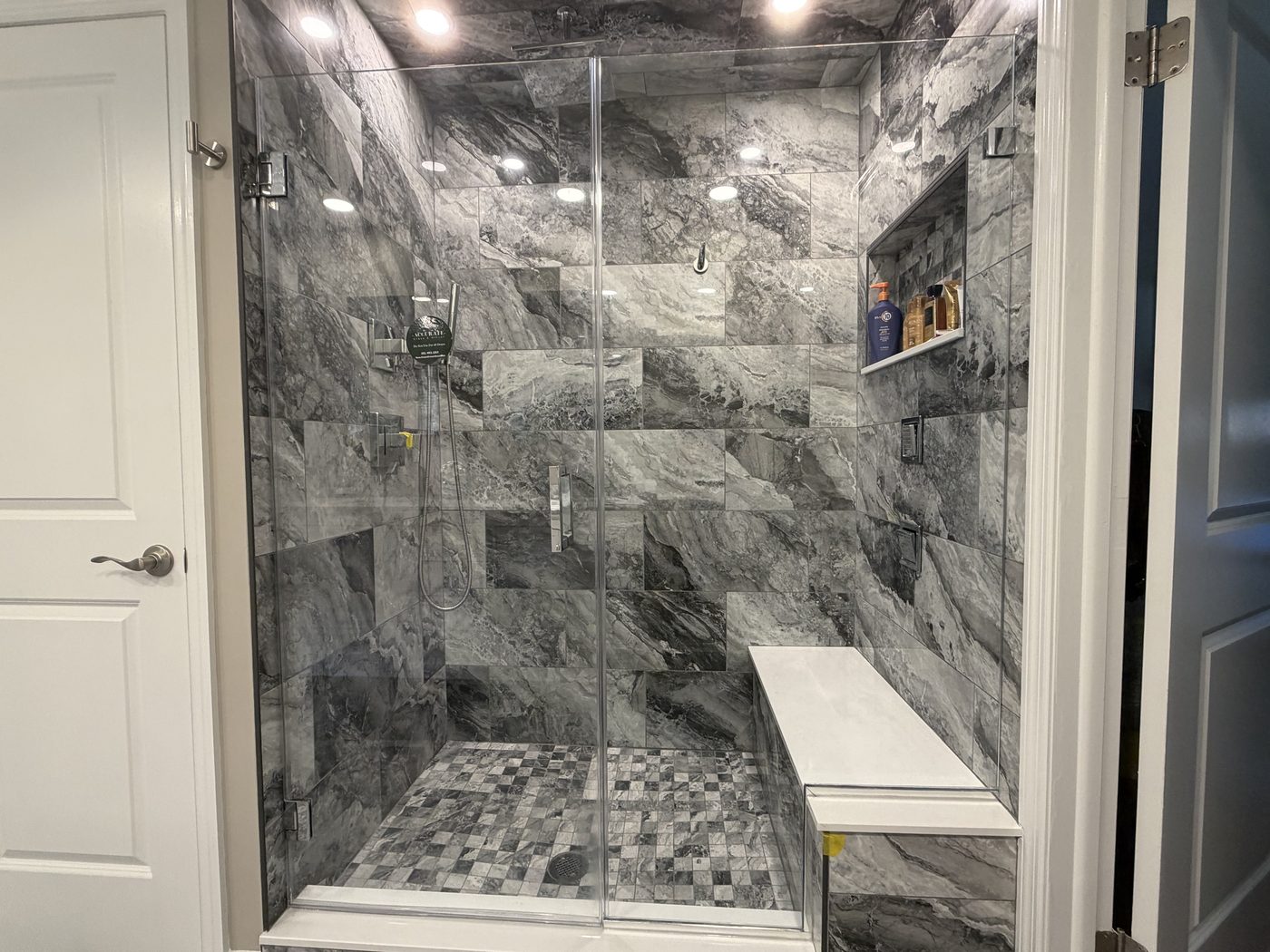
Every opening gets measured at more than one height, because an old wall rarely holds the same dimension top to bottom. We take the width at the curb, at chest height and up at the top, check both jambs for plumb, run a level along the curb, and read the corner with a square. Those readings decide the build. A wall channel takes up a modest lean behind a fixed panel. A notch works around a tile ledge. Hinges carry a small range of adjustment, and a header straightens a long run that would otherwise fight itself. What we will not do is force a panel in and let silicone hide the difference.
There is a point where the room has to move instead of the glass. If a jamb is out far enough that a door would bind or drift open on its own, the honest answer is to shim and skim that wall before anything is cut, and you will hear it at the measure, not after the panels arrive. Most Tenafly bathrooms never get near that line. The ones that do tend to be second-floor baths carved in under a roof, where framing settled around a chimney or a dormer. Either way it comes up early, in the room, while the fix is still simple.
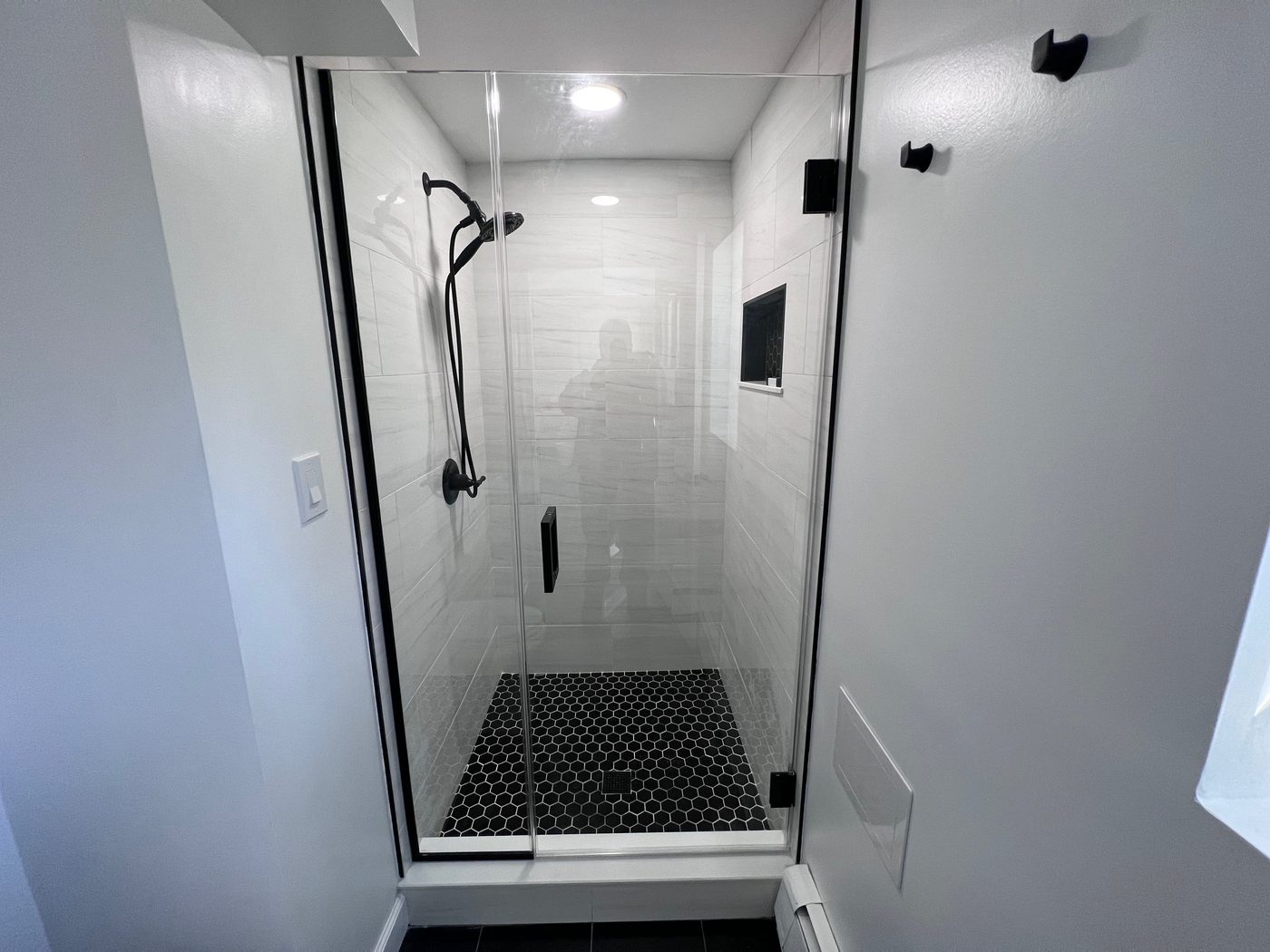
A Colonial Revival, a Gilded-Age Tudor near the Magnolia Avenue historic district and an architect-drawn modern custom on a wooded lot can sit within a few blocks of each other here, and the shower openings behind those front doors have nothing in common. The colonials usually hand us a small original bath with a deep window well in the wet wall. The Tudors bring plaster, heavy trim and corners nobody machine-cut. The modern customs are square, but they are also large, which pushes the glass to half-inch thickness and panel sizes that need real support overhead.
That range is why an enclosure here does not come off a chart. A corner unit, a neo-angle, an inline door and panel, or an open walk-in screen all stay on the table until we see what the room allows and where the water actually lands. Thickness follows panel size and span rather than preference. Hardware finish is yours: polished chrome, brushed nickel, matte black or oil-rubbed bronze. Every piece is cut and edged at our Lodi shop, then set by our own crew rather than a subcontractor, which is how the numbers taken in your bathroom stay attached to the glass that arrives.
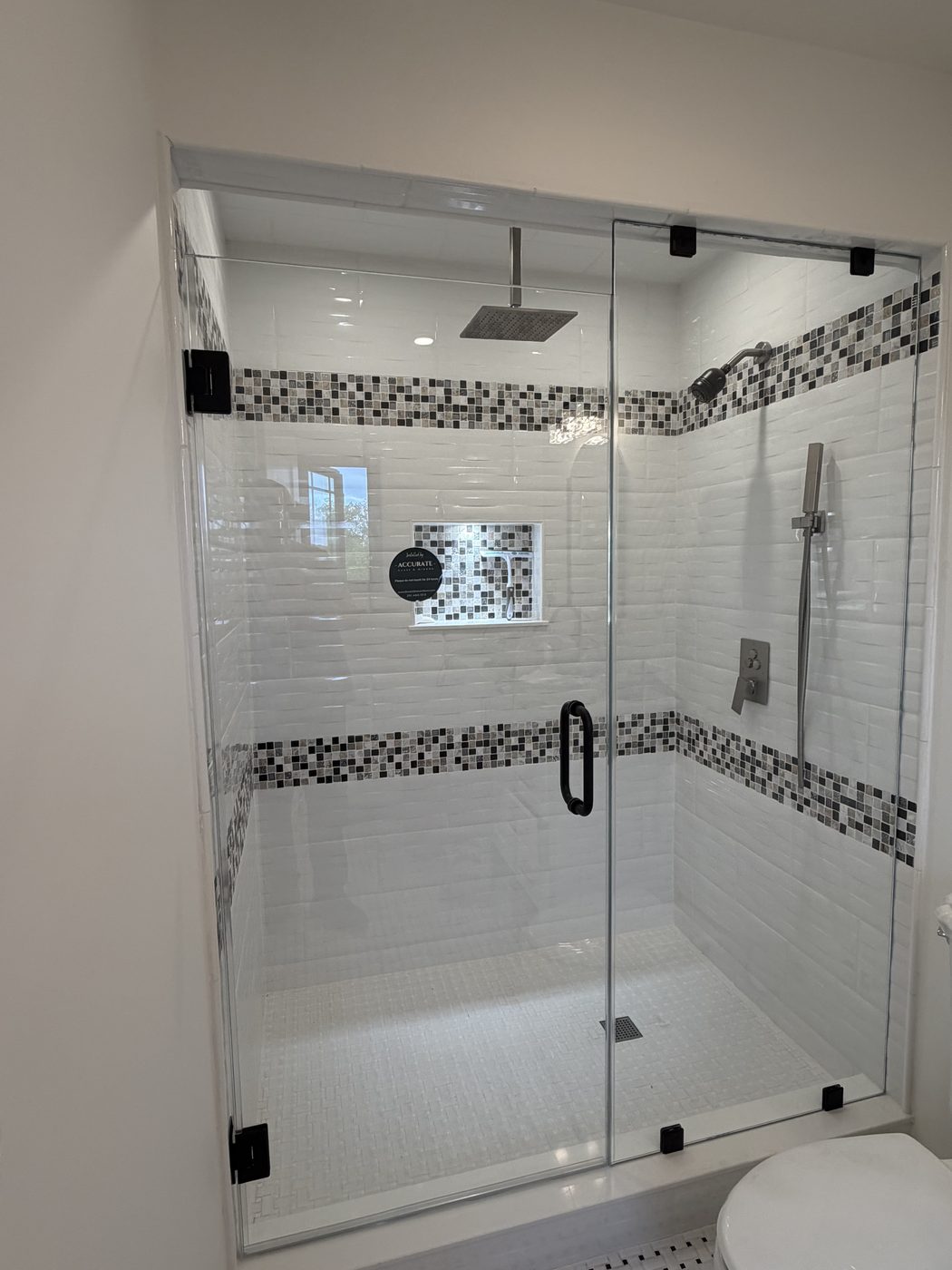
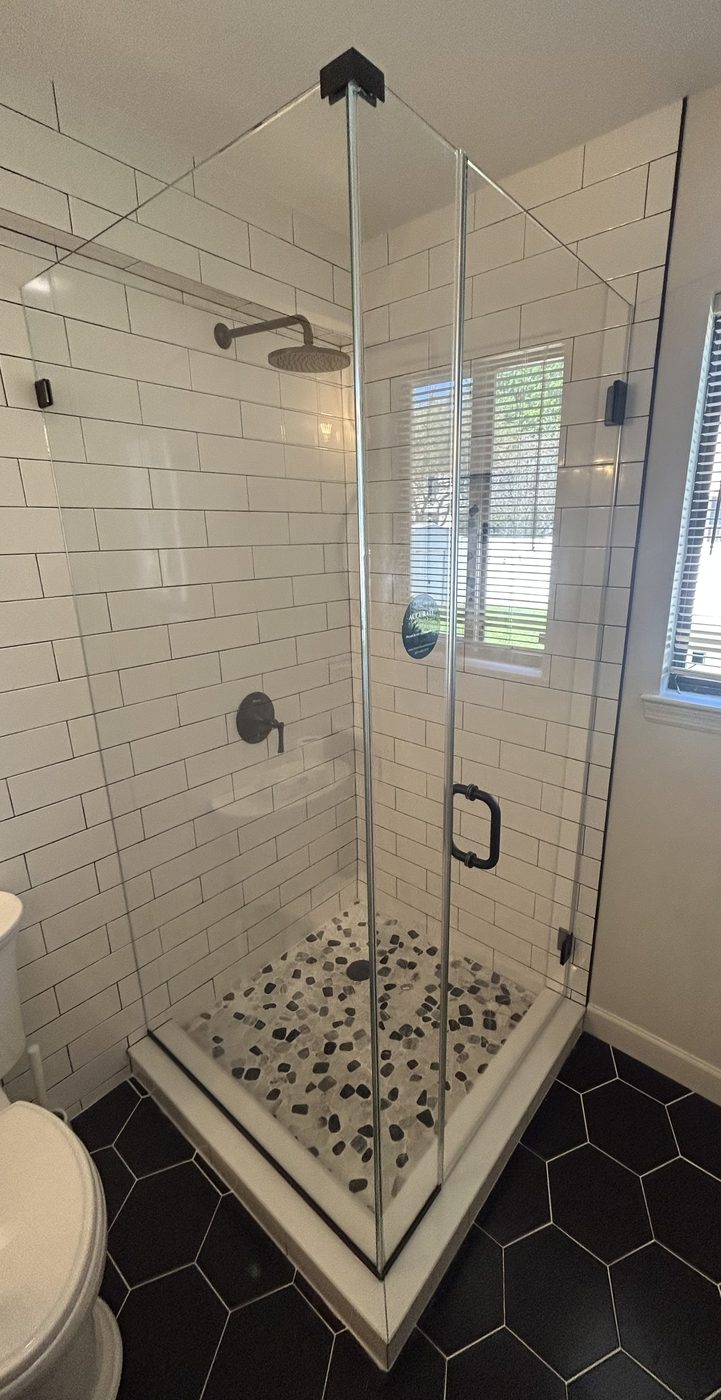
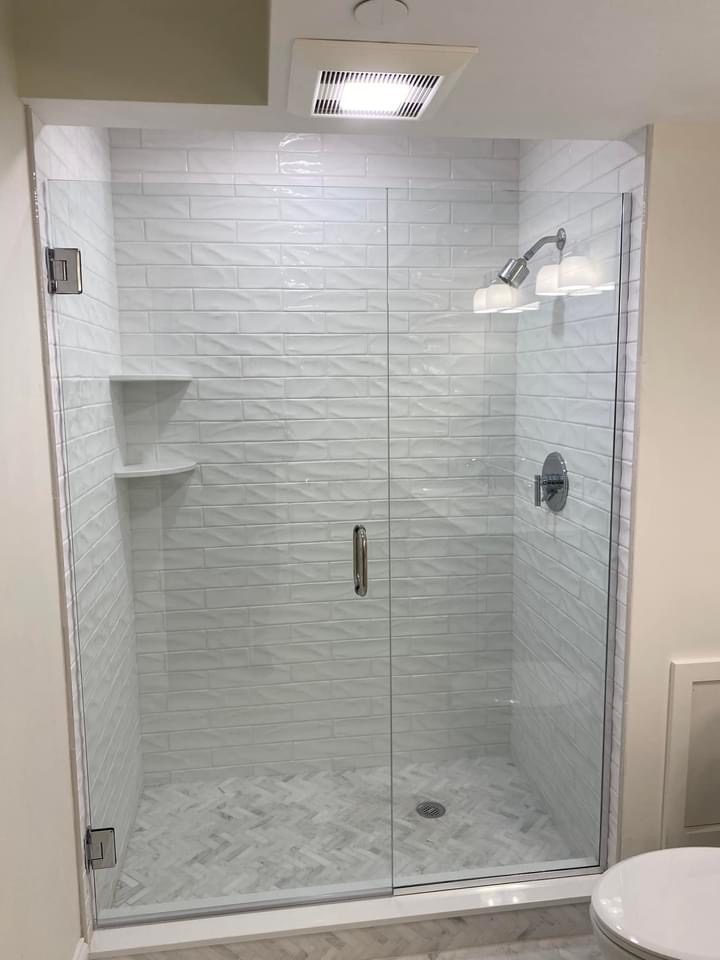
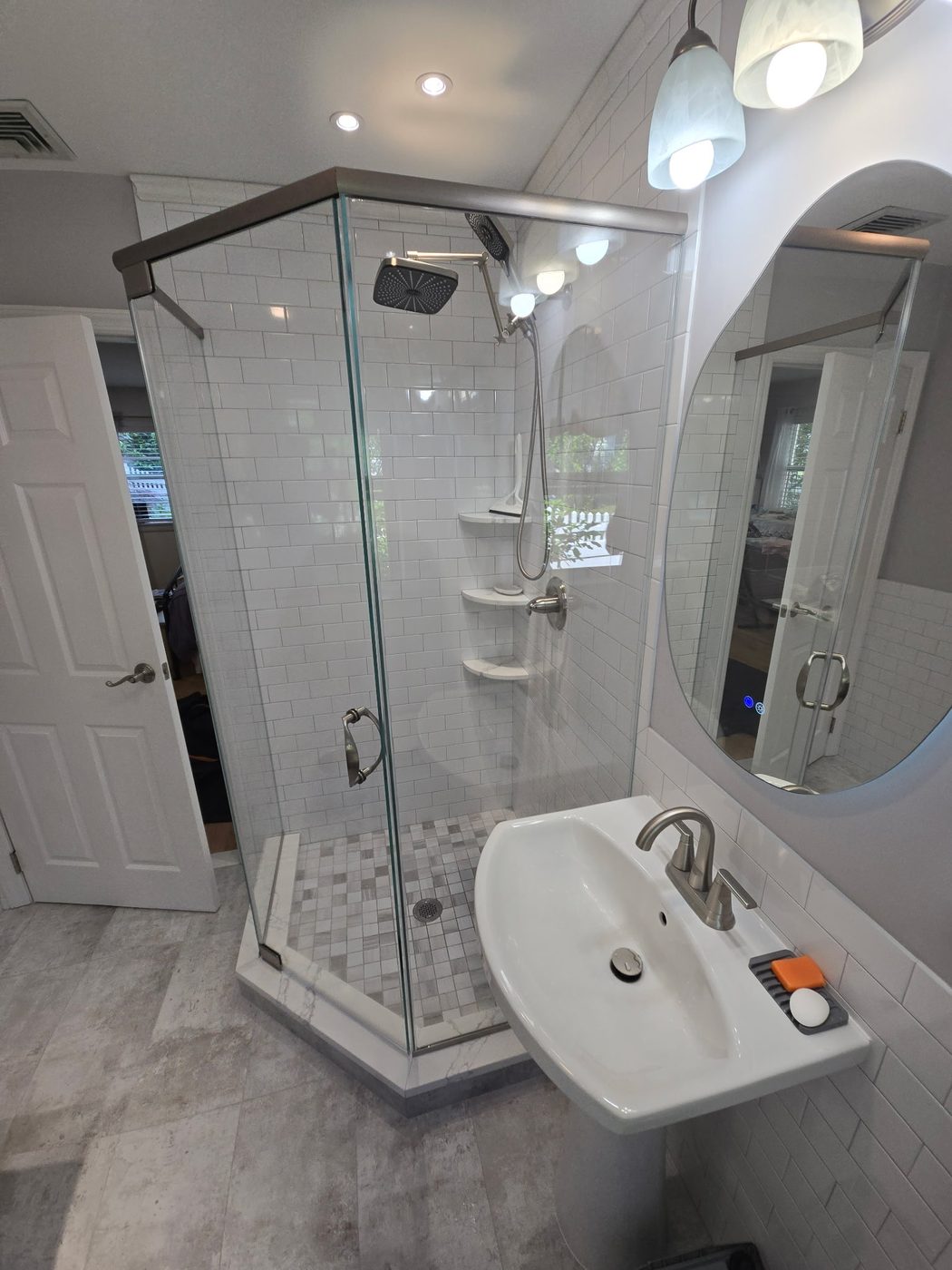
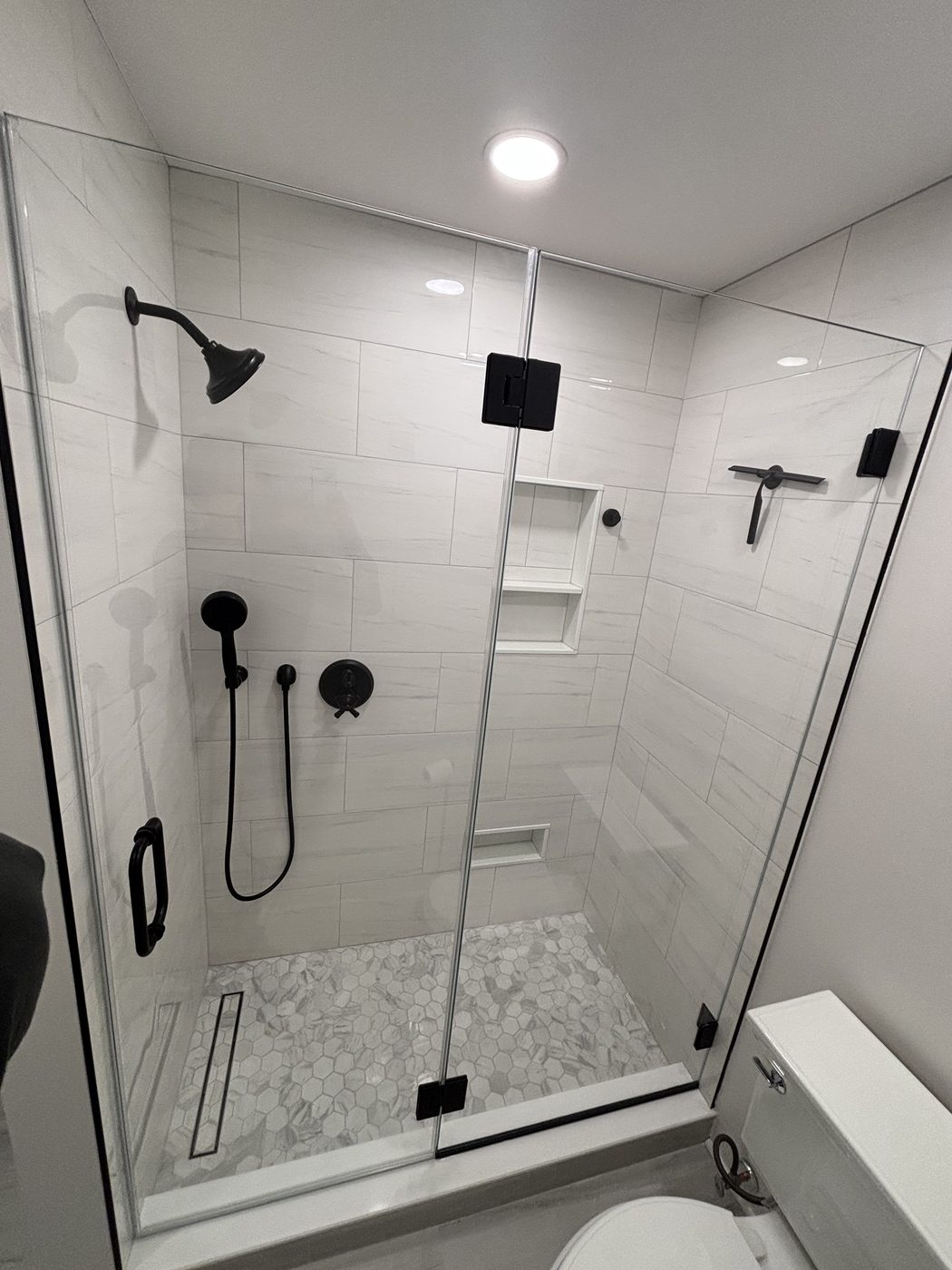
Neo-angles, corner runs and open screens from Tenafly bathrooms and the Northern Valley nearby. Watch the joints where new glass meets old tile, because that is where a hand template earns its keep.
More custom glass in Tenafly: frameless shower doors, sliding & bypass shower doors, semi-frameless shower doors, shower door replacement, custom mirrors, steam shower enclosures, bathtub shower doors, glass railings, commercial glass. See everything on our Tenafly, NJ page. Custom Glass Shower Enclosures nearby: Paramus, Ridgewood, Hackensack, Fort Lee, Lodi, Midland Park, Englewood, Teaneck, Fair Lawn, Mahwah, Wyckoff, Franklin Lakes, Ramsey, Glen Rock, Montclair, Wayne. Learn more about our frameless shower enclosures across Bergen, Passaic and North Jersey, or read the The ultimate guide to custom shower doors and Shower glass thickness: 3/8″ vs 1/2″ guides.
Not in the borough, no. The closest is our main showroom in Lodi, a run of about sixteen minutes, and it takes walk-ins. Doors open at nine, weekdays until five and Saturday until four, at 80 Industrial Rd. Full enclosure displays stand on the floor there, plus a glass-and-finish selection wall for setting a hardware finish against the thickness you are considering. Midland Park, 108 Greenwood Ave, runs by appointment.
No. A corner that reads ninety-one or ninety-two degrees is common in these houses, and it gets solved at fabrication rather than on site. We record the actual angle at the measure, then the panel edges are cut to meet at that angle and the hinges and clamps are specified for the swing you end up with. It closes and seals like a true corner. Guessing the angle is what causes trouble.
Span and panel size drive it. Three-eighths handles most doors and side panels comfortably. Once a fixed panel gets tall or wide, or a door is heavy enough to work its hinges hard, half-inch stiffens the assembly and keeps the edges from flexing over the years. A large primary bath in a newer custom house often lands on half-inch for that reason. We size it to the opening, not to a default.
After the tile and the pan are finished and set, never before. The glass is cut to the surfaces that will actually be there, and a quarter inch of tile thickness changes every number in the file. Once we template, fabrication generally runs one to two weeks and installation is usually a single visit. Your tile setter and plumber finish their scope, then we bring and install the glass.
There is, and weight sets it as much as anything. A sheet of half-inch tempered glass gets heavy quickly, and a door has to hang off hardware that will carry it for years without sagging. Past a certain width we split the opening into a door plus a fixed panel, or run a header across the top. Getting a panel up a narrow older staircase factors into that call too.
Squeegee the panels after a shower and most of it never starts. Minerals in the water etch into the surface of untreated glass over the years, and that is what turns an old door permanently cloudy. A protective glass coating fills that surface so water sheets off instead of sitting, and it is worth asking about when you order. Keep abrasive pads and acidic cleaners off the hardware.
Bring us the room as it stands, lean and all. One picture from the bathroom doorway tells us most of it, and an approximate opening width tells us the rest. Text Jessica, or call (201) 460-1313. The measure that follows costs nothing, and the readings taken that day are the ones your glass gets cut to.
Bring us the room as it stands, lean and all. One picture from the bathroom doorway tells us most of it, and an approximate opening width tells us the rest. Text Jessica, or call (201) 460-1313. The measure that follows costs nothing, and the readings taken that day are the ones your glass gets cut to.
Text Jessica directly with photos. To speed things up, include: