The generator is specced, the tile goes up next week, and someone finally asks how tall the glass has to be. In a steam room the answer is all the way. Panels carry to the ceiling, a transom shuts the gap over the door, and the seams an ordinary shower is allowed to breathe through get closed instead. Miss any of that and you are heating the room rather than the person standing in it. We build these for Mahwah renovations, put our own tape on the room before a panel is drawn, and fabricate the glass at our Lodi shop. If a room cannot hold steam properly, we will tell you that too. Looking at it costs you nothing.
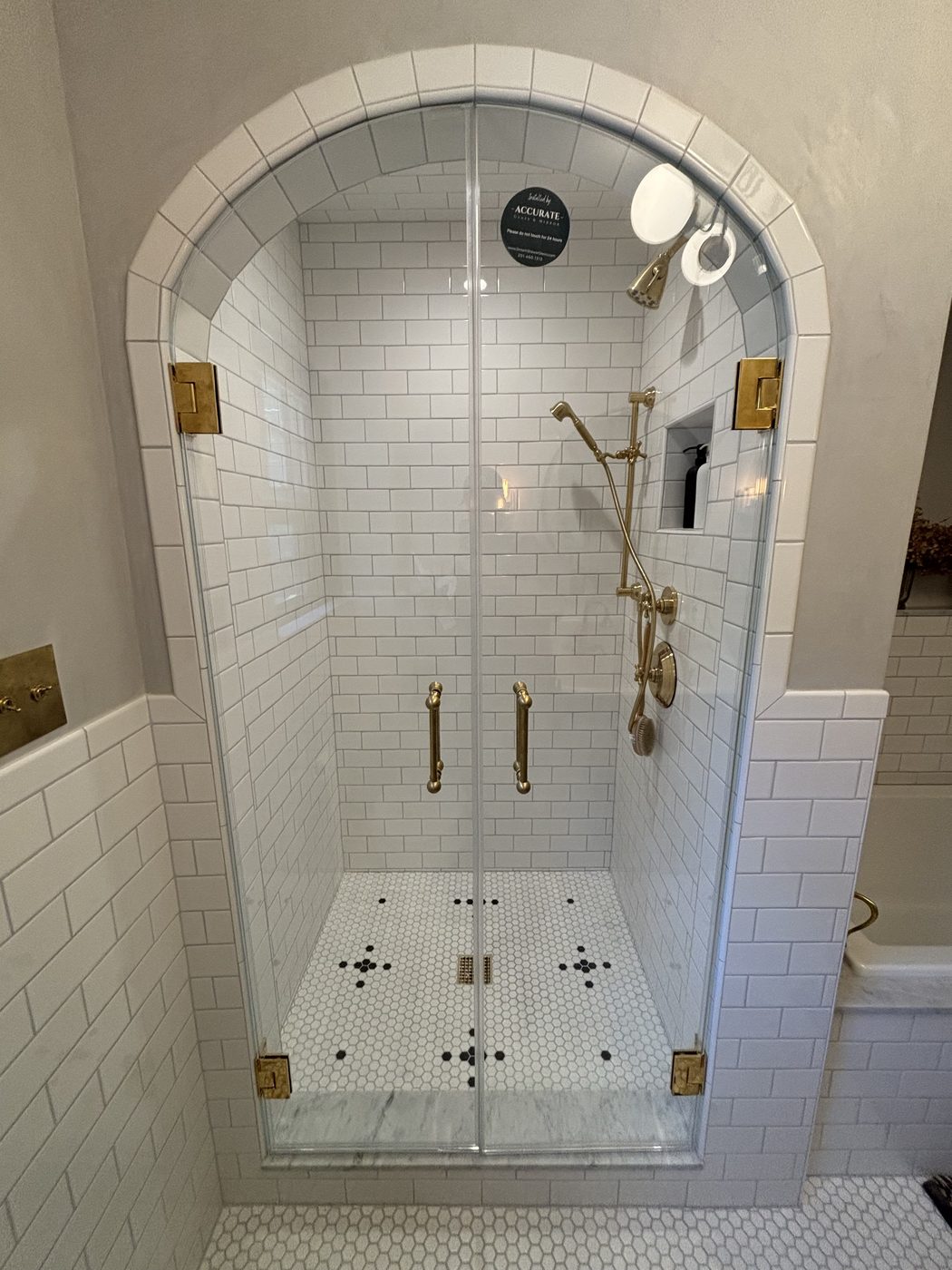
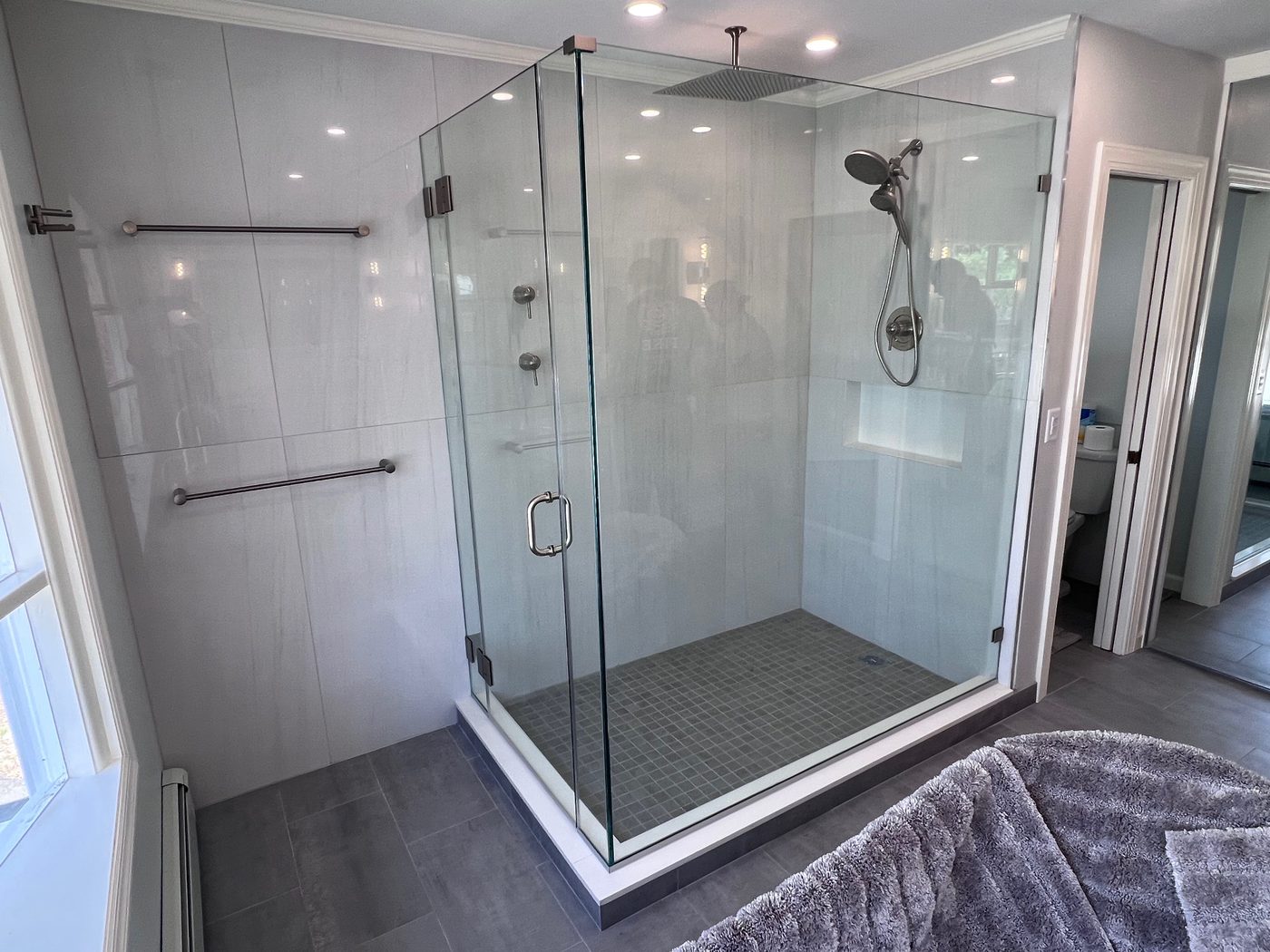
We come twice on a steam job, and the first visit is a conversation. While the room is still framing and paper we want to know the ceiling height, where the door will land, where the steam head is going and whether there is a soffit or a slope over the shower. Those four answers shape the design more than anything chosen later. Steam blowing straight at a door is a nuisance nobody notices until the room is finished. A ceiling that drops three inches over the shower changes the transom, the header and sometimes the whole idea. The second visit is the template, and it waits until the tile and the pan are done, because glass gets measured to the surfaces it will actually touch.
Ceilings are rarely dead level, so the top edge of a steam panel is scribed to the one you have rather than cut straight and shimmed later. Full-height glass is heavy glass, which means the header has to carry it and the hinges have to land in something solid. After that it is all seams: glass to glass, glass to tile, and the bottom edge, where a sweep keeps water on the right side of the curb. The transom above the door is usually set to vent so the room can dry out after a session. When we finish, the silicone has to cure before the first steam cycle, and we will tell you how long to wait. Running it early is the one reliable way to undo careful sealing.
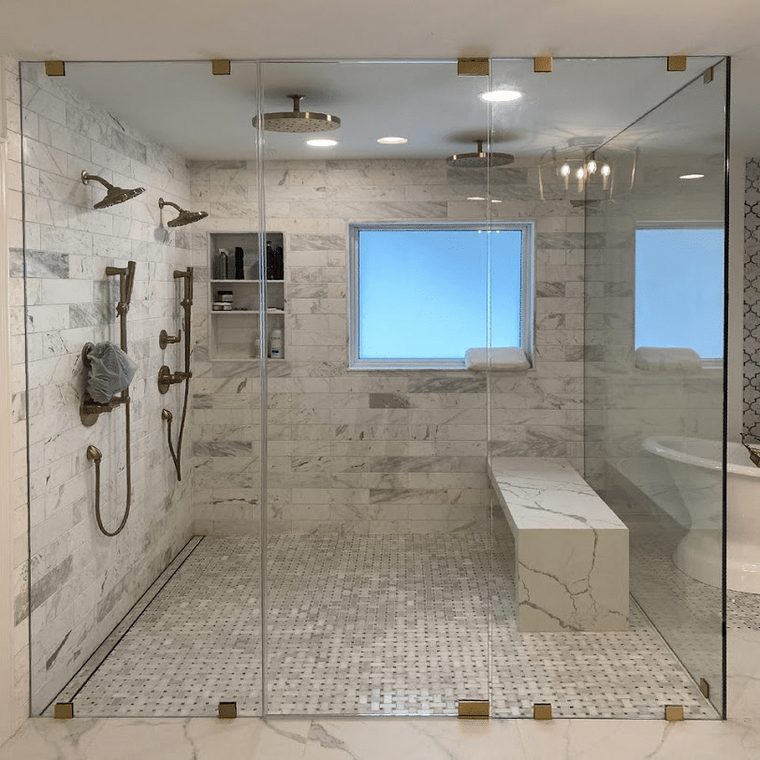
Steam arrives with a serious renovation, and Mahwah hands us two versions of it. In the custom estates near the Ramapo Mountains the master suite is oversized, so the sealed room is large: more panel height, more seam length, and a generator that has to be sized to the actual volume rather than to a number somebody liked. Every extra foot of glass is another foot of joint that has to hold. In a Cape Cod or a townhome unit the room is small, which is easier on the generator and harder on the layout, because the door swing, the bench and the transom all compete for the same few feet. Both are buildable. They are simply not the same build, and the quote follows that difference.
The ceiling is where the answer usually lives. Upstairs in a Cape the roof line comes down, so the height over the shower can be less than the room suggests, and a soffit hiding pipes takes another few inches out of it. In a townhome the ceiling is whatever the building gave you and it is not moving. None of that rules steam out by itself, but it decides transom height, header depth and door size, and it is worth knowing before anybody buys a generator. We would rather take that number in person than read it off a drawing. Our Midland Park showroom is about 16 minutes from Mahwah, which makes an early look easy to arrange.
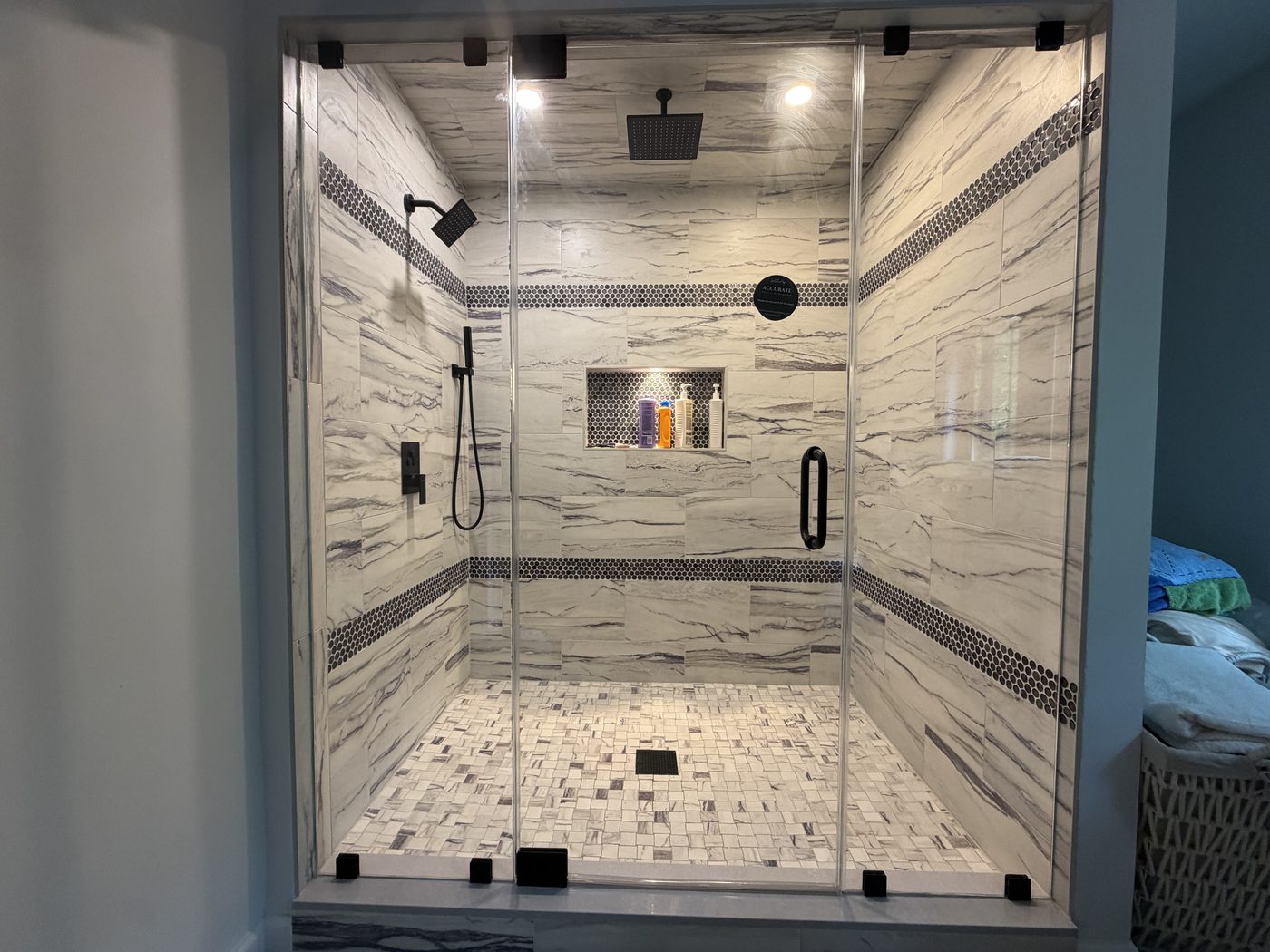
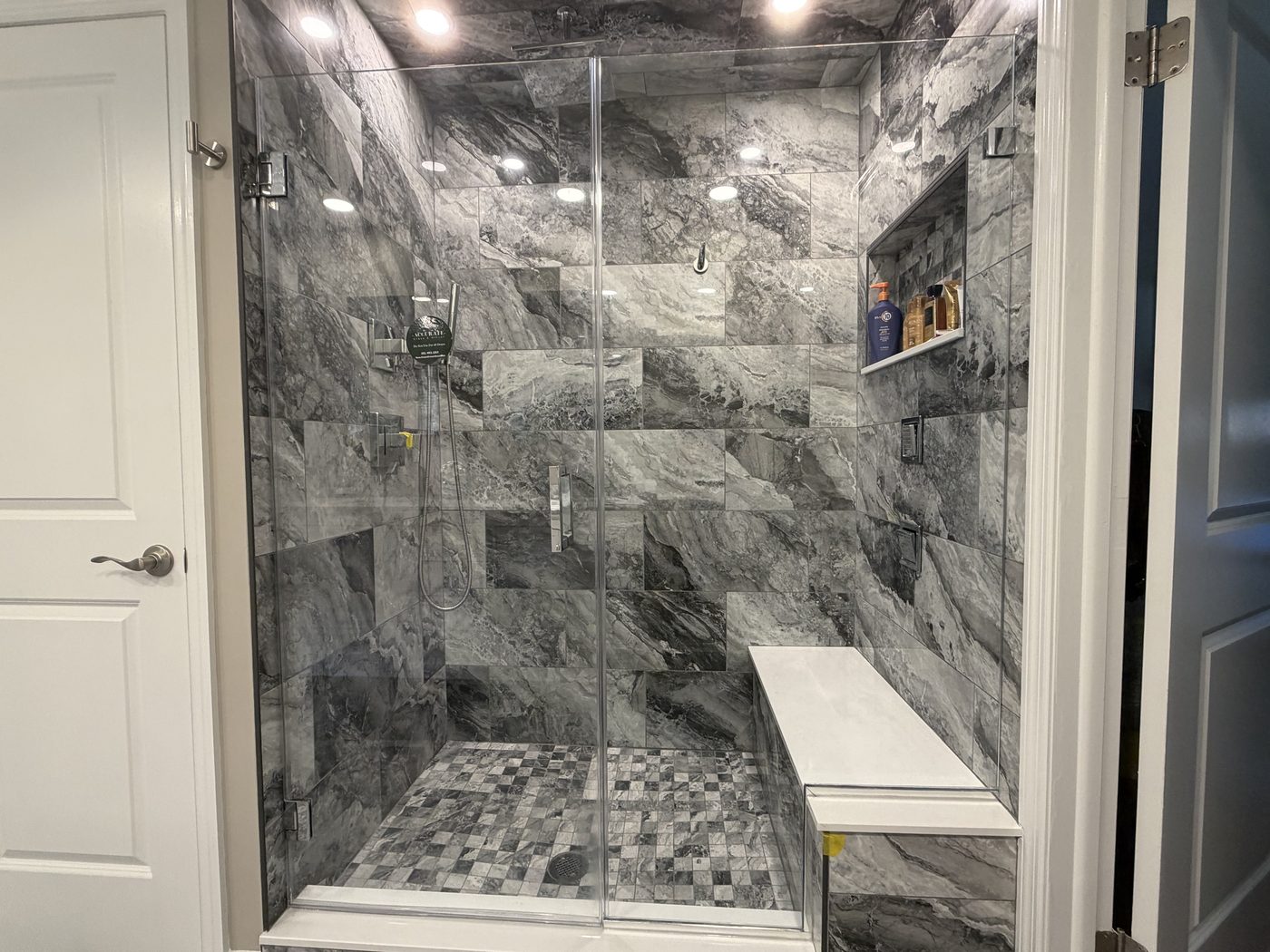
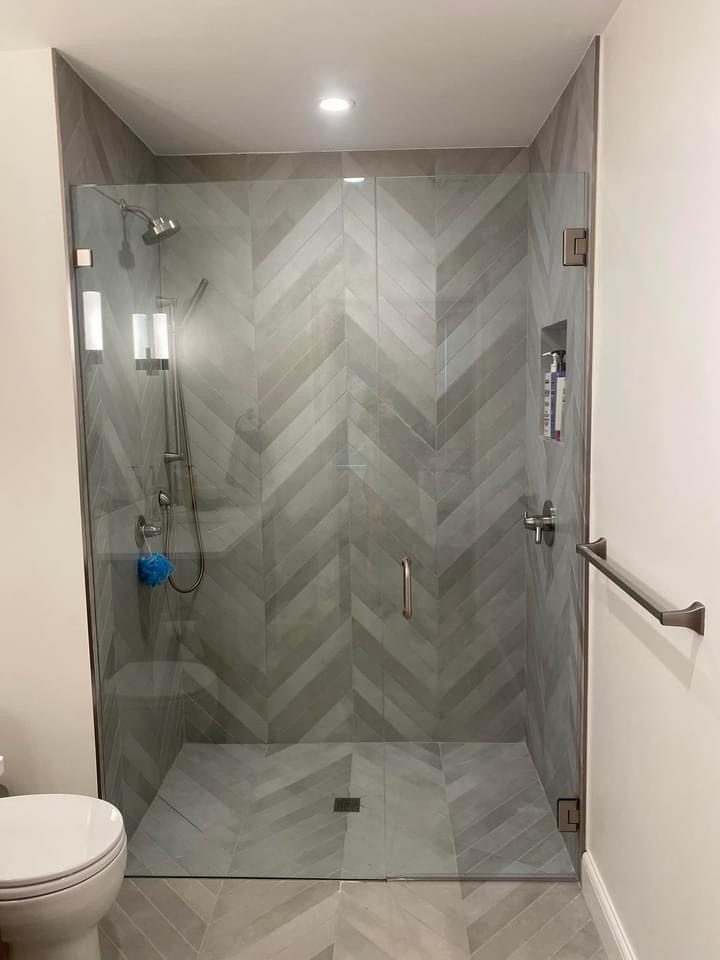
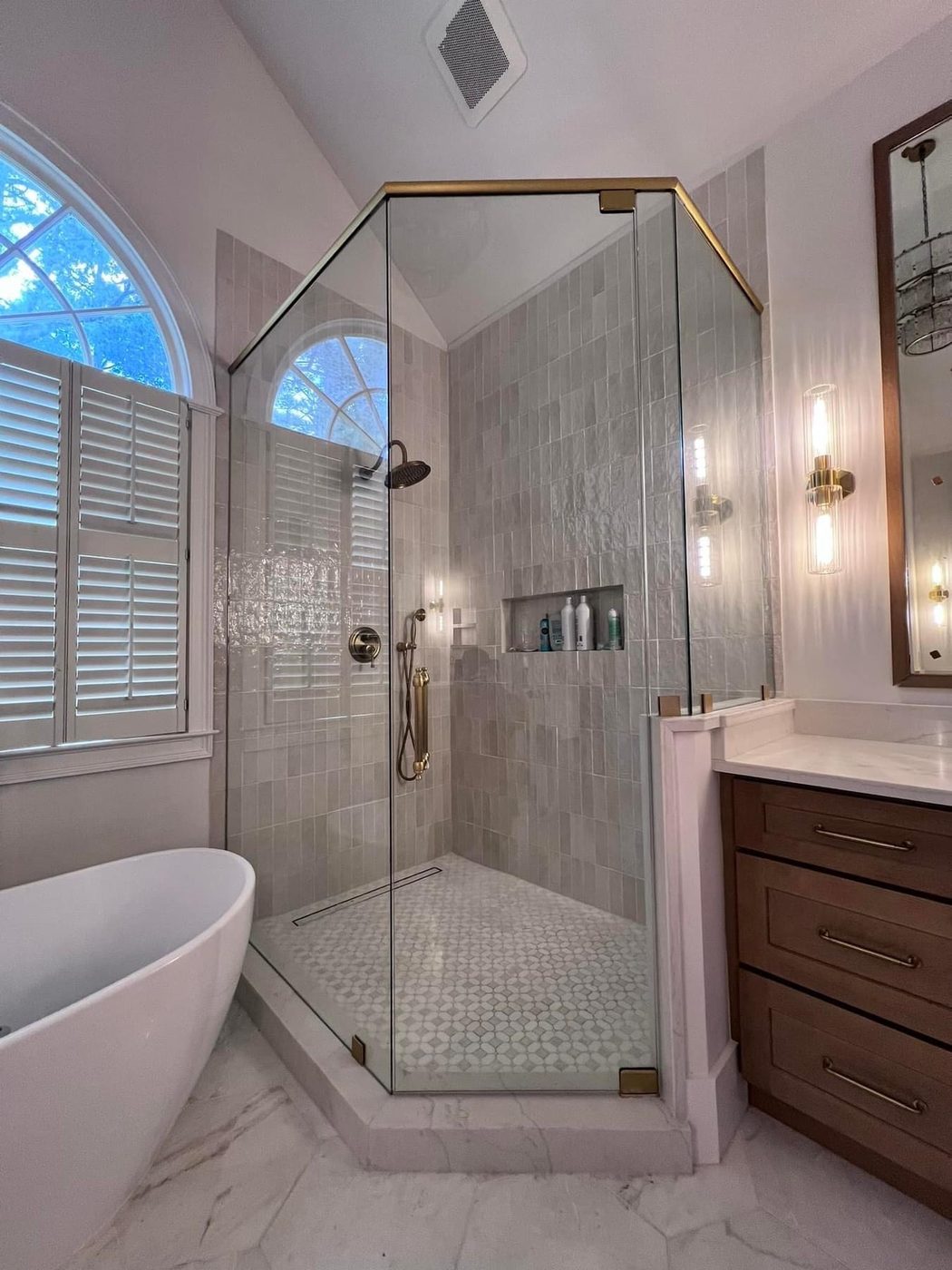
Full-height panels, vented transoms and the joints that keep the heat inside. Look at where the glass meets the ceiling, because that line is the whole job.
More custom glass in Mahwah: frameless shower doors, sliding & bypass shower doors, semi-frameless shower doors, shower door replacement, custom mirrors, custom glass shower enclosures, bathtub shower doors, glass railings, commercial glass. See everything on our Mahwah, NJ page. Steam Shower Enclosures nearby: Paramus, Ridgewood, Hackensack, Fort Lee, Lodi, Midland Park, Englewood, Teaneck, Fair Lawn, Wyckoff, Tenafly, Franklin Lakes, Ramsey. Learn more about our steam shower enclosures across Bergen, Passaic and North Jersey, or read the Shower glass thickness: 3/8″ vs 1/2″ and The ultimate guide to custom shower doors guides.
Yes, and on a steam job it is worth the trip. Our Midland Park showroom sits at 108 Greenwood Ave, about 16 minutes from Mahwah. It opens by appointment, so give the shop a ring at (201) 507-5918 and the door will be unlocked with someone in it when you arrive. The full enclosure displays and the glass-and-finish selection wall are there, so thickness and finish stop being abstract. Regular hours are kept at the main shop, 80 Industrial Rd in Lodi, roughly 27 minutes south, Monday through Friday 9 to 5 and Saturday 9 to 4.
More glass, mostly. A steam enclosure runs from the curb to the ceiling instead of stopping at seven feet, and it adds a transom above the door. That is more square footage, more weight, heavier hardware and a header built to carry it. The sealing work is real labor too, since every joint gets treated instead of left open. Ceiling height and glass thickness move the number more than anything else, followed by hardware finish and how far out of level the ceiling turns out to be. We quote it in writing once we have measured, broken out line by line.
No. The generator, the steam head, the controls, the vapor barrier behind the tile and the waterproofing all belong to your plumber and your contractor. We build, seal and install the glass room they are enclosing. That division works better than it sounds as long as everyone is talking early: your plumber needs to know where the door and the transom are landing, and we need to know where the steam head points. Bring us into that conversation while the room is still open and it saves a change order later.
Often, but it has to be measured rather than assumed. What matters is the lowest point over the shower, not the height in the middle of the room, because the glass has to close the space at the worst spot. A sloped ceiling means the top edge of the panels gets cut to follow the rake, and the transom shrinks or changes shape to suit. Sometimes the honest answer is that the room will not hold steam well enough to be worth the money, and you will hear that at the measure rather than after the install.
Not the same afternoon. Silicone needs to cure before the room gets hit with heat and moisture, and a first steam cycle run too early is the classic way to spoil good sealing. You will get the wait time from the crew at the install, and it is worth respecting to the hour. Ordinary showering usually clears sooner than steam does. After that the upkeep is dull: a squeegee after a session, glass cleaner now and then, and leave the transom cracked open when the room is not in use so everything dries.
Yes. The enclosure holds steam inside the glass while you are in there, and the transom lets it out afterward, but the room itself still has to dry. A working exhaust fan is what does that, and it protects the paint, the trim and the ceiling above the door. It is one reason we prefer a transom that vents over a solid sealed panel: you crack it after a session, the fan pulls the moisture out, and the glass dries instead of standing wet until evening.
Steam is the one enclosure where a call in week one changes what gets built. Call (201) 507-5918 or text Jessica, say where the bathroom sits in the schedule and who is setting the tile, and we will get out to Mahwah while a door or a steam head can still move on paper. The visit is free.
Steam is the one enclosure where a call in week one changes what gets built. Call (201) 507-5918 or text Jessica, say where the bathroom sits in the schedule and who is setting the tile, and we will get out to Mahwah while a door or a steam head can still move on paper. The visit is free.
Text Jessica directly with photos. To speed things up, include: