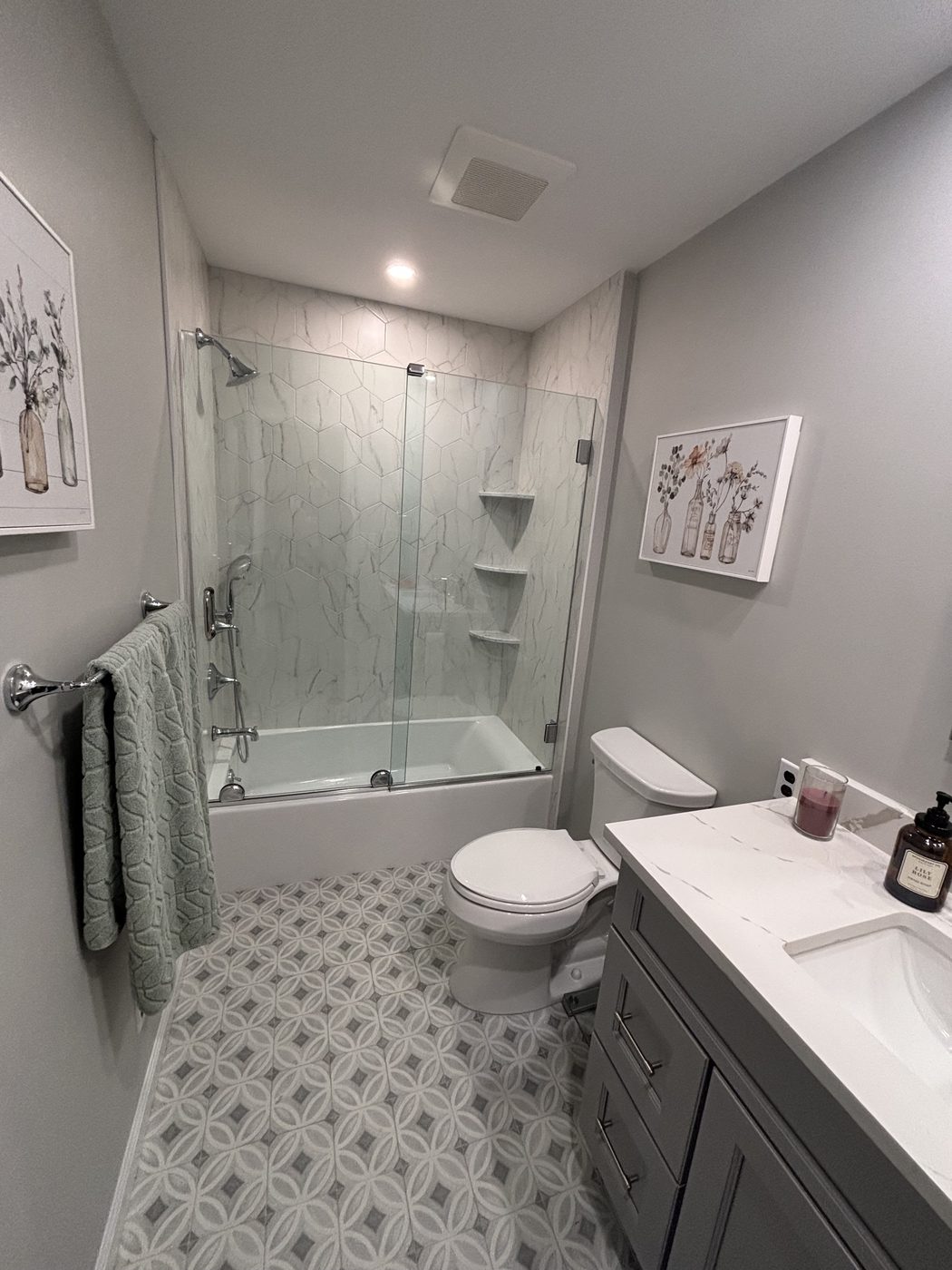
Every few months the liner clouds over and somebody buys another one. The tub underneath is usually fine: cast iron in an older house, deep, solid, and nobody has a real reason to rip it out. What dates the room is the curtain and the rod sagging above it. Glass ends that, in one of two shapes. Two panels can hang from a header above the rim and slide clear of each other, or one fixed panel can stand at the faucet end and let you step past it. Either way the tub, the tile and the plumbing are left alone. We measure Mahwah tubs at no charge, fabricate the panels at our Lodi shop, and our own crew sets them, usually inside one visit.
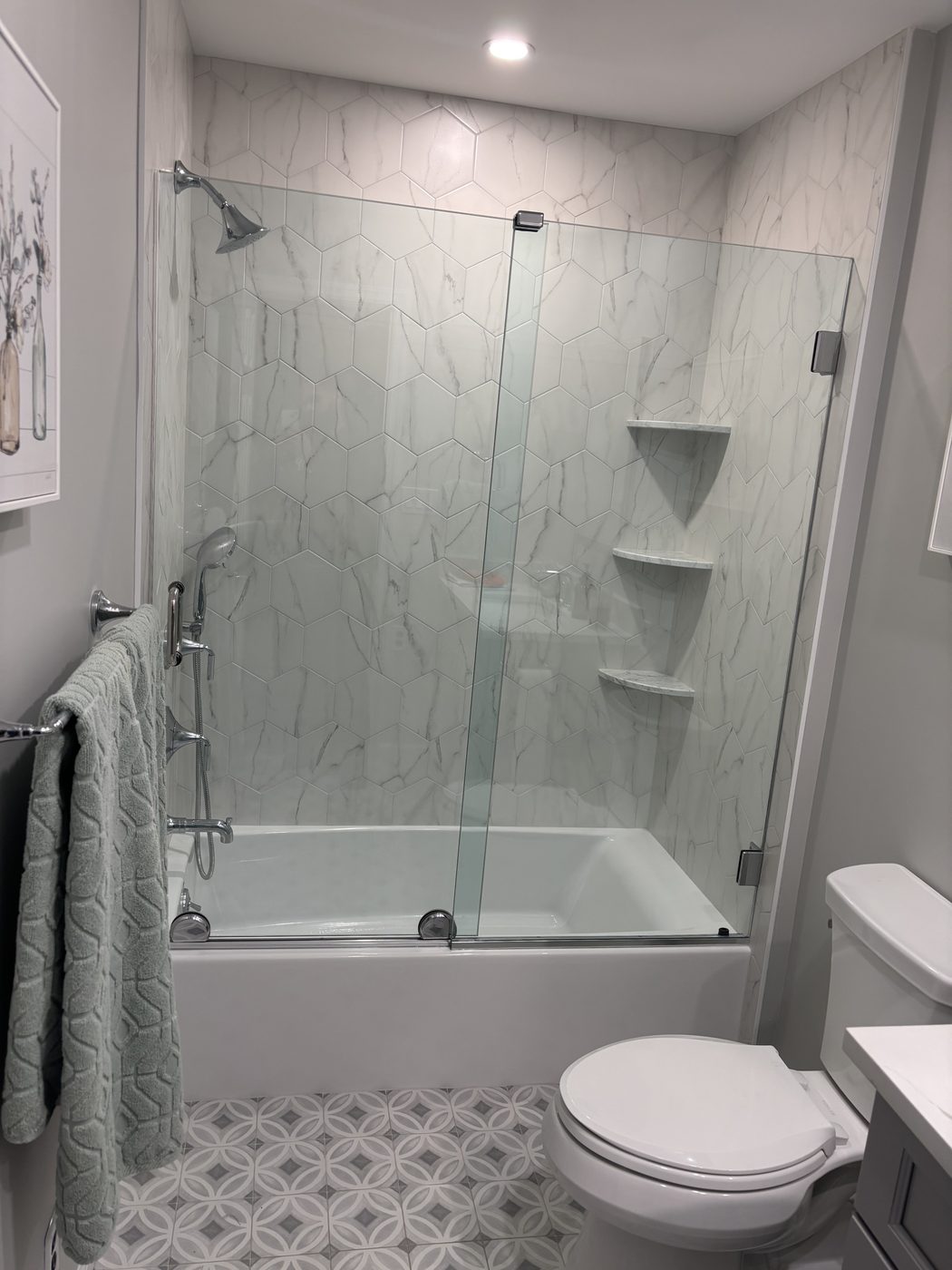
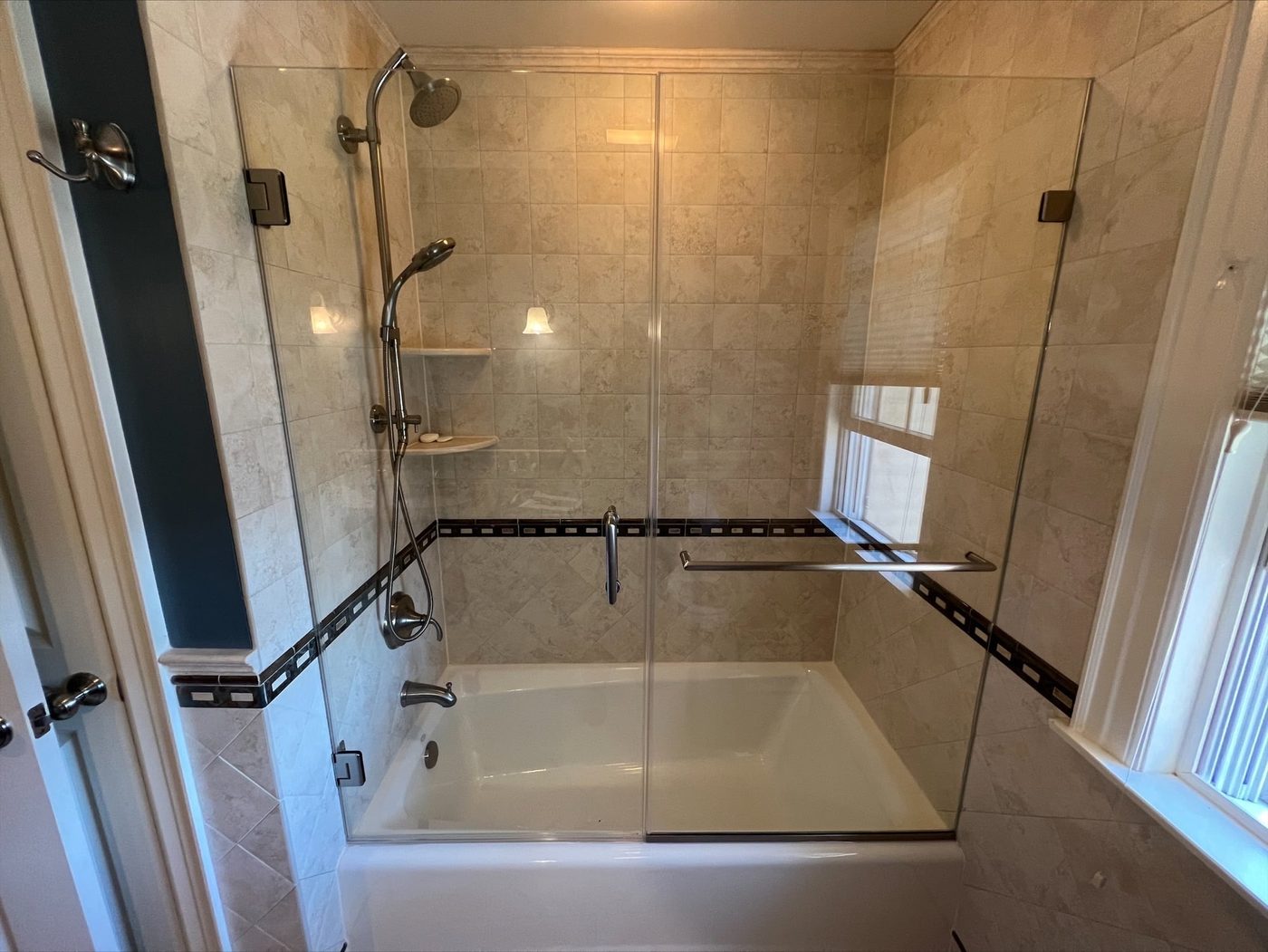
A tub opening gets measured in three places, not one. The width comes off the rim first, then from a point around chest height, then from the top course of tile, because alcoves are almost never parallel and the spread between those three numbers is what the hardware has to absorb. Height comes off the tub rim rather than off the floor, since the rim is the surface a track or a screen actually sits on. Then we look at the rim itself: a rolled cast iron edge is a different mounting surface than a flat modern deck, and it changes how the bottom rail or the base clamp seats and seals. A tile lip, a soap niche or a window in the wet wall all get noted, because the glass has to clear them.
From there it is two builds. A bypass slider hangs two panels from a top track so they pass each other. It closes the whole opening, holds heat and water in, and never swings out into the room, which is why it wins in a tight bath. A fixed screen is one panel standing at the faucet end with the rest of the opening left open: less hardware, less to clean, easier to step past, and better when somebody is kneeling beside the tub bathing a child. Either way the glass is tempered, cut to your numbers, and the hardware comes in polished chrome, brushed nickel, matte black or oil-rubbed bronze. If a framed door is sitting in the opening now, taking it out and hauling it off is part of the job.
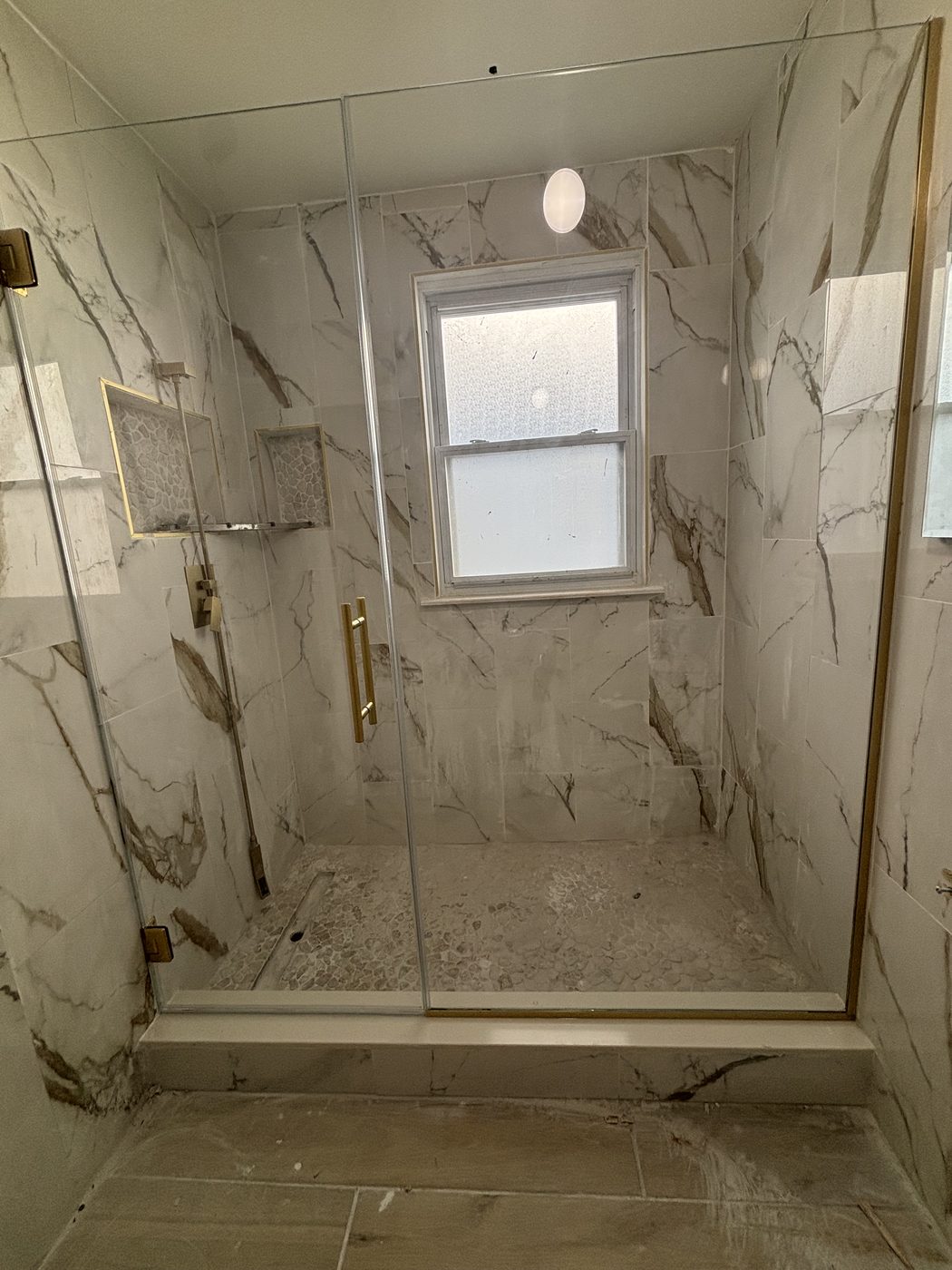
Drive from an estate near the Ramapo Mountains to a Cape Cod on a wooded lot to a townhome in Society Hill and you will not pass two houses that agree on anything. Walk inside and nearly every one of them still keeps a bath with a tub in it. In an estate that is the hall bath, left exactly as it was while the master suite got the walk-in shower. In a Cape it may be the only full bathroom in the house. In a townhome it is the second bath, the one guests use. Same fixture, three completely different addresses, and the same upgrade works in all three.
Of everything we make, tub glass asks the least of the room around it. There is no demolition, the tile stays on the wall, the fixtures stay where they are, and the bathroom is only out of use while the crew is working. That matters more in some of these homes than others. In a townhome with a shared wall there is nowhere to stage a mess, and in a Cape with one full bath the family cannot lose it for long. So the sequence stays short: we measure, the panels are cut to those numbers in Lodi, and one visit puts them in. The last step is silicone, and it wants some quiet time before anyone runs water. The crew will give you the number of hours before they leave.
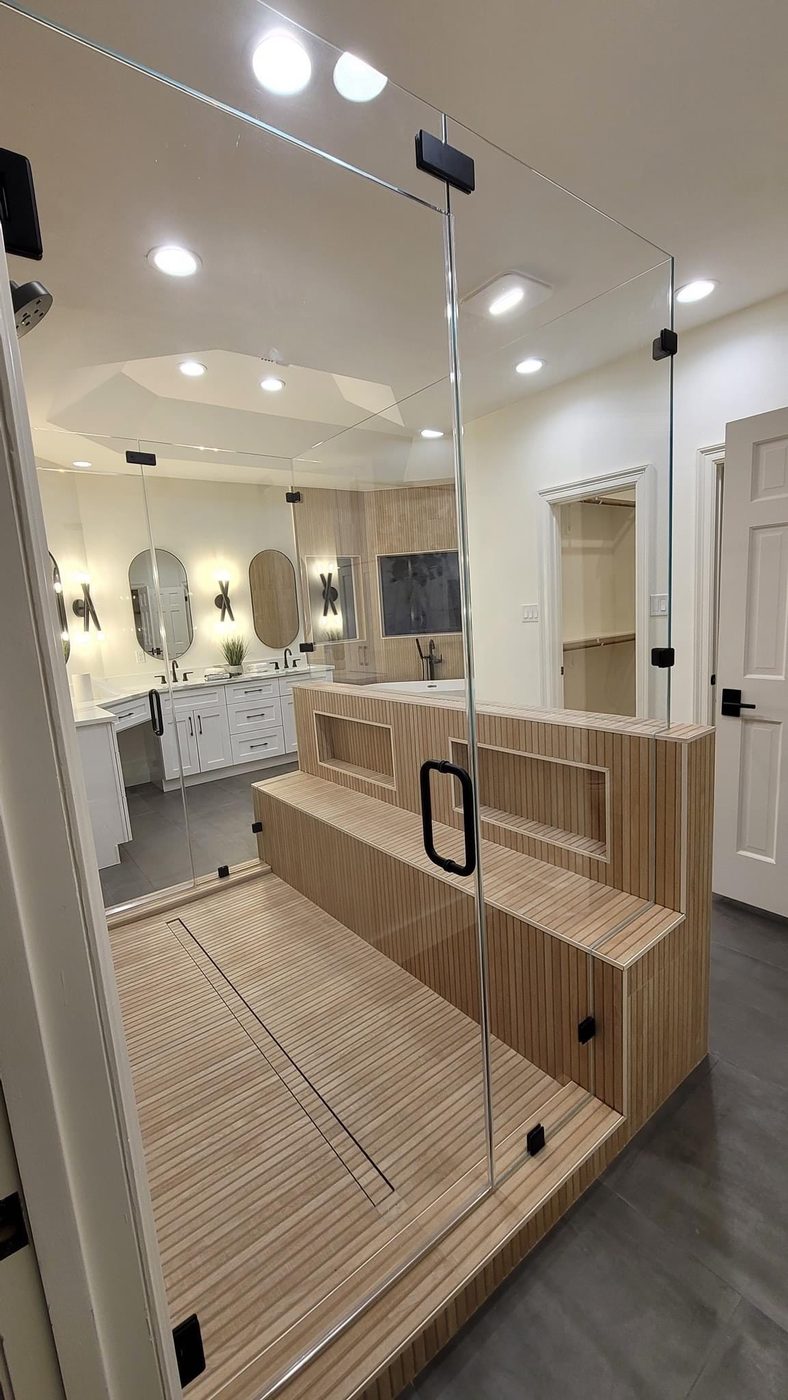
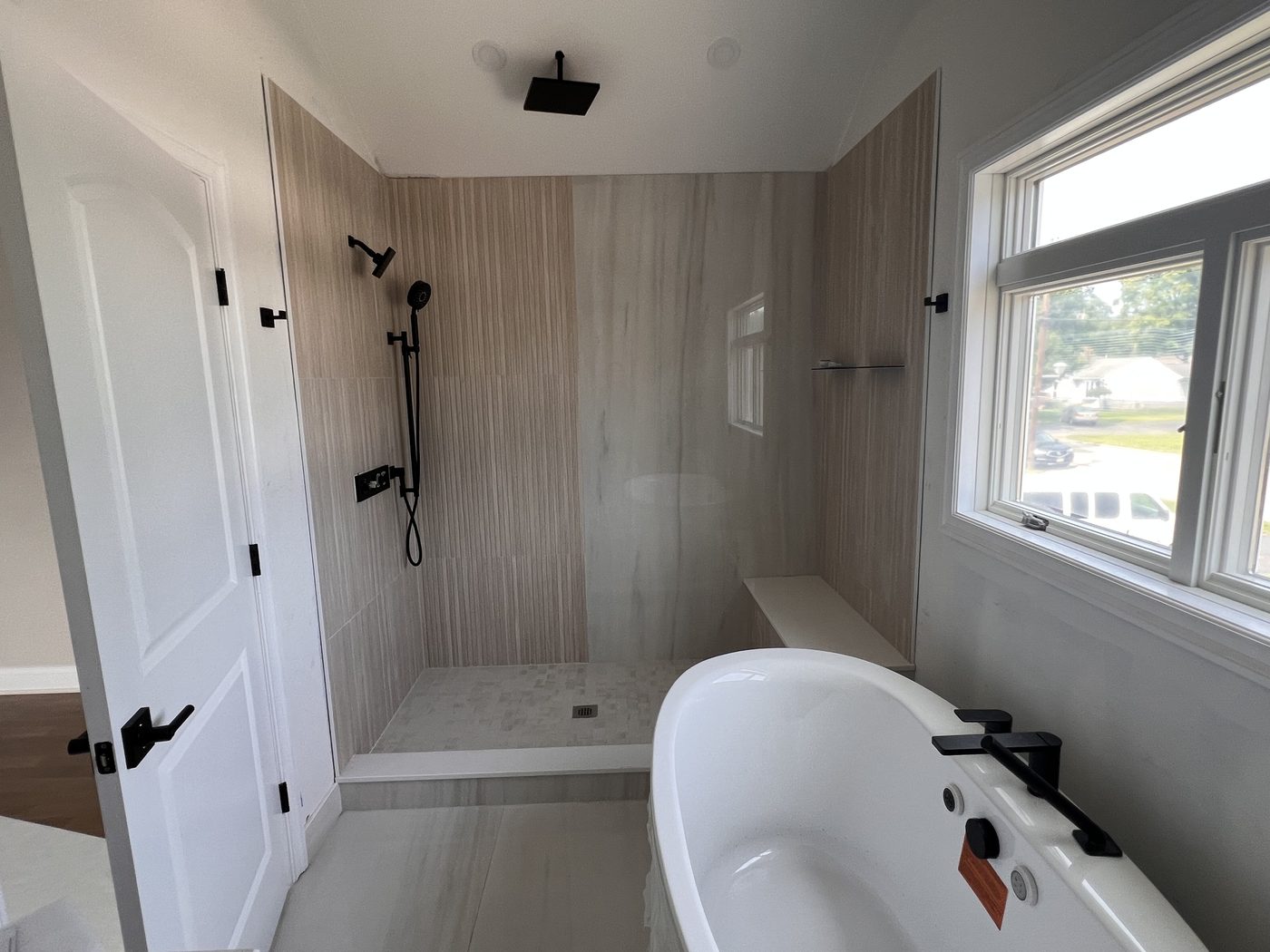
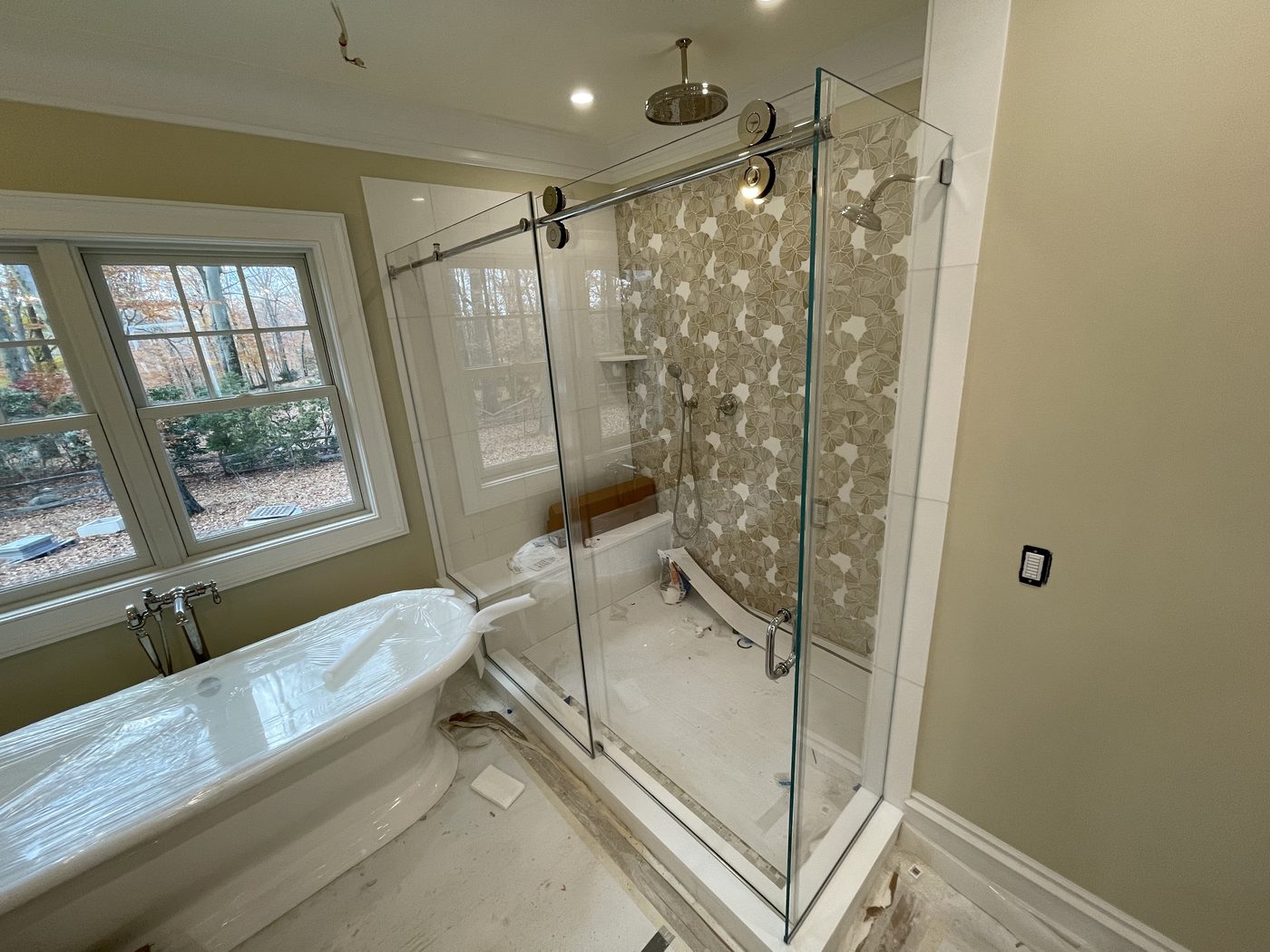
Bypass panels on the track and single fixed screens, set over tubs that never moved an inch. Bergen County baths, and no demolition in any of them.
More custom glass in Mahwah: frameless shower doors, sliding & bypass shower doors, semi-frameless shower doors, shower door replacement, custom mirrors, custom glass shower enclosures, steam shower enclosures, glass railings, commercial glass. See everything on our Mahwah, NJ page. Bathtub Shower Doors nearby: Paramus, Ridgewood, Hackensack, Fort Lee, Lodi, Midland Park, Englewood, Teaneck, Fair Lawn, Wyckoff, Tenafly, Franklin Lakes, Ramsey. Learn more about our shower doors & enclosures across Bergen, Passaic and North Jersey, or read the How much do shower doors cost in NJ? and Frameless vs. semi-frameless: which is right? guides.
In a better spot than you would think, because a tub door gets built for the opening it lives in, not picked off a shelf. We come out, measure the alcove as it stands and quote new glass along with the hardware to hang it. Chasing rollers and guides for a unit that went out of production years ago is the slower road, and at the end of it you still have the same tired track. On install day the existing door and track come out, the surfaces underneath get cleaned back, and the new panels go up. Standing in the room is what turns any of that into a real number rather than a guess off a photo.
No, and a tub like that is worth keeping. The rolled rim only changes the mounting. A bottom track or a base clamp has to sit on that curved surface and seal against it, so we measure the rim profile at the template and build to it instead of forcing a flat part onto a round edge. Old alcoves also tend to be out of square, which is fine once the glass is cut to the actual widths at the rim, mid height and tile line. What we will not do is pull the tub out. That is a plumbing and tile job for your contractor.
Sliders, usually. Two panels close the opening completely, so water stays in the tub through the splashing years, and the space stays warmer for a small person standing in it. Nothing swings into a knee in a tight room either. The tradeoff is the track, which collects grime and wants a wipe now and then. A fixed screen is easier to clean and easier to reach past when you are kneeling next to the tub, but it leaves the far end of the opening open. Families with young kids tend to land on sliders.
None of it. This is glass over the tub you already own. The tile stays, the tub stays, the valve and the spout stay, and nothing gets opened up. We cover the floor, take out the old unit if there is one, drill only what the hardware needs, set the panels and seal them. Then we clean up and go. The one thing the job asks of you is a little patience before the first shower so the silicone can cure, and you will be told exactly how long.
Four things, mostly. How wide and how tall the opening is, because that is the glass. Glass thickness, because heavier panels need heavier hardware to carry them. Hardware finish, chosen from polished chrome, brushed nickel, matte black and oil-rubbed bronze. And whether there is an existing framed door that has to come out and be disposed of. A badly out-of-square alcove adds a little labor at the template. We will not throw a number at you on the phone. The measure at the house is free and the quote afterward is written out.
There is no showroom in the township. The nearest is Midland Park, 108 Greenwood Ave, about 16 minutes away, and it runs by appointment: call (201) 507-5918 first and someone will be there waiting for you. It has the full enclosure displays and the glass-and-finish selection wall, which is the quickest way to settle on a finish. If regular hours suit you better, our main Lodi shop at 80 Industrial Rd is about 27 minutes south, Monday through Friday 9 to 5 and Saturday 9 to 4.
Tell us which end of the tub the faucet sits on, and whether there is a framed door in the opening now. That plus a photo gives Jessica something to work with, and the measure at your Mahwah bathroom is free either way. The tub stays, the tile stays, and the rod comes down for good. Call or text (201) 507-5918.
Tell us which end of the tub the faucet sits on, and whether there is a framed door in the opening now. That plus a photo gives Jessica something to work with, and the measure at your Mahwah bathroom is free either way. The tub stays, the tile stays, and the rod comes down for good. Call or text (201) 507-5918.
Text Jessica directly with photos. To speed things up, include: