A custom mirror that comes down toward the floor meets things a vanity mirror never does: a baseboard standing proud of the wall, a heater or a register along it, a floor that has settled a little from one end to the other. In a Wayne hallway, bedroom or stair landing, those decide how a full length or wall mirror gets cut and hung more than its width does. We make vanity mirrors as well, polish or bevel every edge at our Lodi shop, and there is no fee to measure.
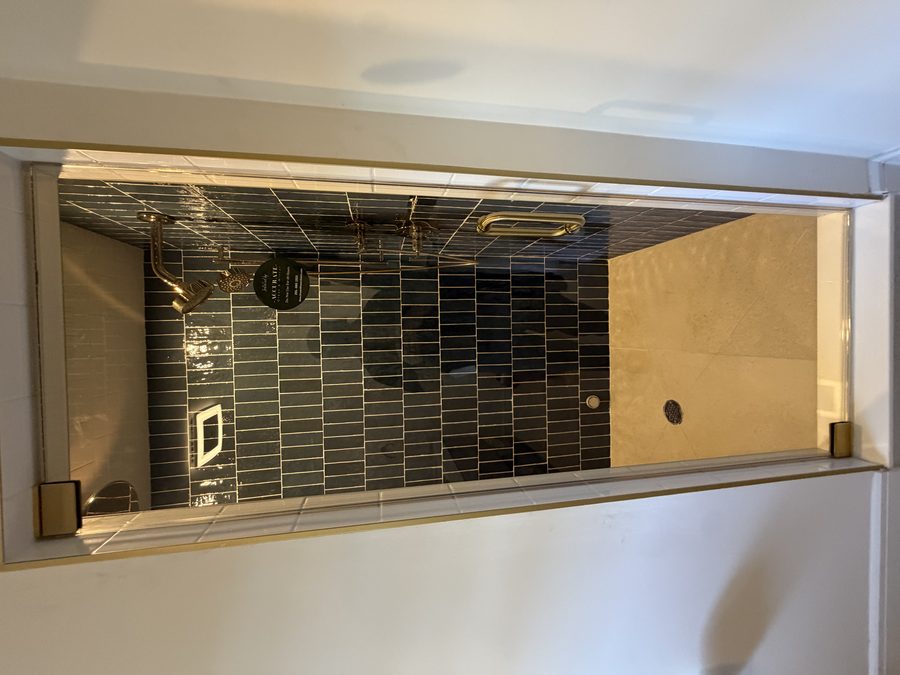
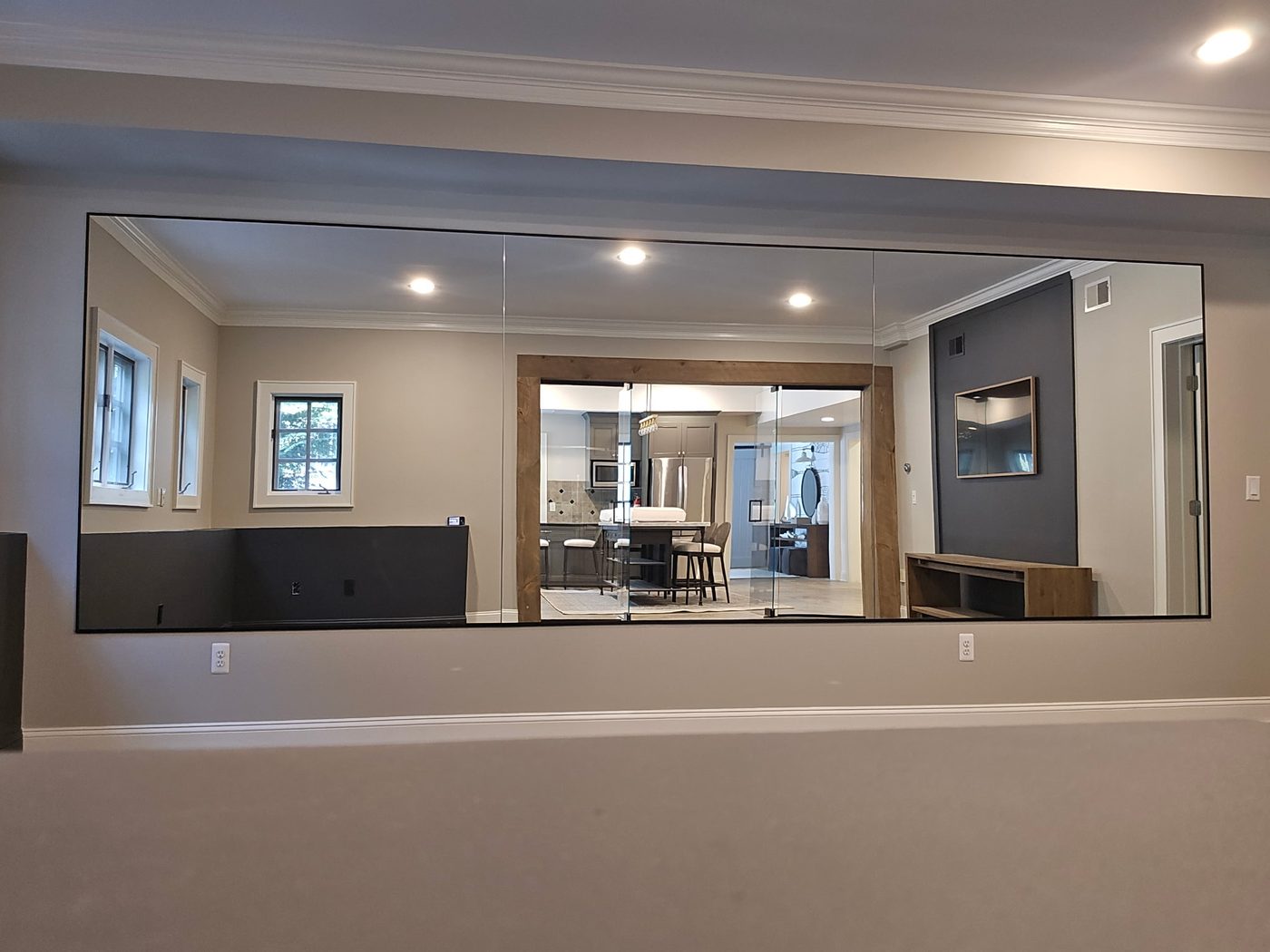
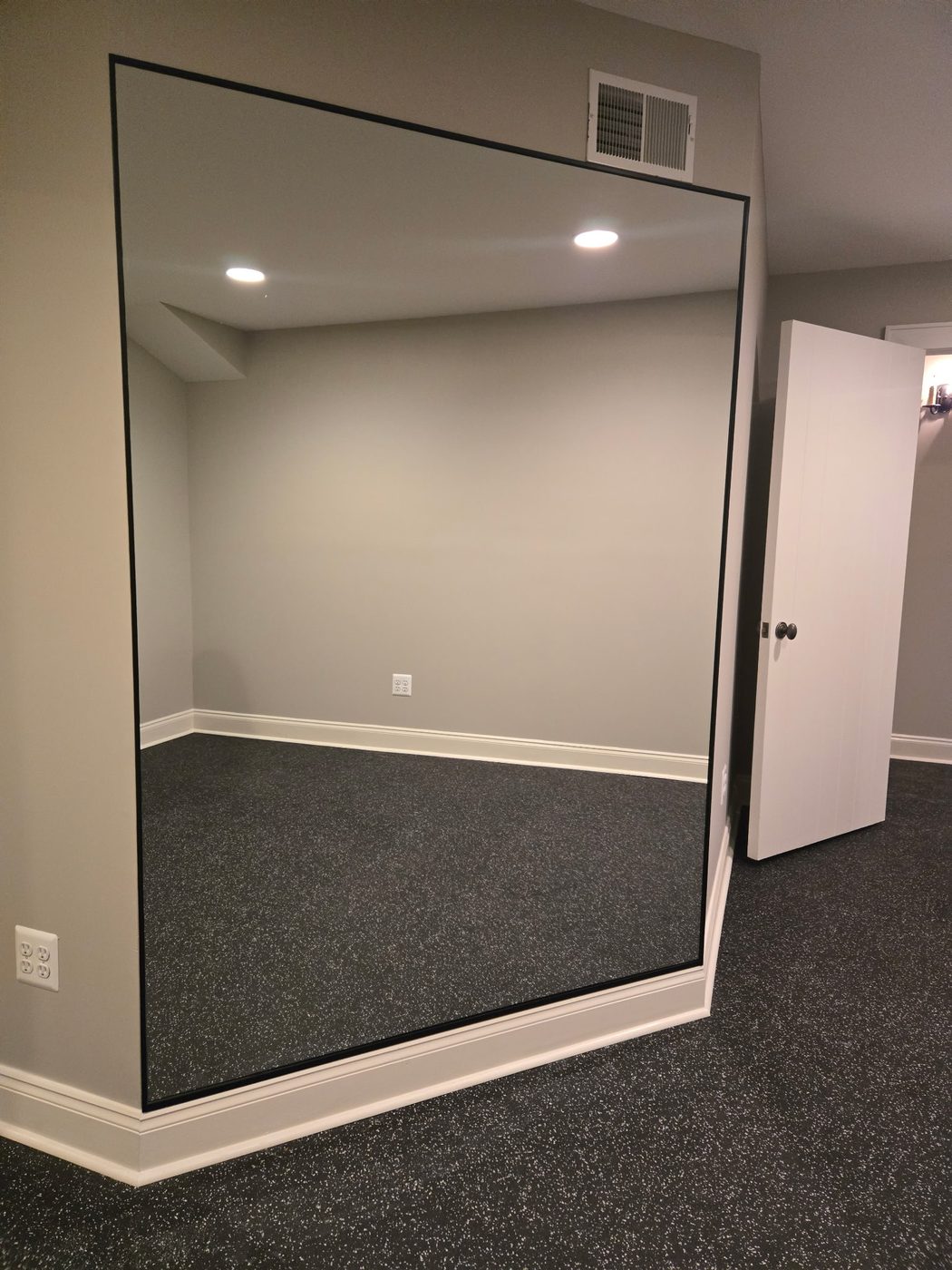
A mirror over a vanity has a countertop to land above. One that runs on down toward the floor meets the baseboard instead, and the baseboard stands proud of the wall by the thickness of its trim, so the glass cannot slide down behind it. That leaves a choice. The mirror can stop just above the baseboard's top edge, the glass can be notched to step around it, or the baseboard can be cut back so the mirror reaches the floor. Stopping above it is the one we tend to recommend: the trim stays whole, and the bottom edge gets a clean, continuous line to sit on. That line is taken at both ends of the piece, since a floor that has settled carries its baseboard down with it.
The rest of what lives at floor level matters as much. A baseboard heater or a floor register wants open air in front of it, so a mirror is kept clear of heat rather than parked over it. Outlets low on the wall get measured and either worked around or kept below the glass. And the bottom edge of a floor mirror takes more knocks than any other part of it, from a vacuum, a shoe or a laundry basket set down too hard, so we leave a little space under it and give that edge a proper polish rather than a rough seam. A large piece is carried on concealed clips or a cleat sized to its weight, not on adhesive alone.
In a Wayne lake cottage from the 1920s or 30s, or a Cape Cod from the same lake years, a bedroom can be too small to give up floor to a standing mirror. A piece hung flat on the wall does the same job with no footprint at all, running from just above the baseboard to head height beside a window or on the end wall of a closet alcove. Baseboards in houses of that age can be tall and shaped, which makes the clean line above them matter more, and the walls themselves may turn out to be plaster rather than drywall. The fixings are chosen for whichever it is, and we find out at the measure rather than on the day the glass arrives.
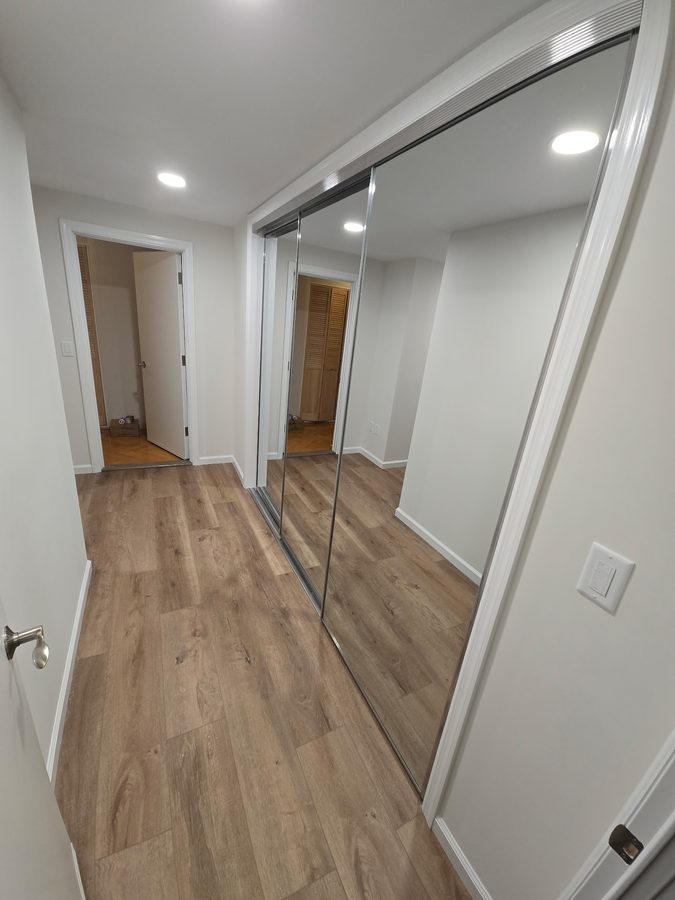
Splits and hi ranches bring walls of their own. The short flights between levels leave landing walls and stair walls that often stay bare, and a full length piece at the top of an entry stair gives everyone a last look on the way out the door. The hall between bedrooms is the other natural spot. Either way the mirror comes down toward a baseboard and, often enough, a register or a heater near the floor, and we measure it with both in view. On a landing the piece is also seen from below as you climb, so its bottom edge and its polish are on show far more than they would be over a sink. It is worth keeping in mind when choosing between a polished and a beveled edge.
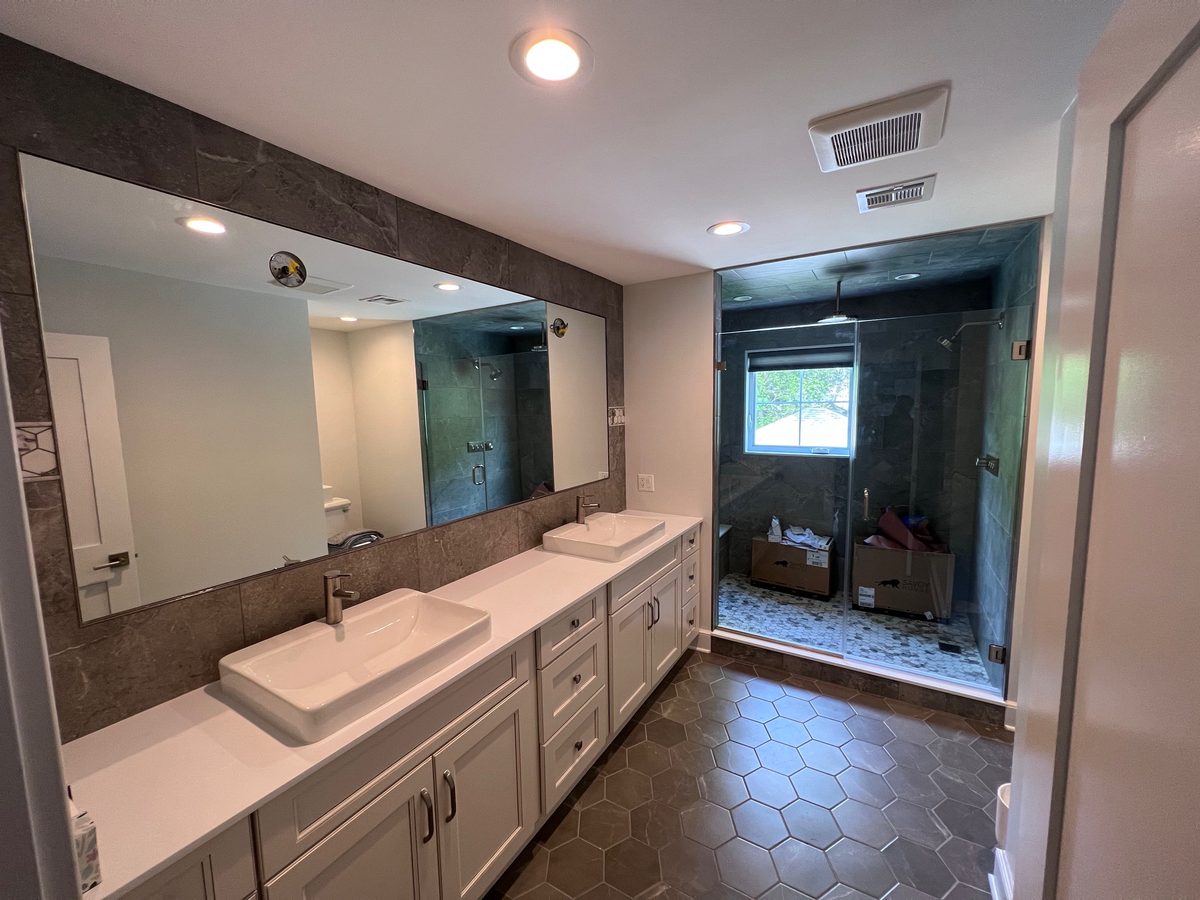
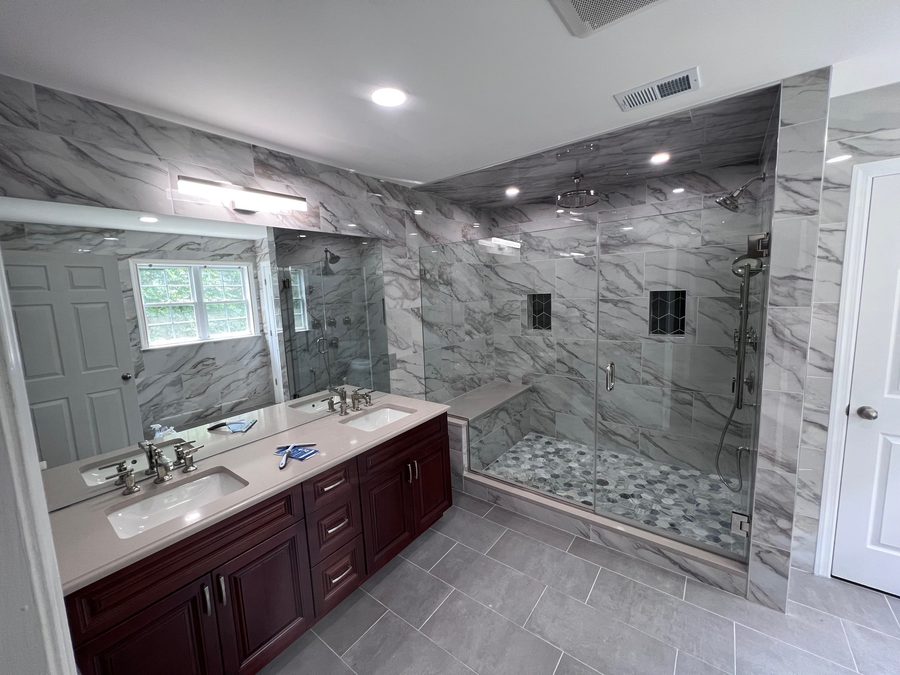
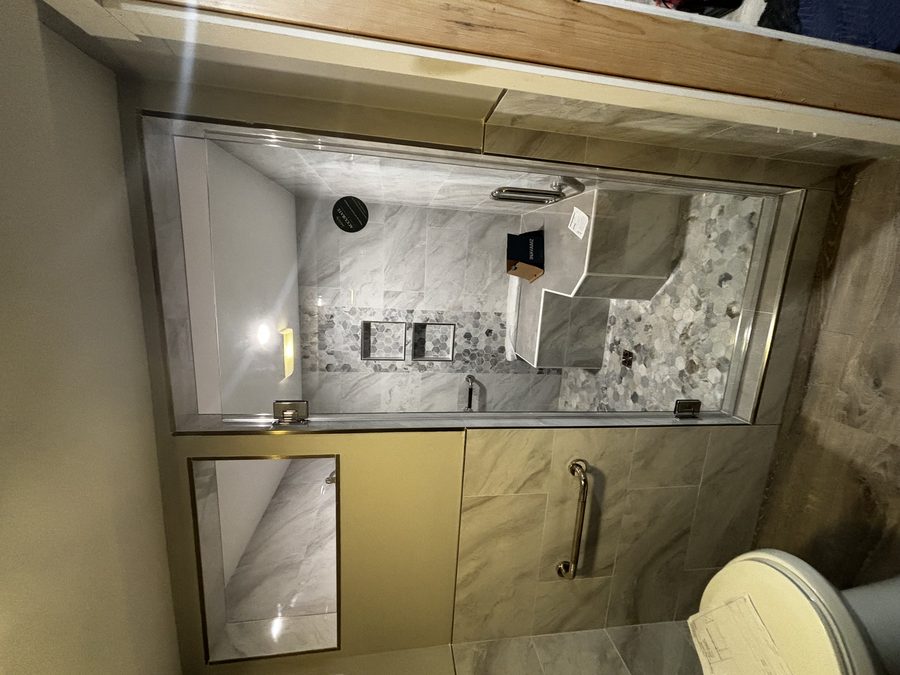
Mirrors from Wayne homes and nearby, over vanities and on bedroom and hall walls. Every piece here was cut and edged at our Lodi shop to numbers taken from the wall it hangs on, down to where it stops at the bottom.
More custom glass in Wayne: frameless shower doors, sliding & bypass shower doors, semi-frameless shower doors, shower door replacement, custom glass shower enclosures. See everything on our Wayne, NJ page. Custom Mirrors nearby: Paramus, Ridgewood, Hackensack, Fort Lee, Lodi, Midland Park, Englewood, Teaneck, Fair Lawn, Mahwah, Wyckoff, Tenafly, Franklin Lakes, Ramsey, Glen Rock, Montclair. Learn more about our custom mirrors across Bergen, Passaic and North Jersey, or read the Vanity mirrors: framed vs. frameless and The complete custom mirror wall guide guides.
Not safely, and we would steer you away from it. A frameless mirror has nothing at its base to grip the floor, so a nudge or a vacuum can walk it out, and a large piece falling flat is a real hazard. The same look comes from hanging it low and plumb, with nothing tilting. If you want a true lean, it needs a frame and an anchor to the wall, which makes it furniture rather than a mirror we would hang.
Yes, and it comes up often with an old frame worth keeping. Bring us the frame or the rabbet dimension, which is the inside groove the glass drops into rather than the visible opening, and we cut to that with a little clearance so nothing binds. Corners are the part to check, since an old frame is rarely square and a mirror cut to a perfect rectangle will sit proud in one of them. We can template it for you.
It can, with the right fixings. Paneling is thin and grooved, so adhesive touches the ridges and little else. We fasten through it instead, with clips or a cleat that reach solid framing, and keep the mirror's edges off the grooves so the piece sits flat. If the paneling is coming down someday, say so, because a mirror hung before a wall is redone will have to come off again when it is.
The glass is the same; the install may not be. A lower level wall runs cooler and can hold more moisture than one upstairs, so we choose the adhesive and the fixings for that surface, keep a little air behind the piece, and seal the edges properly. If the wall has ever shown damp, fix that before anything goes on it, since a mirror will not cure a wet wall and hides one well enough that nobody notices for a while.
Yes, with two conditions. The door has to be solid rather than hollow core, because a hollow one will not hold the fixings and flexes every time it shuts. And the piece has to be sized to clear the hinges and the door stop. We cut those with the corners eased and fit them with cleats rather than adhesive alone, since a door gets slammed and a mirror held on by glue will eventually let go of it.
After, always. Paint has to be fully cured before a mirror is set against it, because adhesive on fresh paint can pull away later and take the skim coat with it. The same goes for wallpaper. Give the finish a few days, then we install against the surface that is going to stay. If we measured earlier we confirm the numbers against the finished wall before the glass is cut.
Look at the foot of the wall before you call (201) 507-5918: a tall baseboard, a heater or a floor vent each change where the glass should stop. Say how close to the floor you want it, and the free measure at your Wayne house works out the rest.
Look at the foot of the wall before you call (201) 507-5918: a tall baseboard, a heater or a floor vent each change where the glass should stop. Say how close to the floor you want it, and the free measure at your Wayne house works out the rest.
Text Jessica directly with photos. To speed things up, include: