A semi-frameless enclosure puts one strip of metal into a room that was drawn to the quarter inch. In a designed Montclair bath, with the tile layout, the niche and the grout joints all settled on purpose, that strip is not a detail anyone can wave off. Land it on a joint, or clearly away from one, and the metal simply finishes an edge. Land it half an inch off a joint and it becomes the thing you look at every morning for the next twenty years. So where it goes belongs to the design, not to the install.
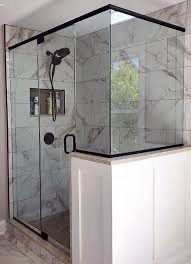
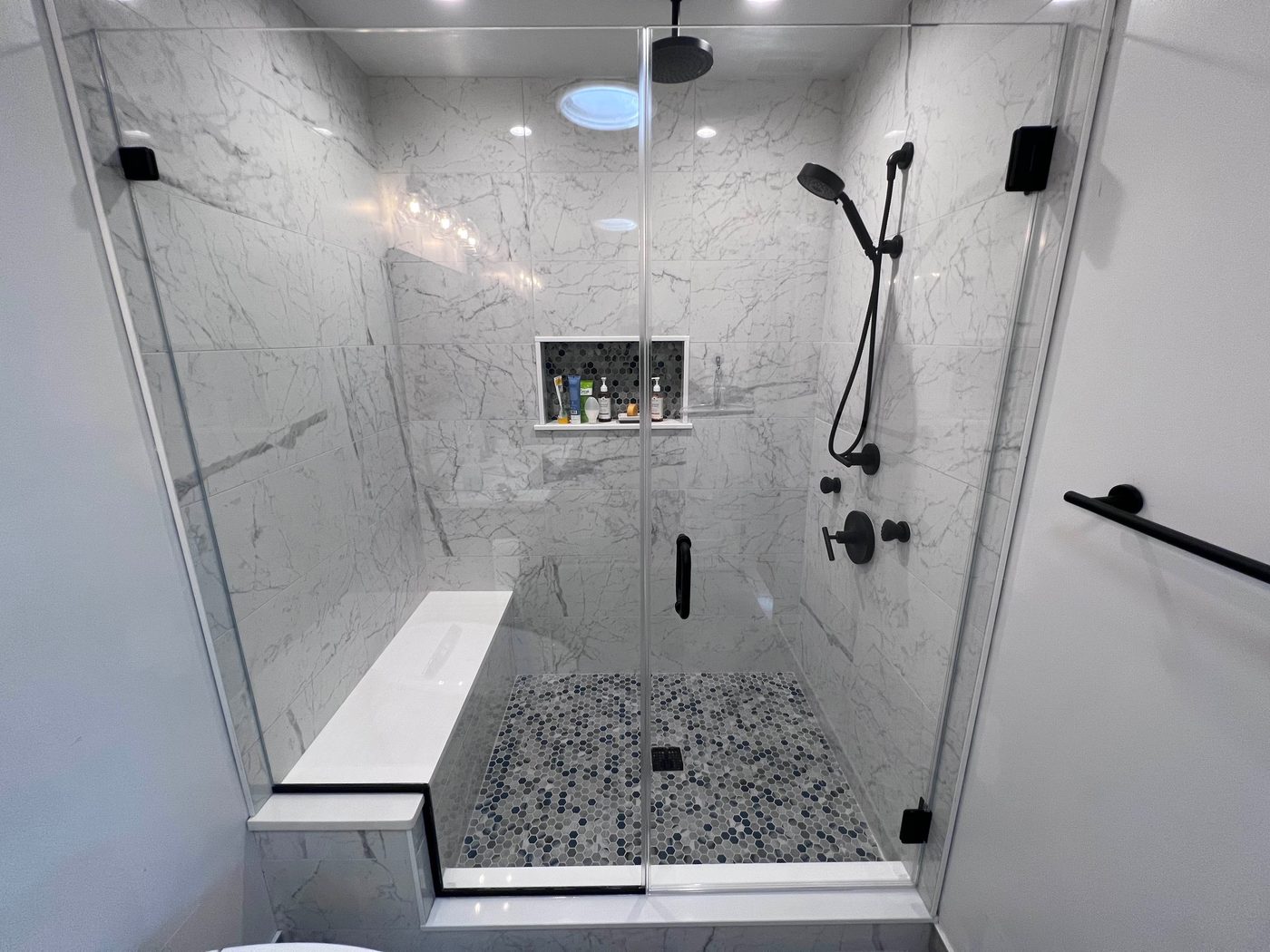
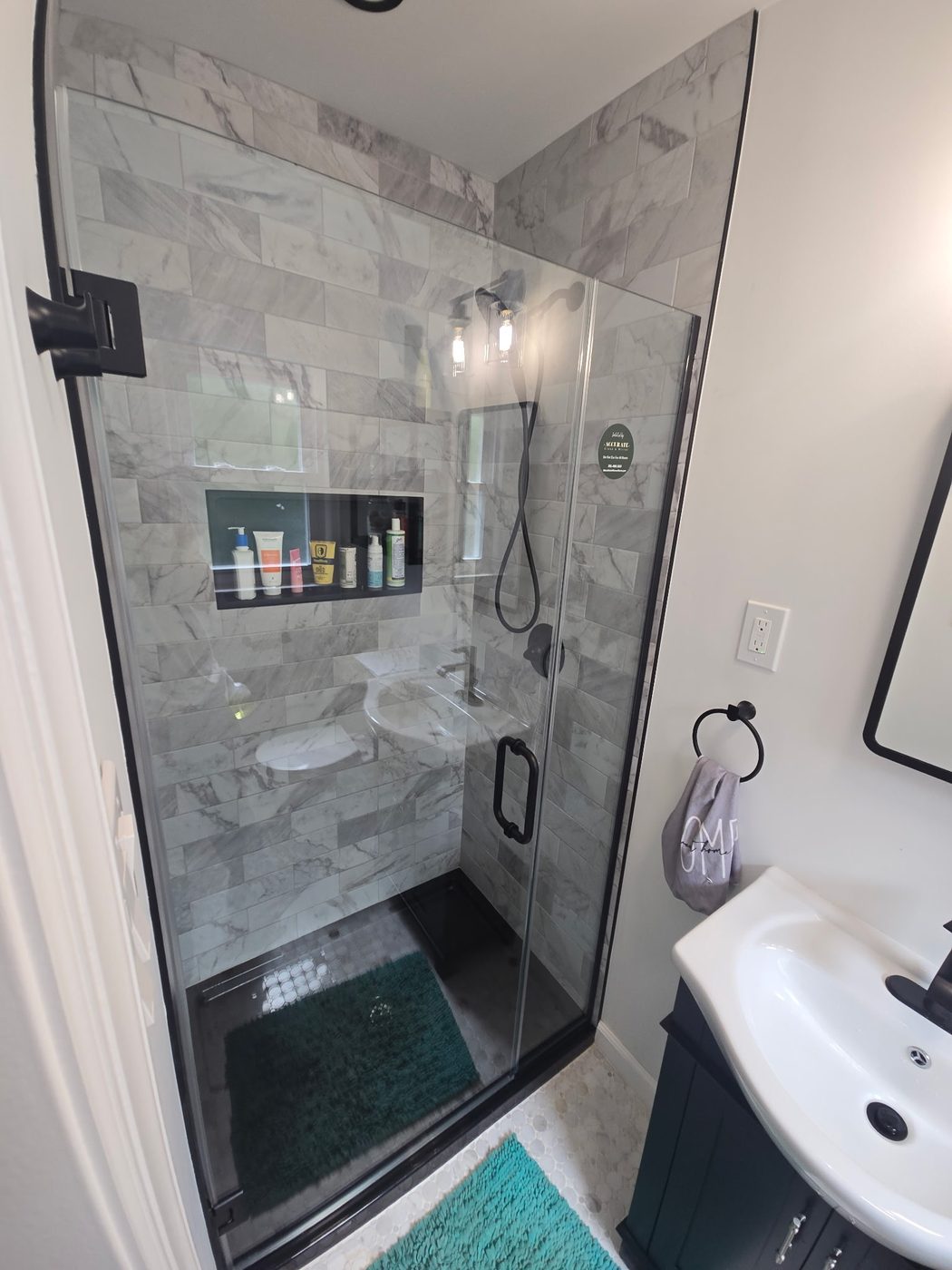
Stand in a finished bathroom and count the horizontals. The top of the wainscot, the head of the niche, a band of accent tile, every grout joint on the wall. A semi-frameless enclosure adds one more, and where that one lands decides whether it belongs to the room or fights it. Metal sitting a half inch off a grout joint reads as a mistake, because the eye pairs the two and sees the gap between them. Sitting on the joint, or clearly away from it, the same piece stops competing with the wall. The logic runs vertically as well, where a jamb channel lands beside a corner or a tile edge. So we treat the tile layout as part of the measure rather than as background, and place the metal against it. That costs nothing to get right, as long as it is decided with a tape still on the wall.
The channel is doing structural work, so where it can go is bounded before the tile gets a vote. It has to sit where the enclosure carries weight and where water has to leave the glass, and inside those limits there is usually an inch or two of latitude. That latitude is the whole negotiation. Slide the metal down to meet a grout joint and the panel edge follows it, which takes the same inch off the door, so a tile driven move gets paid for somewhere in the glass. Where the two genuinely disagree, we mark both versions on the wall, photograph them, and hand the decision to whoever owns the design, because it is a looks question dressed up as a technical one. We do not settle it quietly at the cutting table.
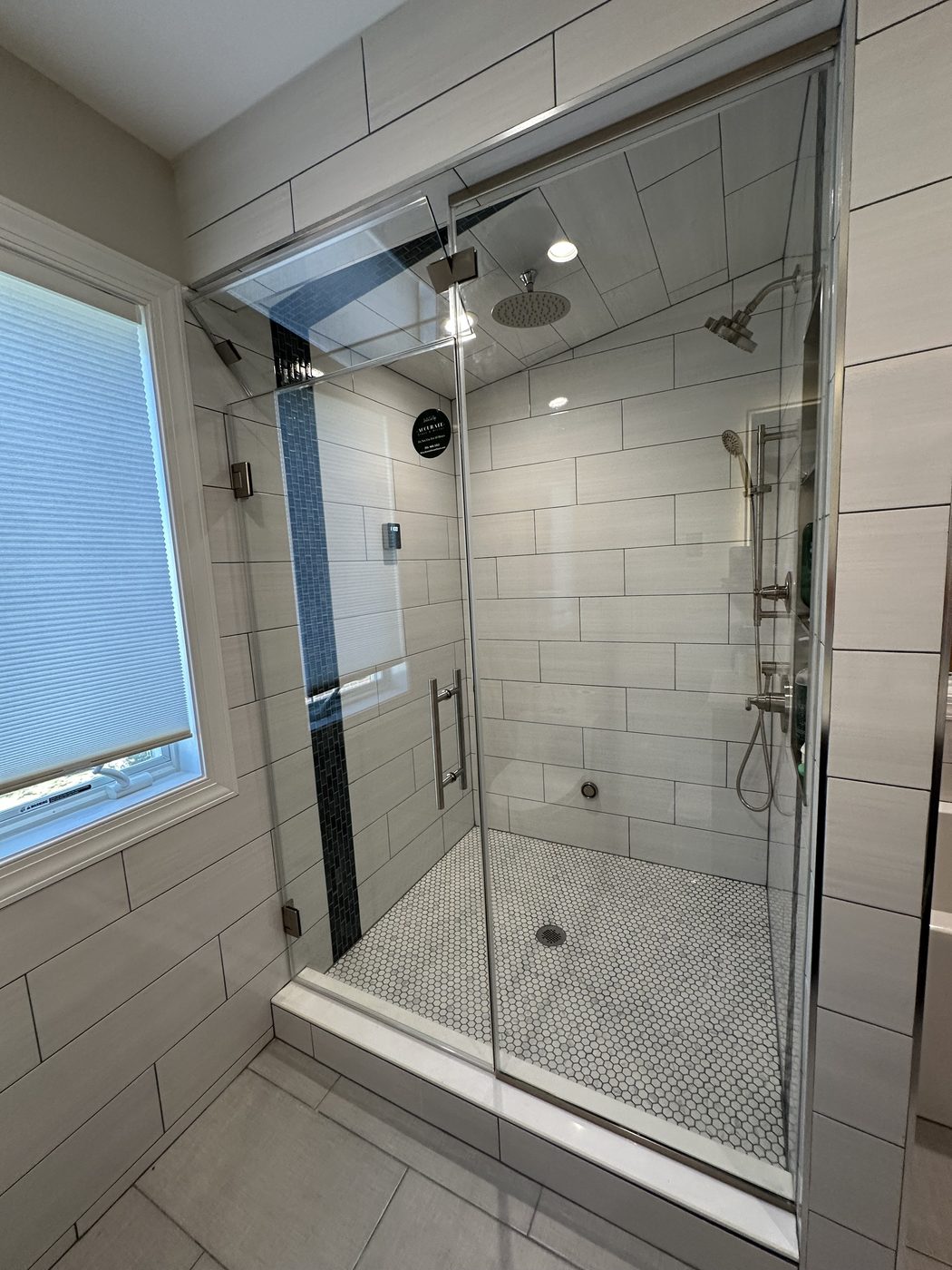
Work here often starts in an envelope: drawings, and a finish sample taped to a card. The drawings carry the intent: which edge the door opens from, how tall the glass runs, what the metal is meant to be. The sample carries the rest, because a brushed nickel chip that looked right taped to that card can go flat against the particular white of the tile somebody chose. So we hold it there, on the wall, under the light the bathroom actually has, and flat rather than at an angle, since a brushed finish reads differently the moment light rakes across it. Behind that tile, in housing this old, there may be lath and plaster, or board from a later renovation. Which of those it is decides what an anchor can bite into, so we would rather know it at the template than find it with a drill.
Then the wall gets marked. Once the room is tiled, grouted and cured, we measure the opening and draw the metal where we think it belongs, in pencil, on the tile itself, with the sample beside it. That is the last moment when a half inch either way is still free. Photograph it, send it to whoever is running the design, and the call gets made looking at the real thing instead of a drawing. If the design team would rather compare finishes side by side first, Lodi is about sixteen minutes north, with the selection wall in it. After that the panels are cut and edged in our Lodi shop, our own crew sets them, the old enclosure leaves with us, and the written quote is itemized and firm.
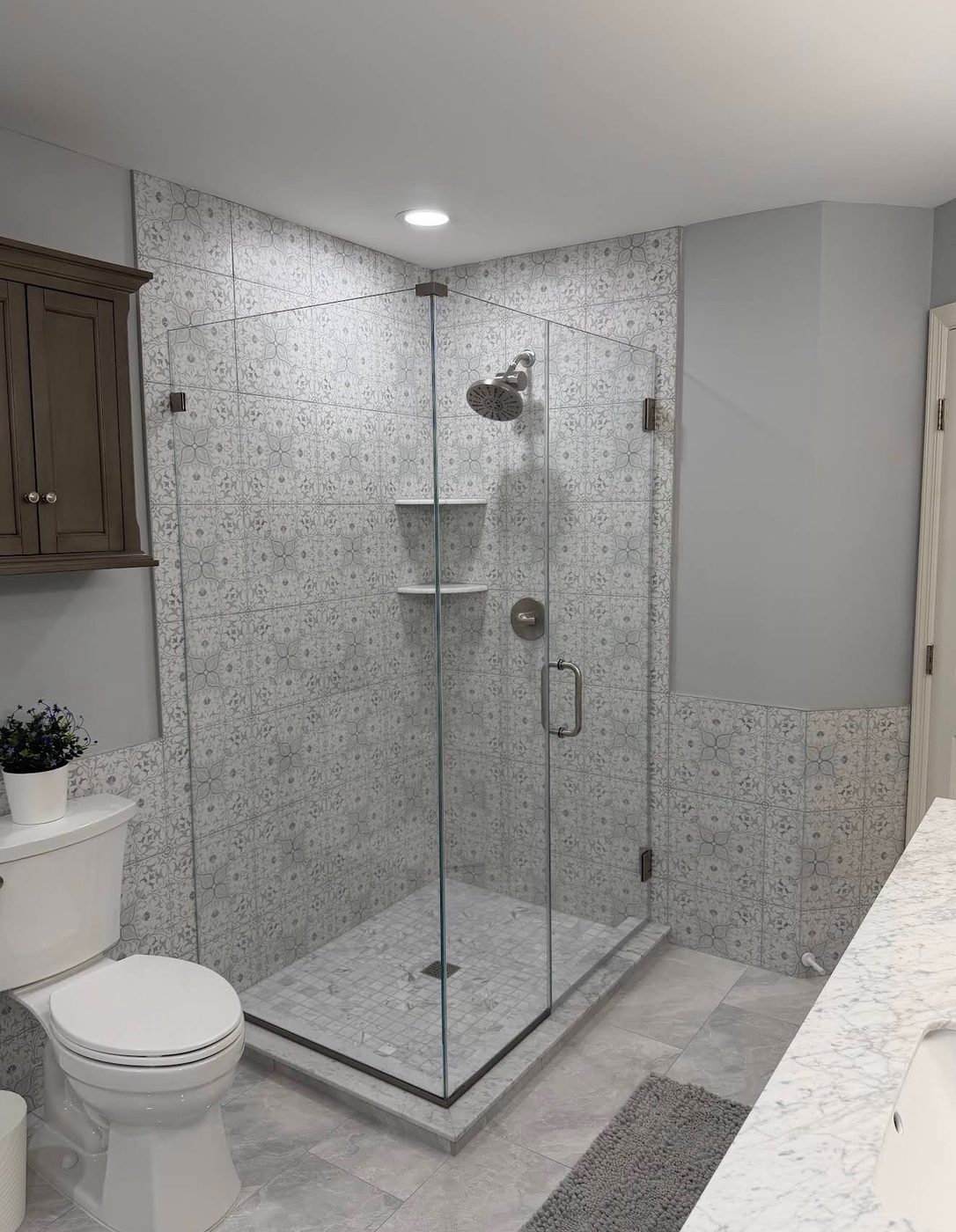
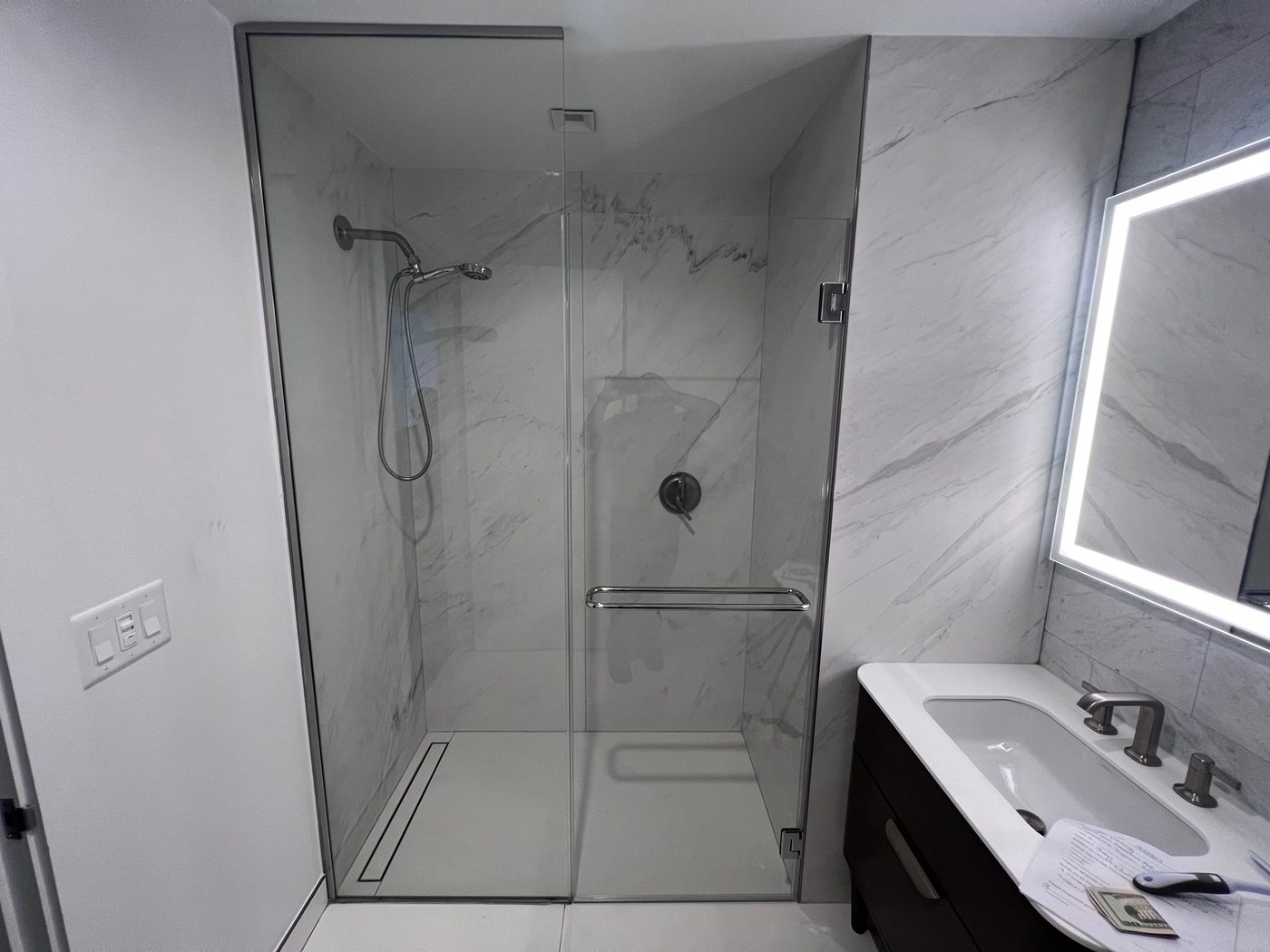
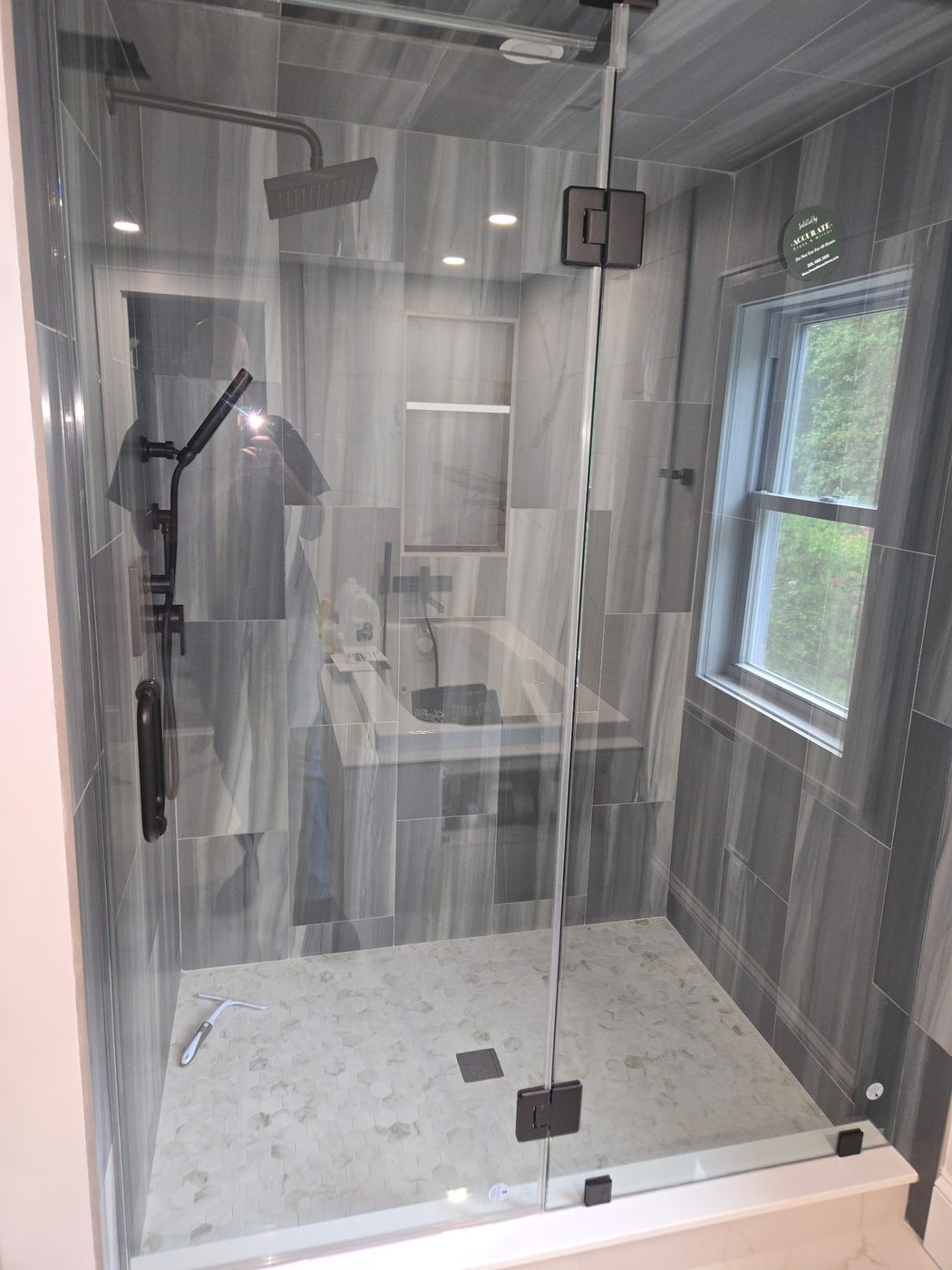
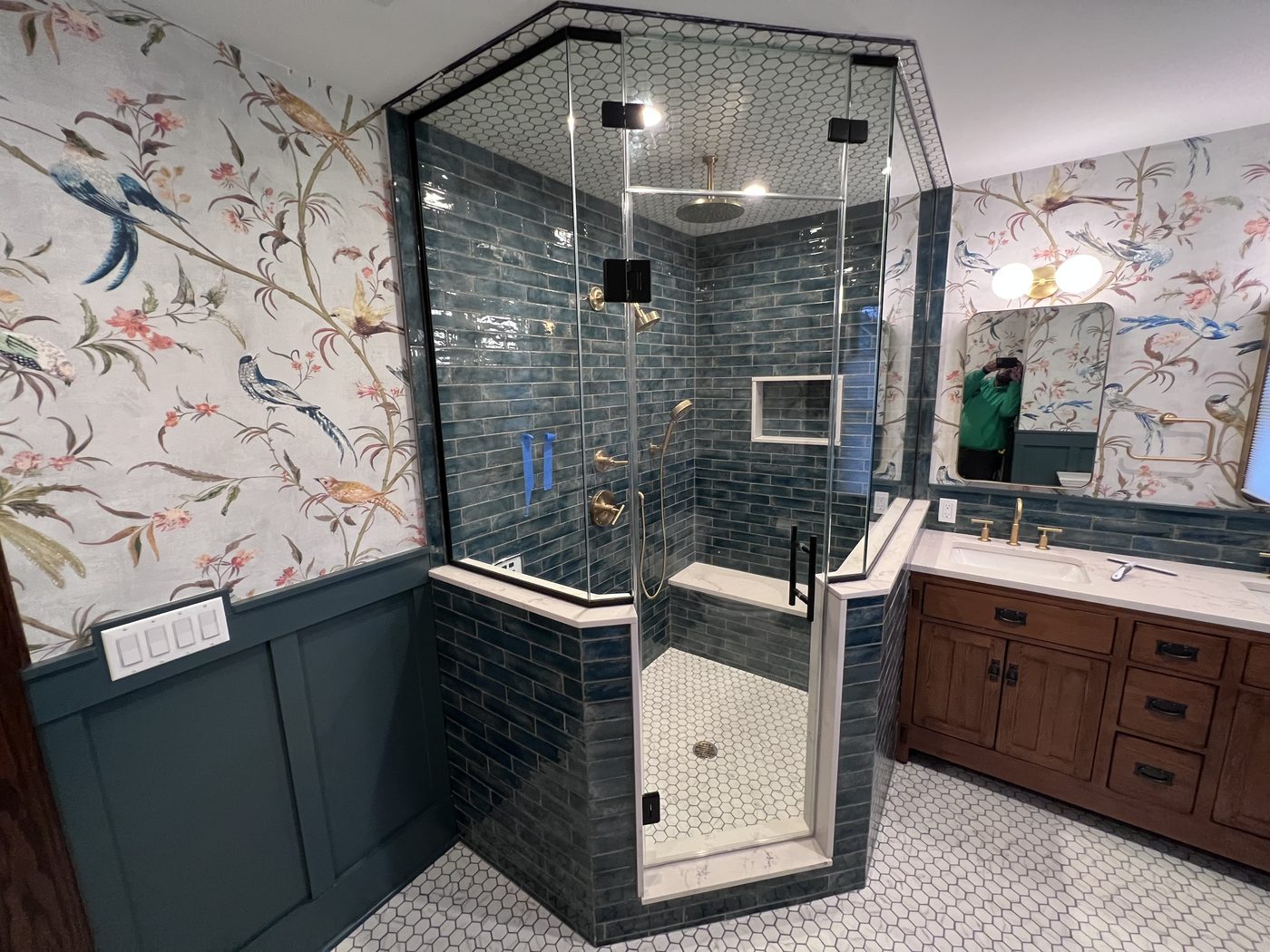
Enclosures where the metal was placed against the grout joints, from Montclair bathrooms and from Verona, Glen Ridge and Bloomfield nearby. Enlarge one and follow the metal: which edges carry it, where it stops, and how the line sits against the grout joints behind it.
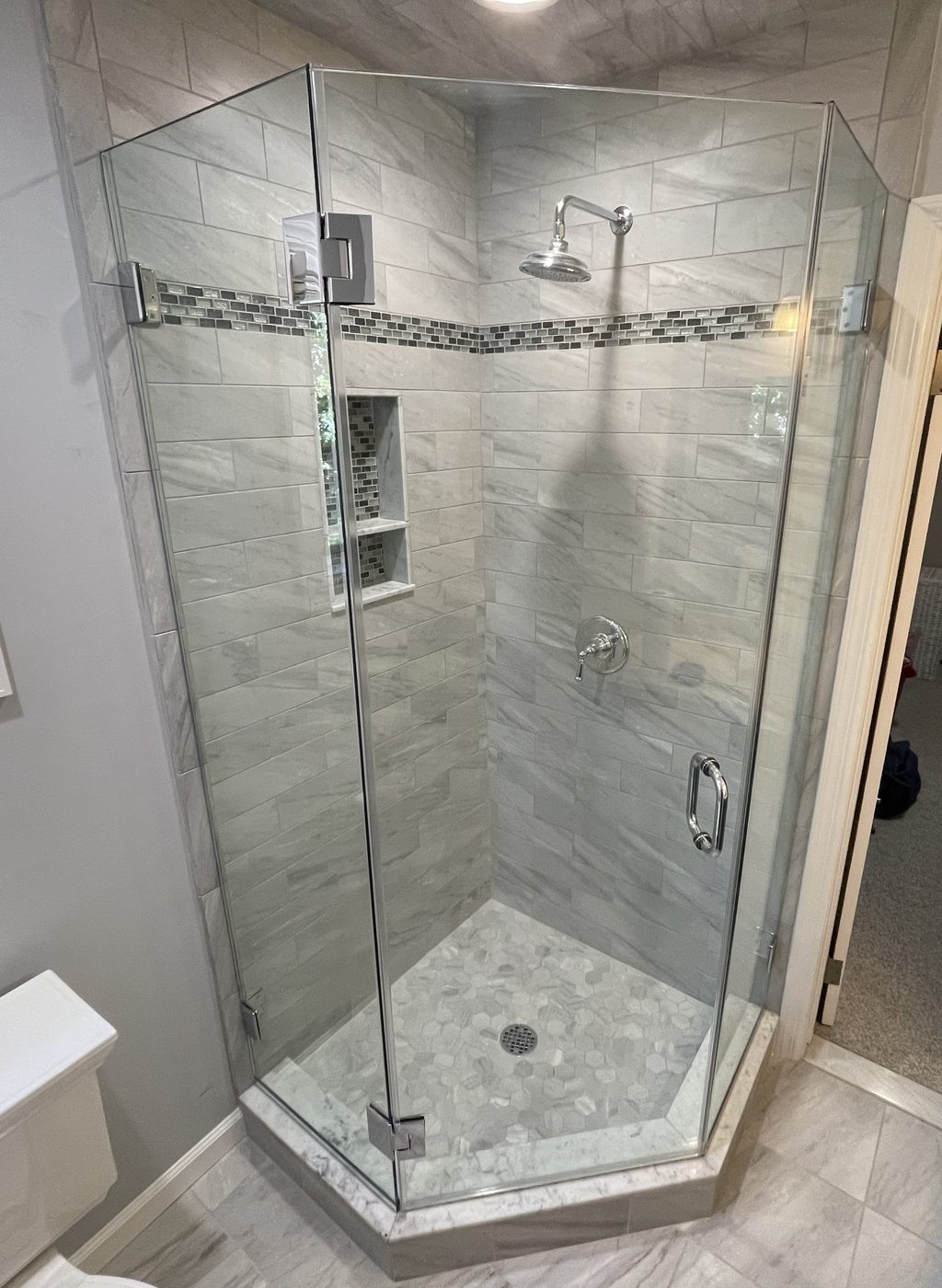
More custom glass in Montclair: frameless shower doors, sliding & bypass shower doors, shower door replacement, custom mirrors, custom glass shower enclosures. See everything on our Montclair, NJ page. Semi-Frameless Shower Doors nearby: Paramus, Ridgewood, Hackensack, Fort Lee, Lodi, Midland Park, Englewood, Teaneck, Fair Lawn, Mahwah, Wyckoff, Tenafly, Franklin Lakes, Ramsey, Glen Rock, Wayne, Carlstadt, Paterson. Learn more about our shower doors & enclosures across Bergen, Passaic and North Jersey, or read the Frameless vs. semi-frameless: which is right? and How much do shower doors cost in NJ? guides.
Whoever can decide without making a phone call. Two questions come up with a tape in hand: where the metal lands against the tile, and which edge the door opens from. If the design team is running the finishes, ten minutes of their time at the template saves a week of messages afterward. If coordinating anyone is a nuisance, we photograph the options, mark them up and send them over, and no glass is ordered until somebody says go.
Yes, and the time for it is before any tile goes up. From the plan we can tell the setter roughly where the channel will stand, and the setter decides where the cuts go so a joint lands on that line or well clear of it. The exact position still comes from the finished wall at the template, so treat the early mark as a target rather than a promise.
We carry polished chrome, brushed nickel, matte black and oil rubbed bronze. Oil rubbed bronze is the warm one of those, and next to a warm brass faucet it reads as a companion rather than a twin. If your plan is built around a finish we have not named here, we would rather tell you so while we are measuring than have you find out once the enclosure is hung. Often the answer is to let the faucet lead and keep the glass hardware quiet.
It is bedded and sealed where it meets tile, because that joint is a water path. Taking it off later is possible the way anything fastened and sealed is possible, but it leaves anchors and a sealant line behind, and on older tile that removal is the delicate part rather than the drilling. Which is an argument for settling the position before we build, not for planning to move it.
Sometimes, and it has nothing to do with settling. The channel is metal you can place on purpose: set to a grout joint, it closes off the tile field the way a strip of trim would, which some rooms want. It also gives the bottom edge a defined line to close against, so that leak path is handled by shaped metal rather than a bead of sealant. On true walls both builds are open to you, and the choice is about what you want to look at.
On the stone, with clips or a channel bedded into it and sealed. The part worth deciding early is how the glass sits against the outside face of that curb. Set flush, the sealant line is on show along the whole run. Set in by a quarter inch, the stone shows a shadow line and the joint sits back where nobody studies it. On a stone curb that shadow is usually the better looking of the two, and it costs nothing to ask for at the measure.
One photograph of the finished wall answers most of that: where the grout joints run, where the niche sits, how the tile stops at the edge. With that in hand the metal gets placed rather than dropped. The measure in your home is free, and every piece gets itemized in the written quote that follows. Call or text (201) 460-1313.
One photograph of the finished wall answers most of that: where the grout joints run, where the niche sits, how the tile stops at the edge. With that in hand the metal gets placed rather than dropped. The measure in your home is free, and every piece gets itemized in the written quote that follows. Call or text (201) 460-1313.
Text Jessica directly with photos. To speed things up, include: