Behind the tile in an older Carlstadt bathroom there may be plaster, thin blocking, or nothing useful at all. Semi-frameless is the door that minds that least: the slim channel along the wall spreads the weight of the door down the whole jamb instead of concentrating it at two hinge points the way frameless does. You still get heavy tempered glass and an open front, with metal only where it is doing work.
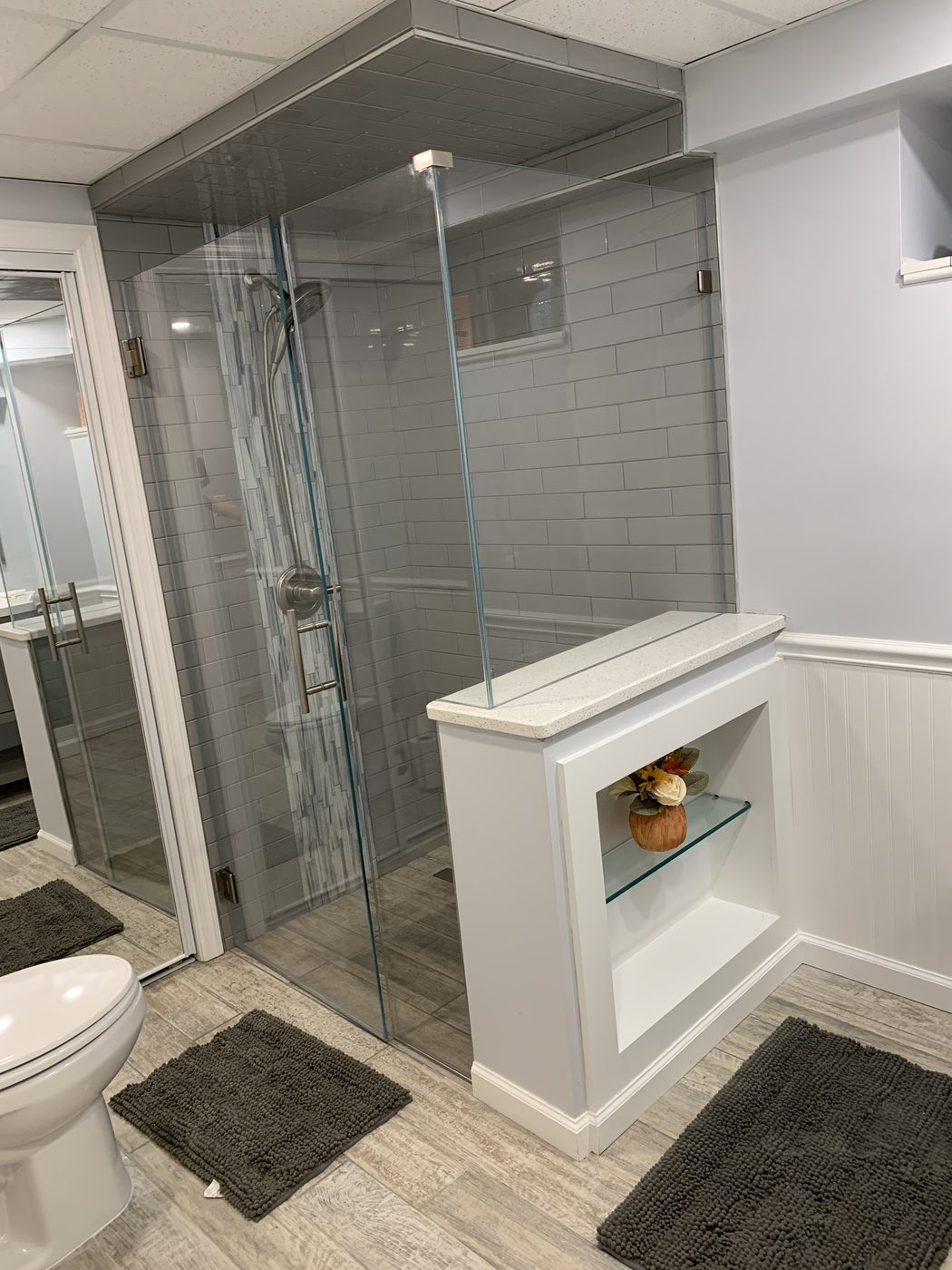
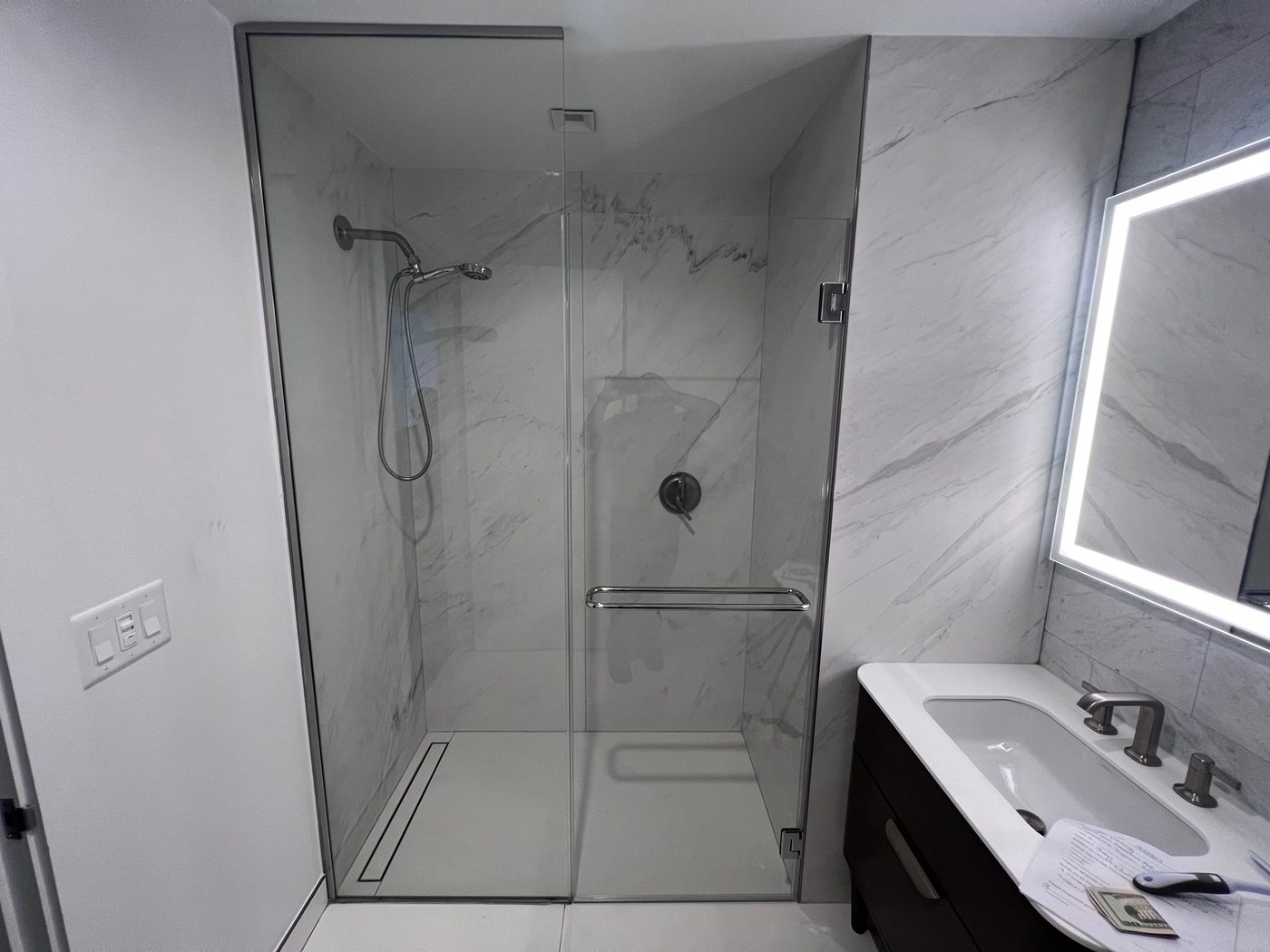
A frameless door puts everything through its hinges. Two or three pieces of hardware take the whole weight of a panel and hand it to a few fasteners inside one narrow band of wall. That works fine where the tile has solid backing behind it, and it is why we sound the wall before quoting frameless work. Semi-frameless changes the arithmetic. The door hangs on a channel running the whole height of the jamb, fastened at intervals along its length, so no single point carries much. Spread the same load over a dozen anchors and the wall barely notices it. In a house built long before anybody thought about hanging heavy glass on its walls, that difference is worth more than the look of a bare edge.
The rest of what the channel does is quieter and shows up later. It holds the strike edge true, so the point where the door meets metal does not wander as the enclosure ages, while a bare edge depends on hinges staying exactly where they were set. It gives the installer somewhere to absorb a wall that leans, since the channel is set to a plumb line and the space behind it is sealed rather than shimmed at two spots. And it gives you serviceable parts: pivots that adjust, a sweep and seals that pull off and replace, and nothing machined permanently into the glass. The panels are the same kind of tempered safety glass. Metal shows here, so pick it on purpose. Brushed nickel is the most forgiving with water spots, polished chrome the least, and matte black holds smudges. Oil-rubbed bronze is on the list as well.
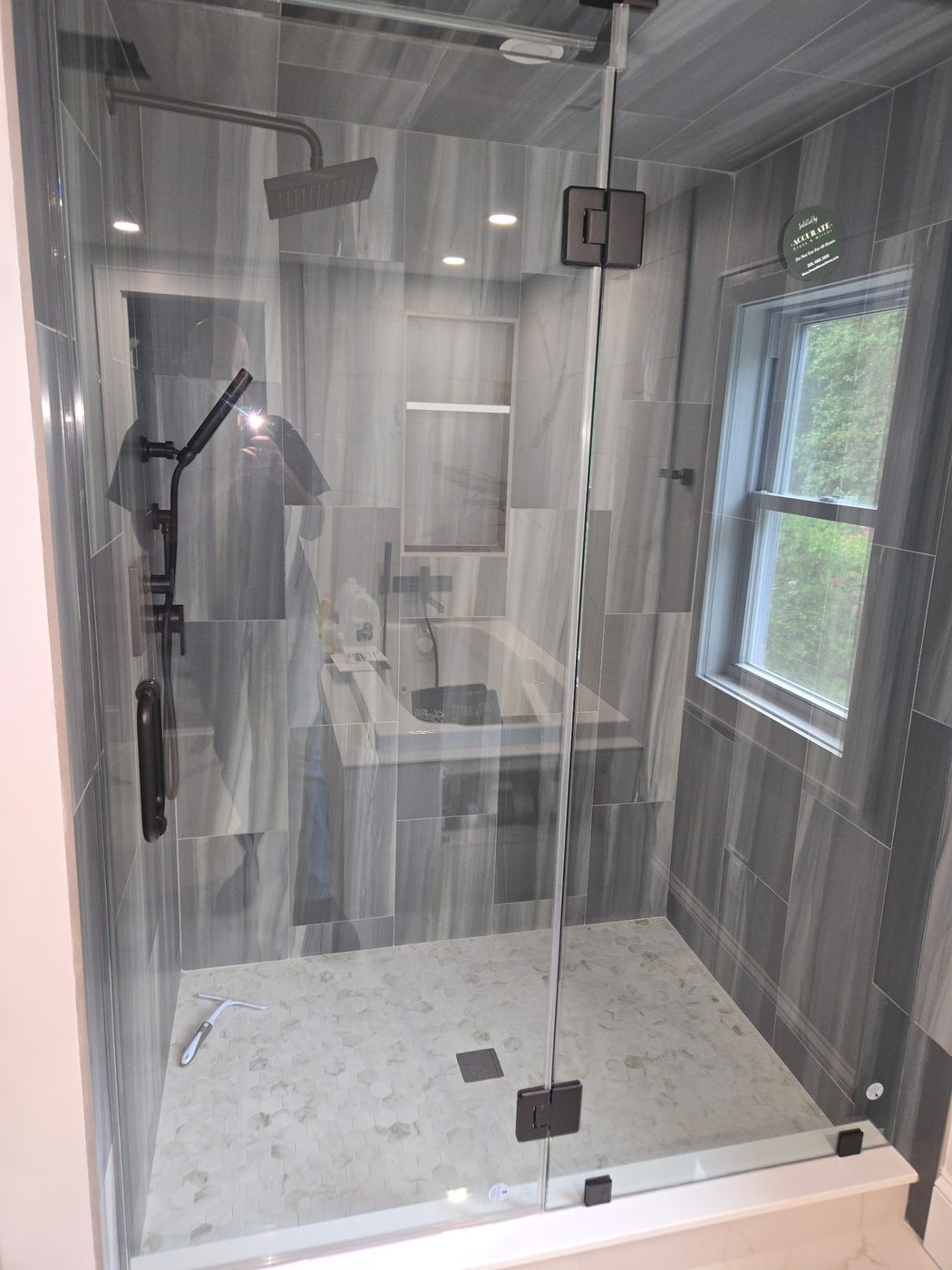
Carlstadt is a small borough where houses stay put. The older ones tend to be kept up and stay in the family instead of turning over every few years, and that changes what somebody wants from a bathroom. This is not a shower being staged for a listing photo. They want the door to keep closing properly long after the tile has stopped being new. Semi-frameless suits that, because every part of it that wears is a part you can get at. Seals and sweeps come off and go back on. Pivots take an adjustment when a house settles a little further. The channel also protects the glass edge that would otherwise catch a knock in a narrow room. None of that shows in a photograph, and all of it decides how the enclosure looks after a few winters of use.
Install day in a bathroom this size is mostly a staging problem. We bring the panels up, protect the floor and anything sitting beside the shower, set the channels first, and hang the door last. Figure roughly a week or two before install day, counting from the measure. We are licensed and insured, our own crew does the work rather than a subcontractor, and whatever we take off the wall goes out with the crew. Because the Lodi shop is about ten minutes from Carlstadt, a forgotten shim or a second pair of hands is a small errand instead of a rescheduled afternoon. And if a monthly payment makes it easier to do two bathrooms in the same year, that option exists and we will lay it out with everything else.
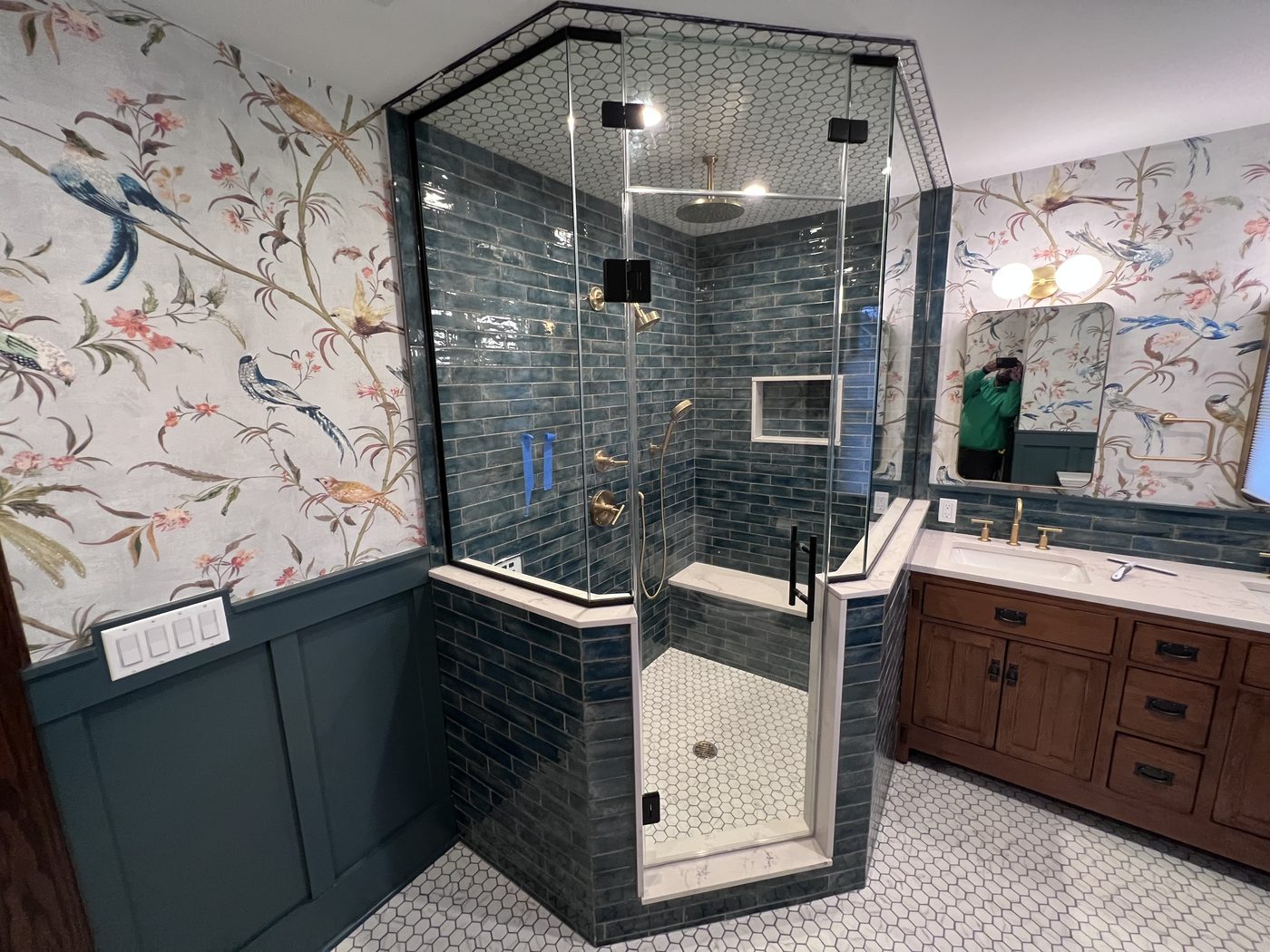
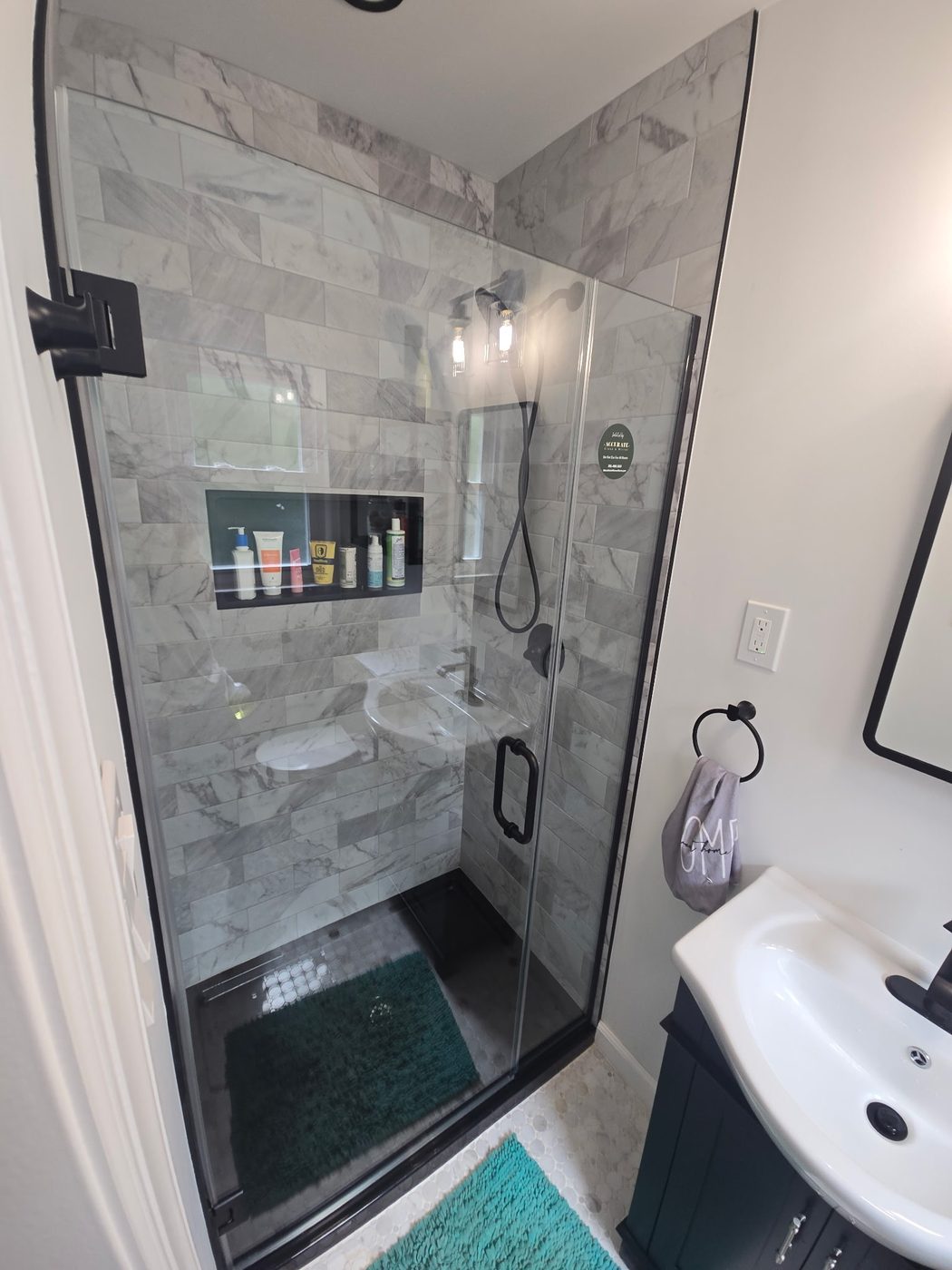
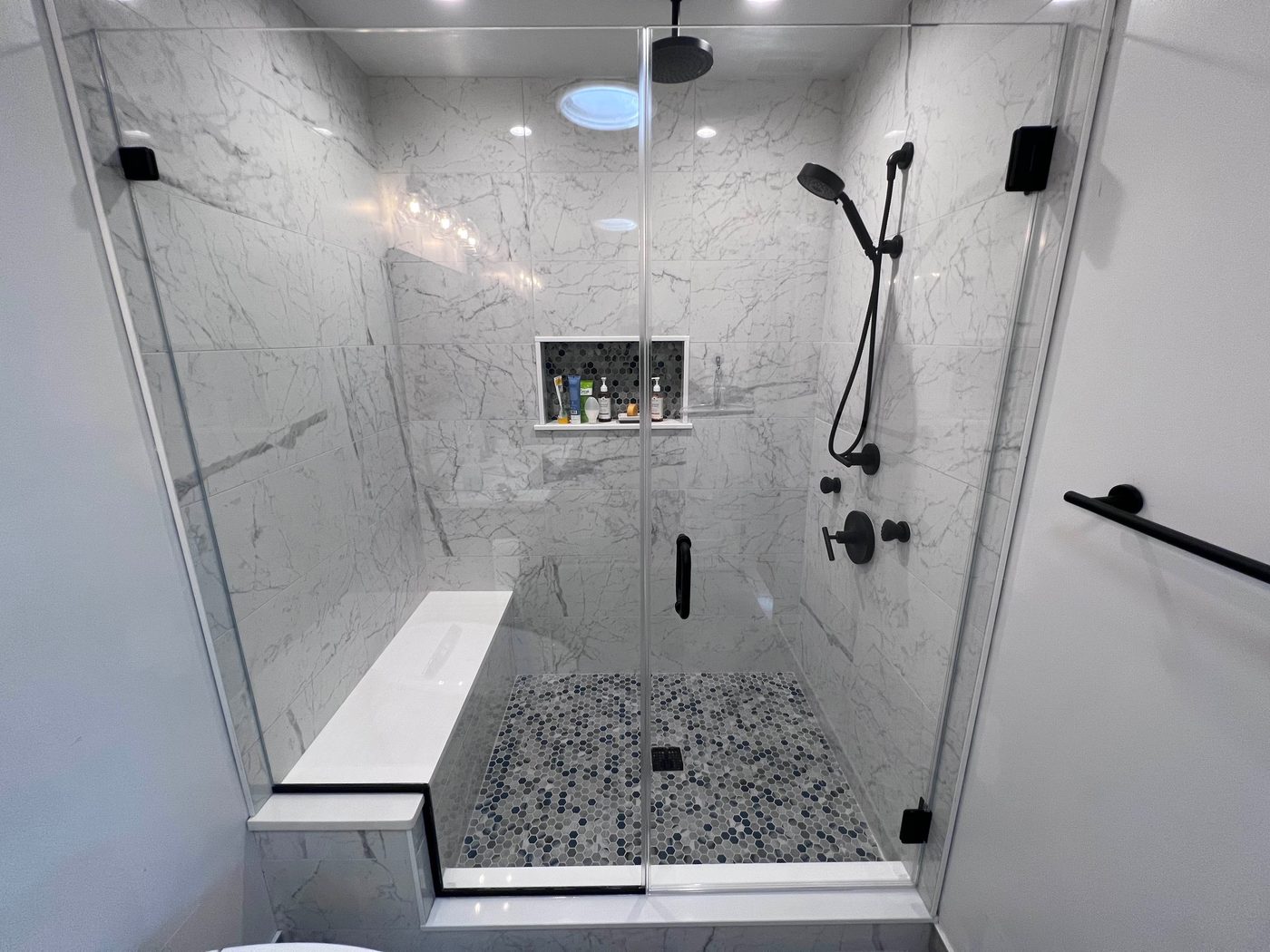
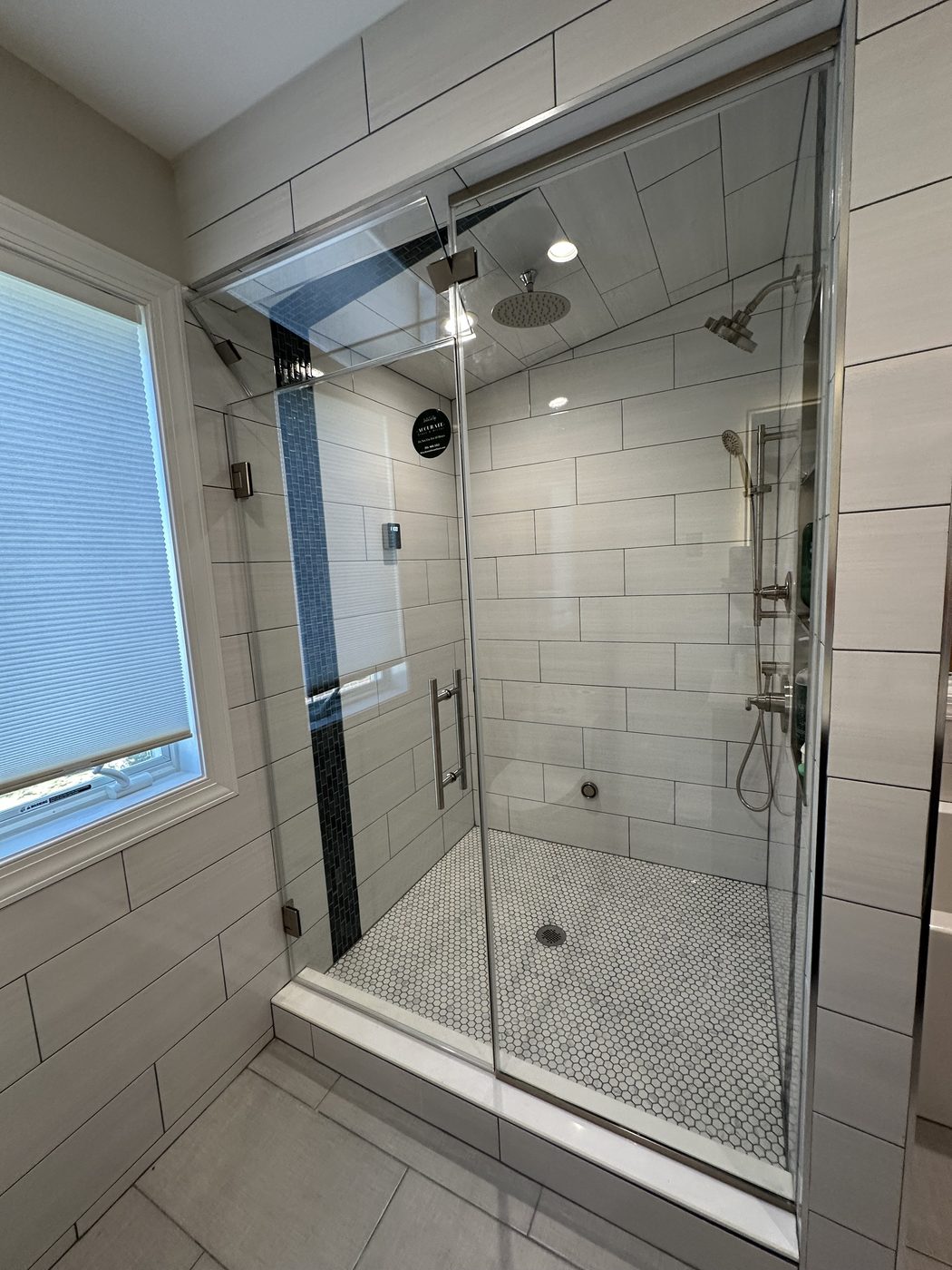
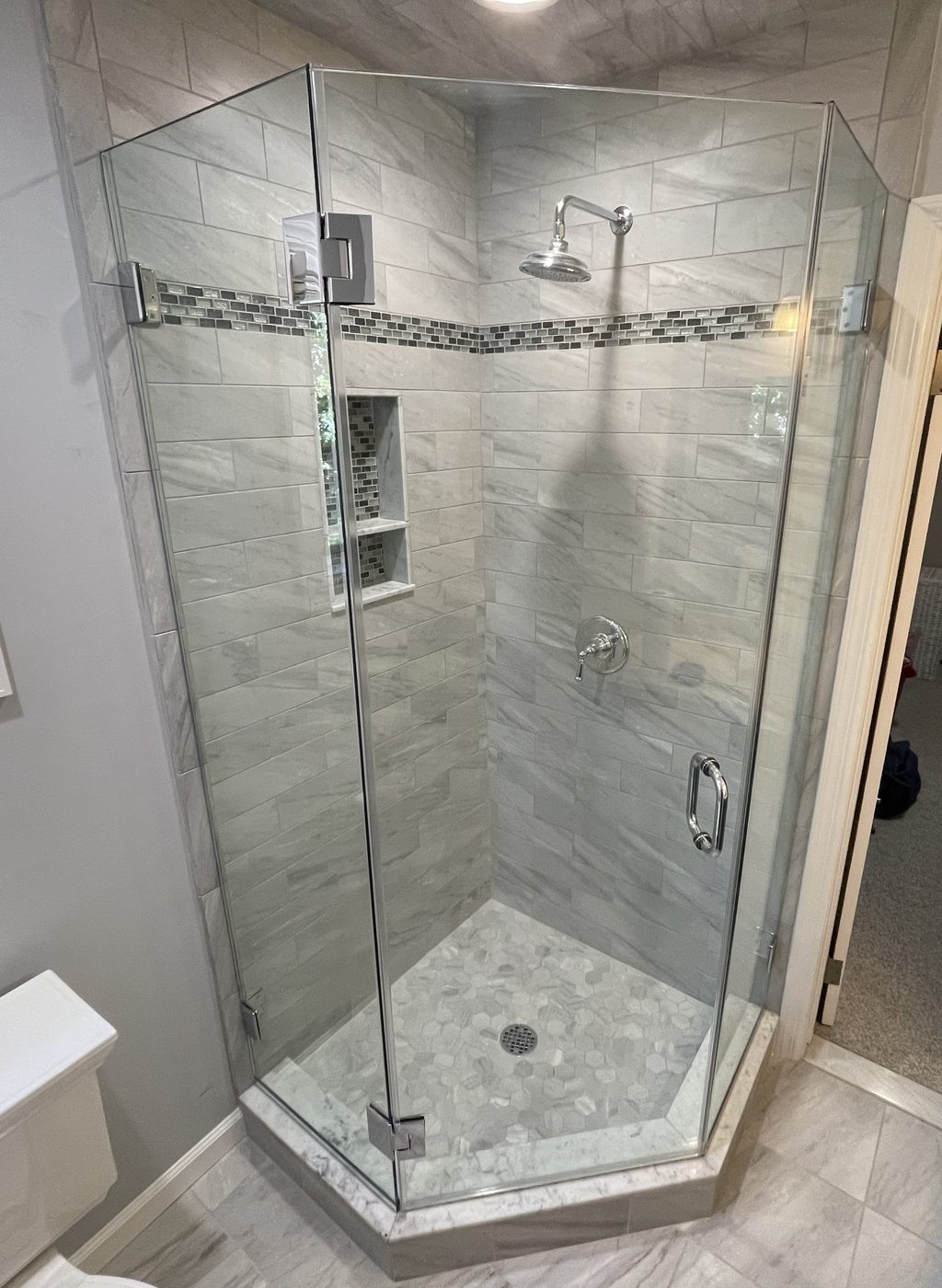
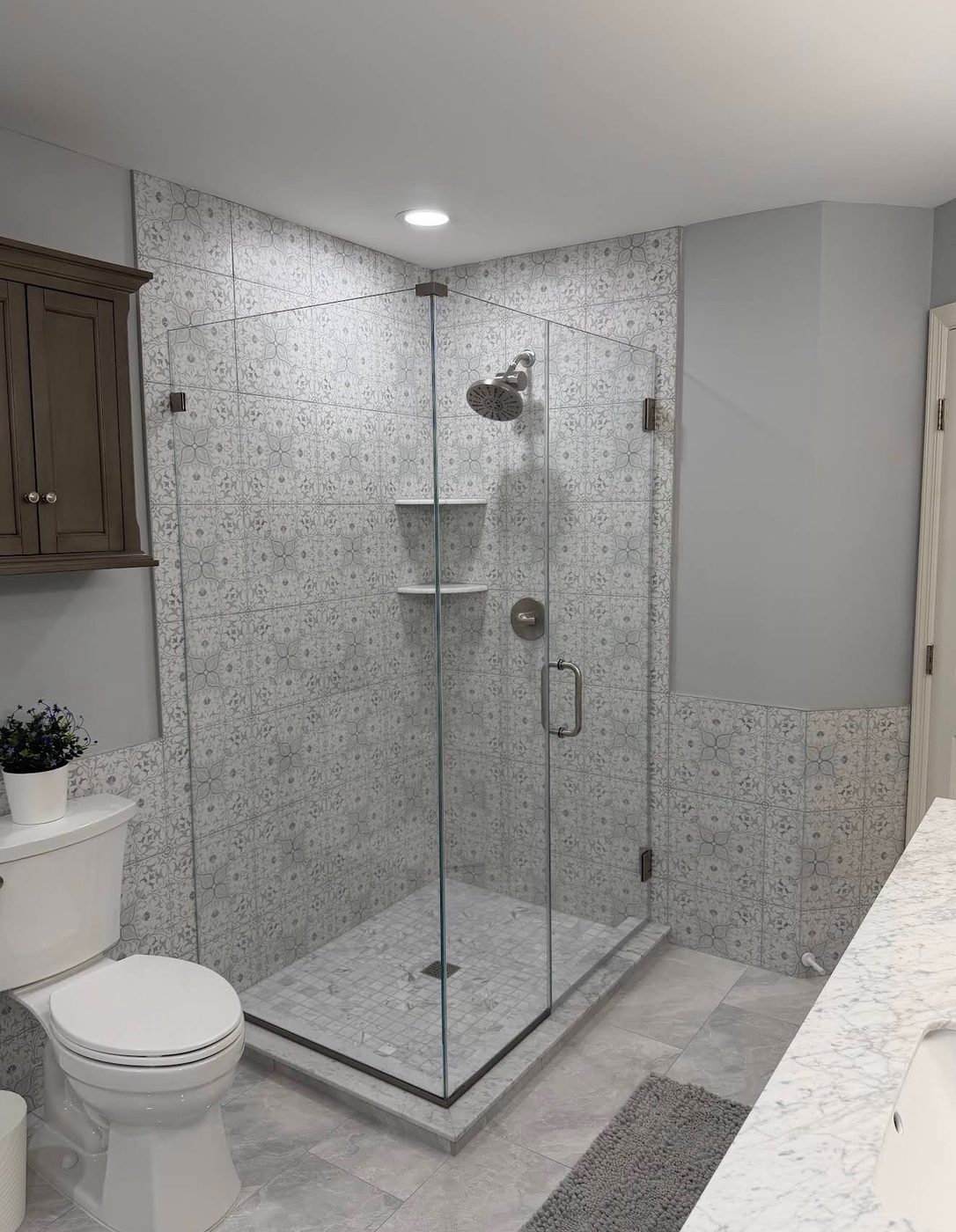
Semi-frameless work from Carlstadt bathrooms and the boroughs near our Lodi showroom, Hasbrouck Heights and Rochelle Park among them. Look at how little metal there actually is, where the channel stops, and how the door meets the fixed panel.
More custom glass in Carlstadt: frameless shower doors, sliding & bypass shower doors, shower door replacement. See everything on our Carlstadt, NJ page. Semi-Frameless Shower Doors nearby: Paramus, Ridgewood, Hackensack, Fort Lee, Lodi, Midland Park, Englewood, Teaneck, Fair Lawn, Mahwah, Wyckoff, Tenafly, Franklin Lakes, Ramsey, Glen Rock, Montclair, Wayne, Paterson. Learn more about our shower doors & enclosures across Bergen, Passaic and North Jersey, or read the Frameless vs. semi-frameless: which is right? and How much do shower doors cost in NJ? guides.
Often, yes. In a house this age the hollow is normally plaster over lath with an empty stud bay behind it, or tile on board with no blocking where somebody later wanted a hinge. If the top of the jamb reads empty, we anchor into what we can find and let the channel bridge the rest. If the whole jamb is dead, frameless is still possible with a header tying the panel back, and we would say so rather than sell you a channel.
Nothing special at thirty two. A hinged door needs enough width to swing clear of its own jamb channel and still leave a comfortable step through, and an opening in the low thirties does that. It gets tight when the opening narrows to the point where a fixed panel beside the door has no room to exist and the door itself starts to feel like a hatch. At that point we would talk about a single door with no panel, hung on the side with the better backing.
Dragging usually means something moved: a fastener worked loose, a wall settled, or the unit was set out of plumb to begin with. The tell is where it drags. Rubbing at the latch edge is an adjustment. Rubbing along the whole bottom means the sweep is worn or the floor has risen, and a sweep is a part you replace. Either way the glass itself is not the problem, which is the main reason these keep working.
The same way it went in, and that is part of the point. The channels are fastened and sealed rather than bonded permanently, so they come off the tile once the fasteners are backed out and the sealant is cut. The door is not drilled through for hinges either, which means a damaged panel can usually be replaced on its own instead of redoing the whole enclosure.
Less than you would expect, and less than a fully framed unit. The metal is a line at the jambs, not a border around everything, so the sightline still runs through to the tiled wall behind. What actually moves light in a small room is the glass itself: clear tempered has a green cast that shows at the edges, and low iron takes that out, which matters most if the tile is white or pale.
It matters for where the bottom of the door lands. A door has to clear the high point of the floor through its entire swing, so on a floor that runs off we set the glass and let the sweep take up the difference rather than trimming the panel short at one end. On a curbed opening, the channel under a fixed panel gets the same treatment.
The wall beside your shower, up near the top of the jamb, is the thing we most want to hear about. A hollow sound there decides whether the door hangs on a channel or on hinges, so knock on it before you call. Booking the free in-home measure takes a minute, and Lodi to Carlstadt is a ten minute drive. Call or text (201) 460-1313.
The wall beside your shower, up near the top of the jamb, is the thing we most want to hear about. A hollow sound there decides whether the door hangs on a channel or on hinges, so knock on it before you call. Booking the free in-home measure takes a minute, and Lodi to Carlstadt is a ten minute drive. Call or text (201) 460-1313.
Text Jessica directly with photos. To speed things up, include: