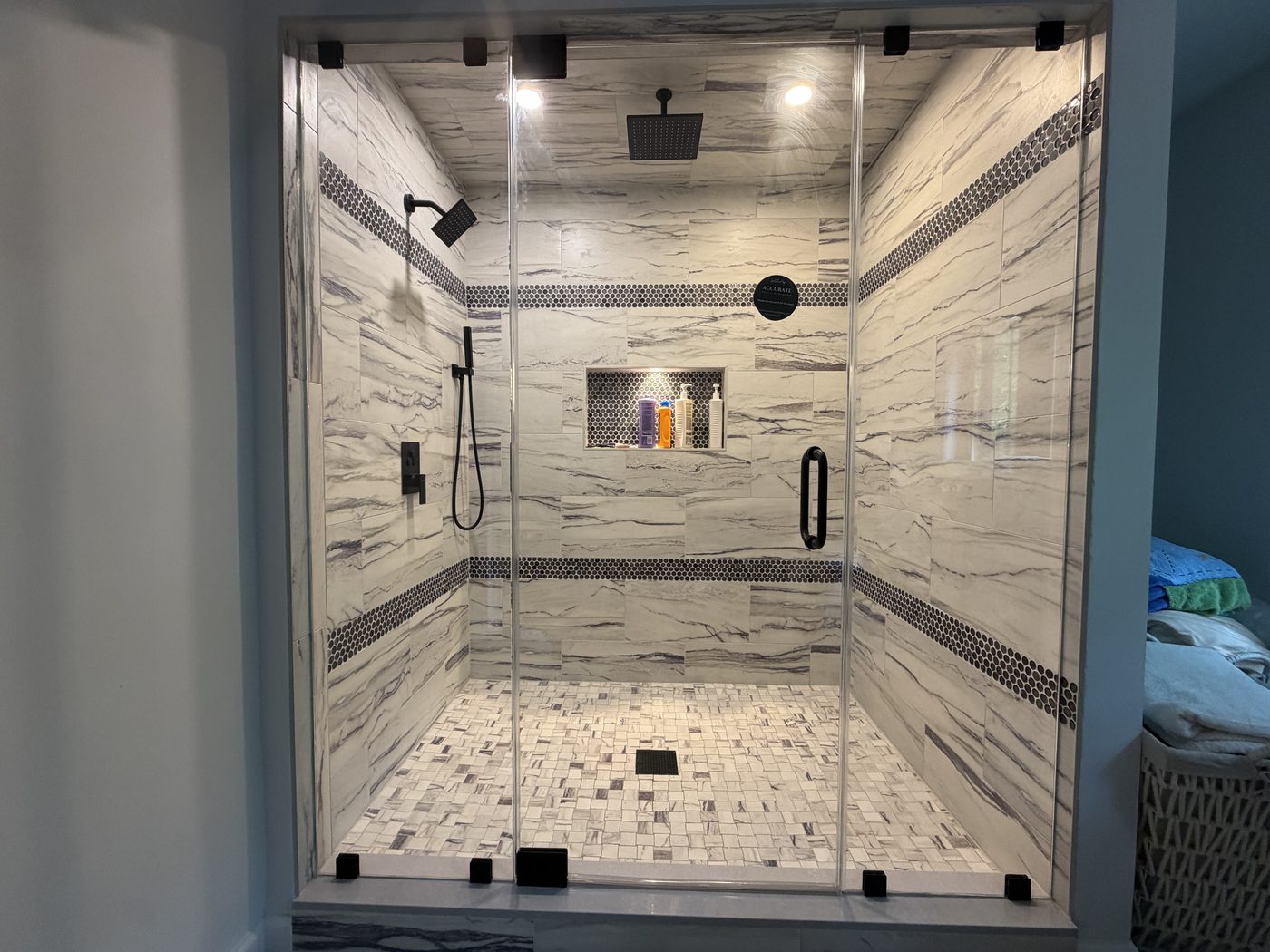
A steam enclosure has one job a normal shower door does not: keep the steam inside. That means glass to the ceiling, a transom panel over the door, and every edge sealed. We build them for renovated Paramus primary suites, cut in our own shop. The in-home measure is free, and we will tell you straight if a room is not set up for it.
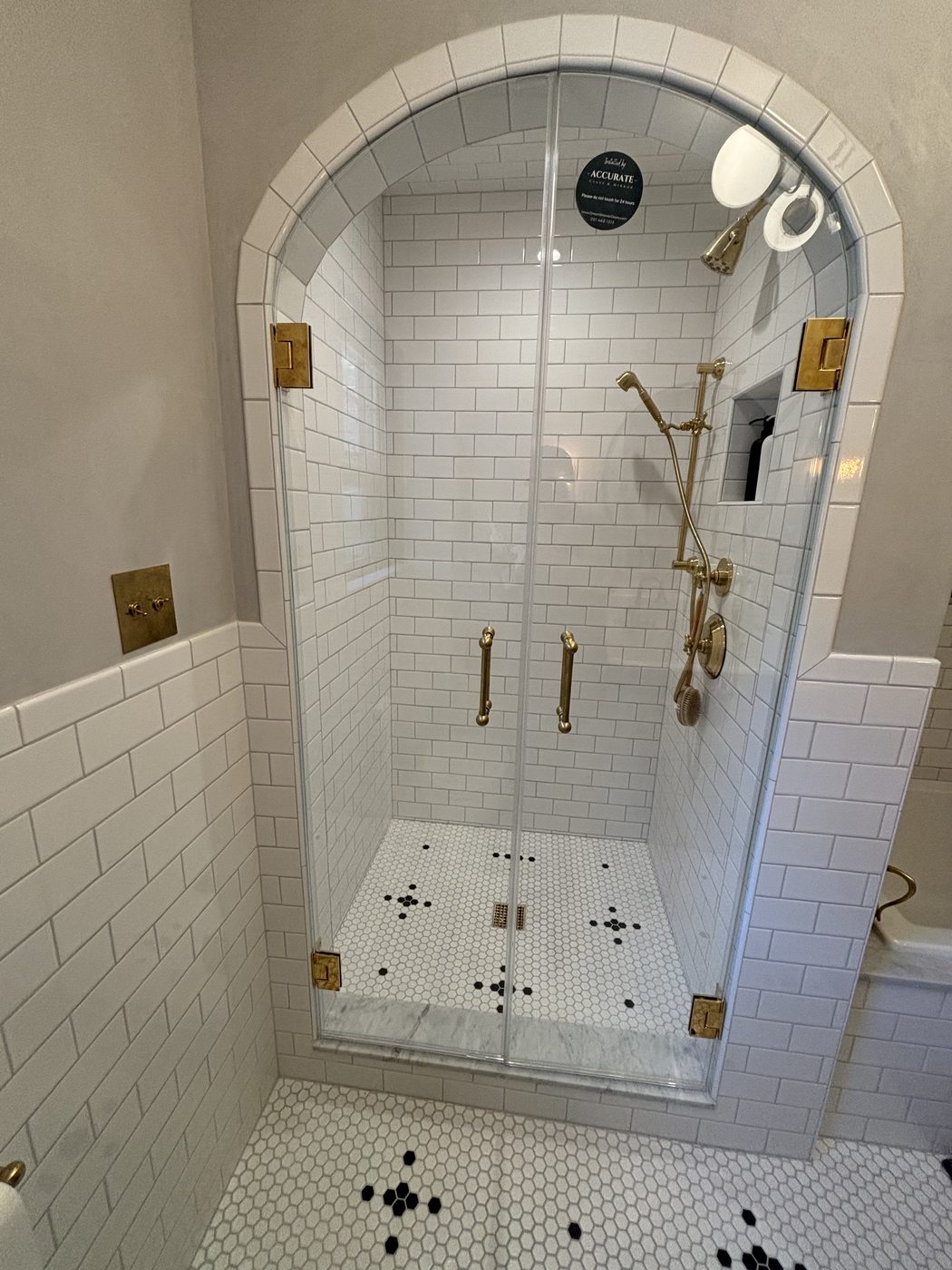
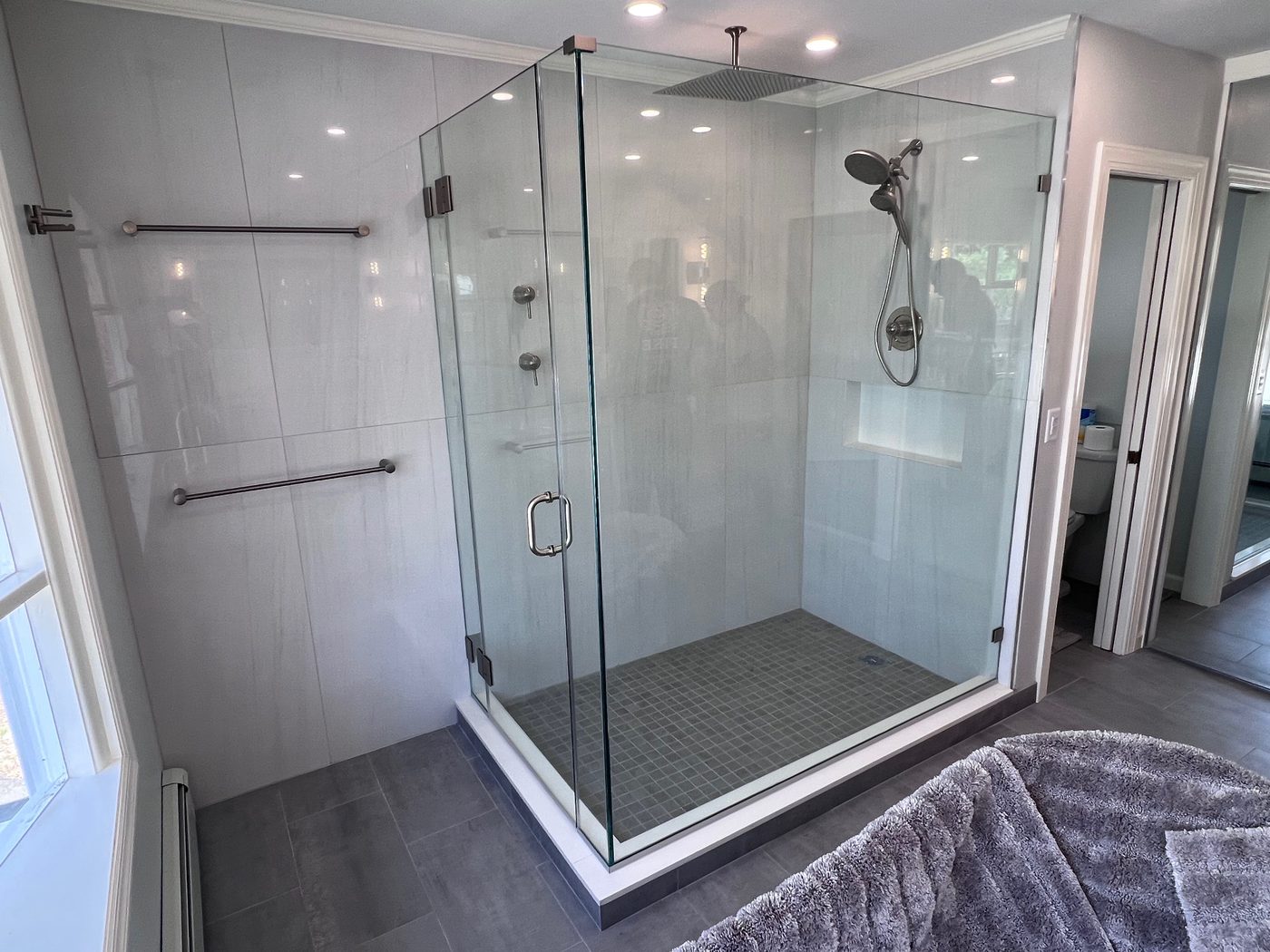
A regular shower enclosure is allowed to breathe. Steam is the opposite. The glass runs from the pan all the way to the ceiling, a transom panel closes the gap above the door, and the door is fitted tight with seals and sweeps at the jamb, the head and the floor. Get any of that wrong and the steam finds the gap, the room outside gets damp, and the generator runs longer than it should.
Because it is sealed, details we would normally treat as trim become part of how it performs. Ceiling height, and any slope in it, sets where the transom lands. Hinge and clamp placement has to clear the seal line. We often build in a hinged or vented transom so you can let the room dry out after a session. All of it is heavy tempered safety glass, templated to your walls and cut in our Lodi shop.
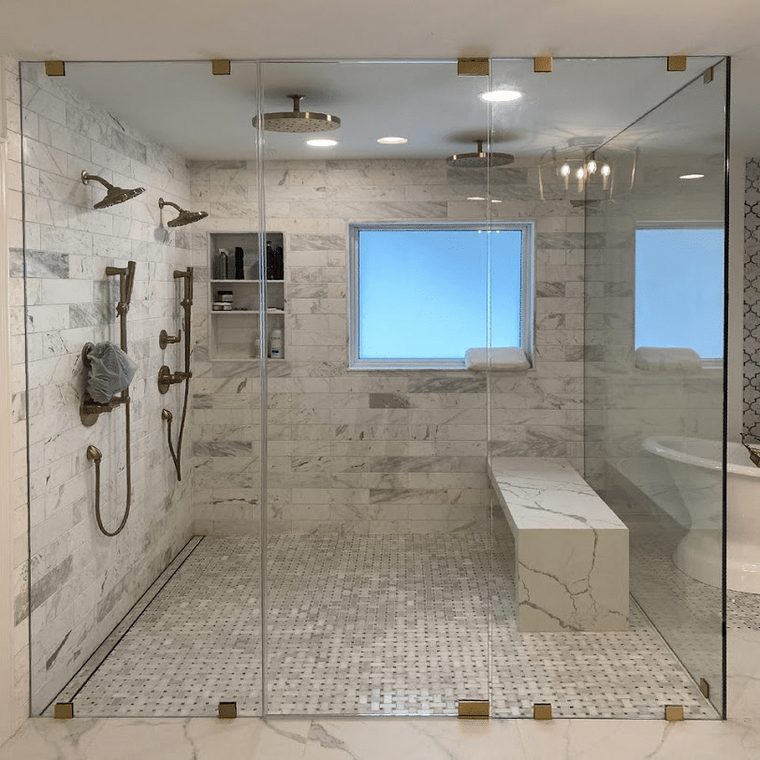
Steam does not belong in every bathroom, and in Paramus it usually lands in one: the primary suite of a postwar house that has been opened up. When a split-level takes a rear addition, or a cape gets a full second-floor dormer, that bath finally has the square footage, the ceiling height and somewhere sensible to put a generator. That is the room where a sealed enclosure is worth building.
The catch in these houses is the ceiling. Dormered upstairs baths often carry a slope on one side, and a converted attic space can run lower than the rest of the floor. Both change where the transom sits and how the door has to be hung. We measure the finished ceiling rather than the plan, and build the panels to what is really there. If a room genuinely will not seal, we say so instead of selling glass that fights it.
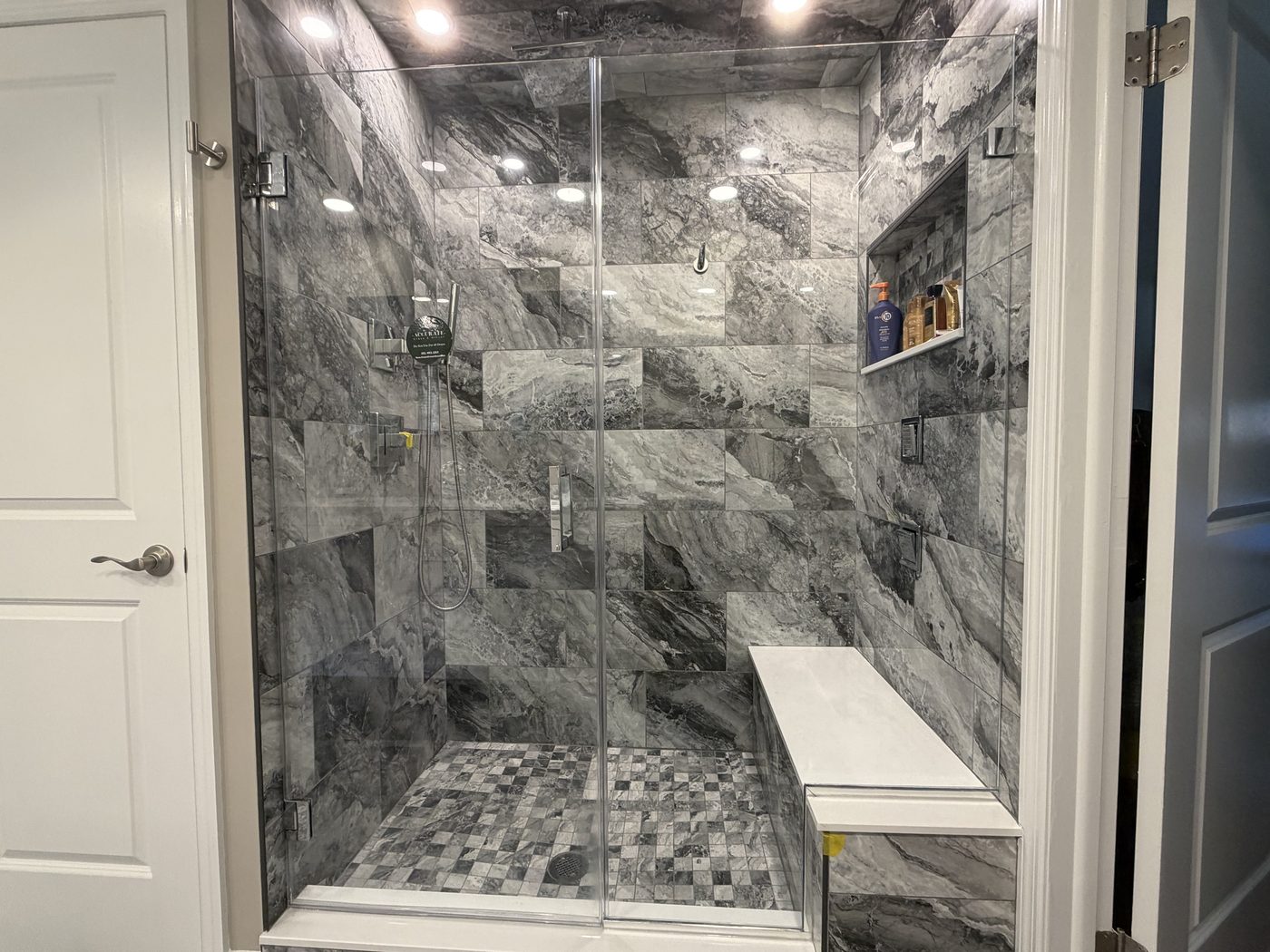
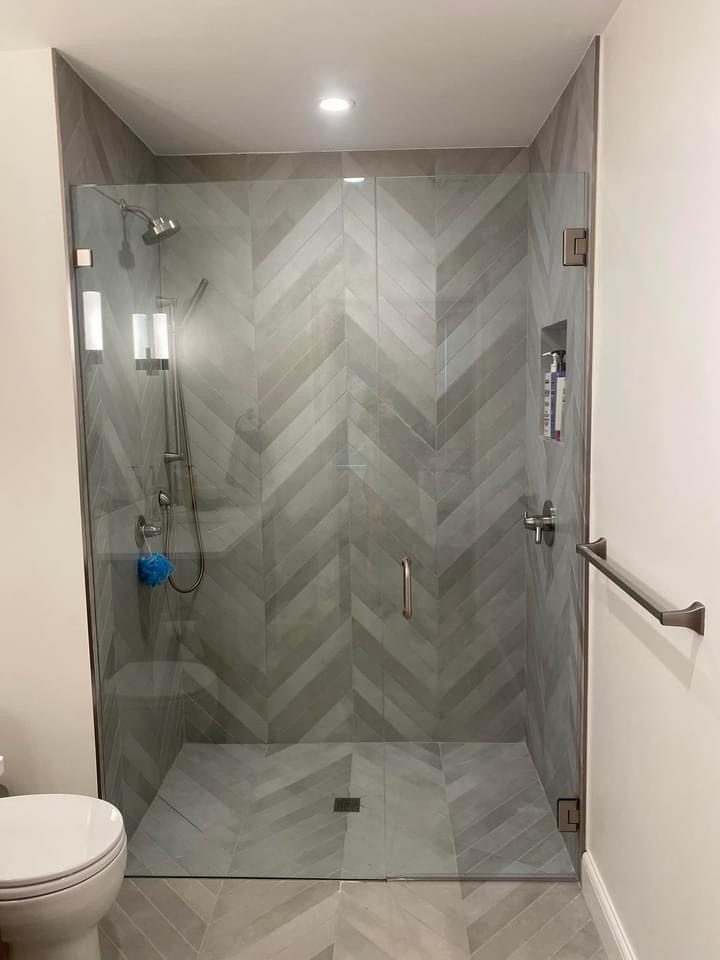
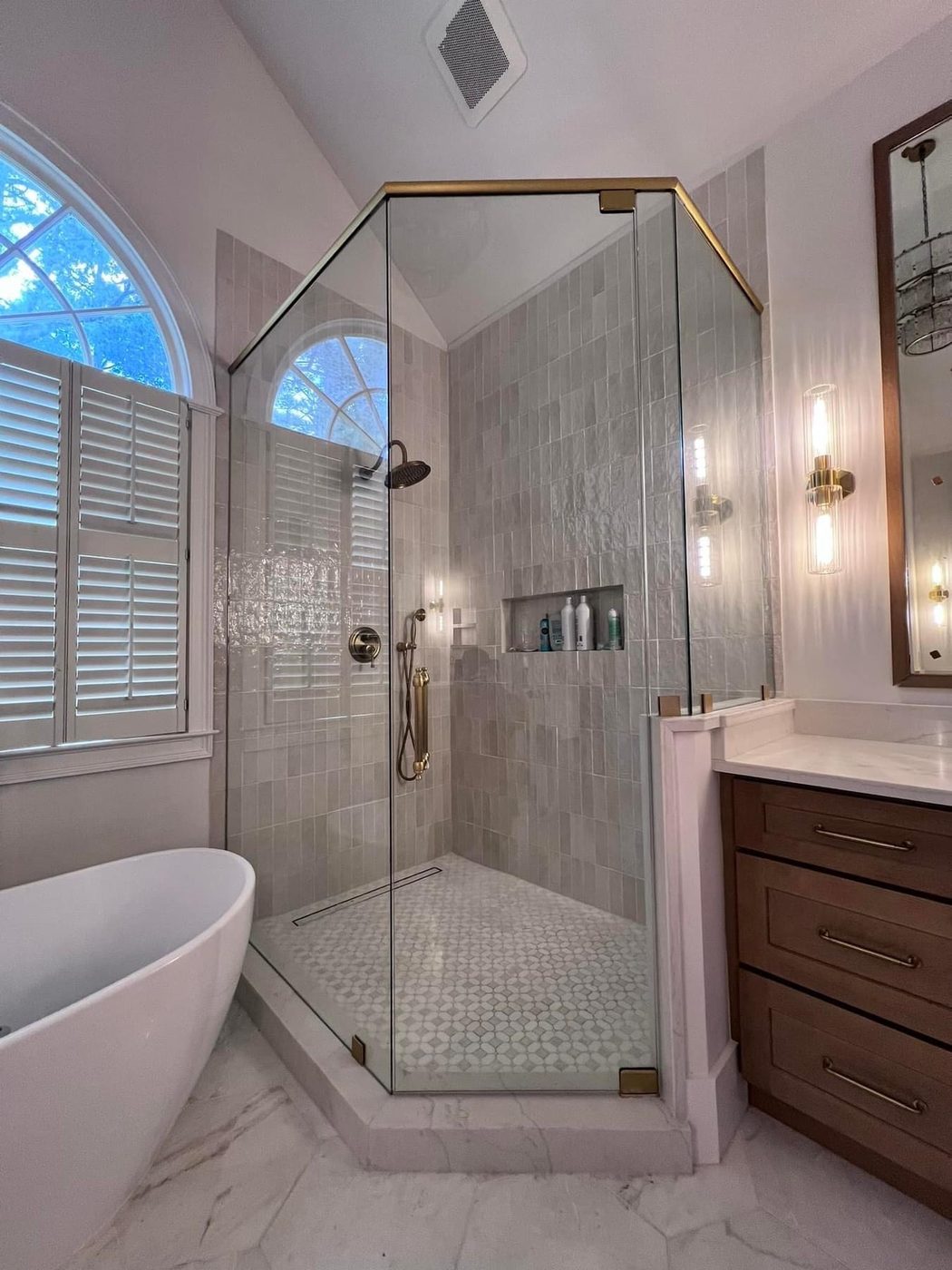
Browse sealed steam glass and full-height enclosures from primary baths near Paramus and across Bergen County.
More custom glass in Paramus: frameless shower doors, sliding & bypass shower doors, semi-frameless shower doors, shower door replacement, custom mirrors, custom glass shower enclosures, bathtub shower doors, glass railings, commercial glass. See everything on our Paramus, NJ page. Steam Shower Enclosures nearby: Ridgewood, Hackensack, Fort Lee, Lodi, Midland Park. Learn more about our steam shower enclosures statewide, or read the Shower glass thickness: 3/8″ vs 1/2″ and The ultimate guide to custom shower doors guides.
Yes, and on a steam job it helps. The main showroom is 80 Industrial Rd, Lodi, NJ 07644, roughly a 10 minute drive from Paramus, open Monday to Friday 9 to 5 and Saturday 9 to 4. Call (201) 460-1313 first so someone is free to walk you through transom and seal details. Our Midland Park showroom at 108 Greenwood Ave runs by appointment, about 20 minutes out.
It is a different build, so it prices differently, but we still will not throw a number at you before we see it. What moves it: glass thickness, the height and number of panels including the transom, your hardware finish, and whether you want low-iron glass or the easy-clean coating. After the free measure you get a firm itemized quote, and monthly payment options are there if you want them.
Template after the tile and the pan are finished, never before. From that measure, fabrication generally takes about one to two weeks, since every panel including the transom is cut to your numbers. The install is usually a single visit. Tell your contractor the glass comes last, and give us the tile completion date so our shop time lines up with the rest of the job.
The generator, the steam head and the controls belong to your plumber or your remodeler. Ours is the enclosure that holds the steam in, and the two are worth planning together. Talk to us before the walls close up, because where the head and the door end up affects where hinges can go and how the transom gets framed. We are happy to talk it through with your contractor.
That is exactly what it is for. The transom fills the space between the door head and the ceiling so the steam has nowhere to climb out. Paired with seals at the jamb and a tight sweep at the bottom of the door, the enclosure holds heat instead of dumping it into the rest of the bathroom. Make the transom vented or hinged and you can crack it afterward to dry everything out.
Both thicknesses work. Most steam enclosures use heavy tempered glass at 3/8-inch or 1/2-inch, and the choice comes down to panel size, look and how the hardware anchors. Taller panels and wider doors push toward 1/2-inch. Low-iron glass is worth asking about here too, since a full-height wall of glass shows the faint green tint of standard glass more than a short door does.
Send Jessica your ceiling height and rough shower size, and we will get a measure on the calendar.
Send Jessica your ceiling height and rough shower size, and we will get a measure on the calendar.
Text Jessica directly and she'll get right back to you. To speed things up, include: