A real working steam shower needs more than a regular frameless door. We build the transom, the seals and the vapor-rated hardware so the steam stays in the stall — where it belongs.
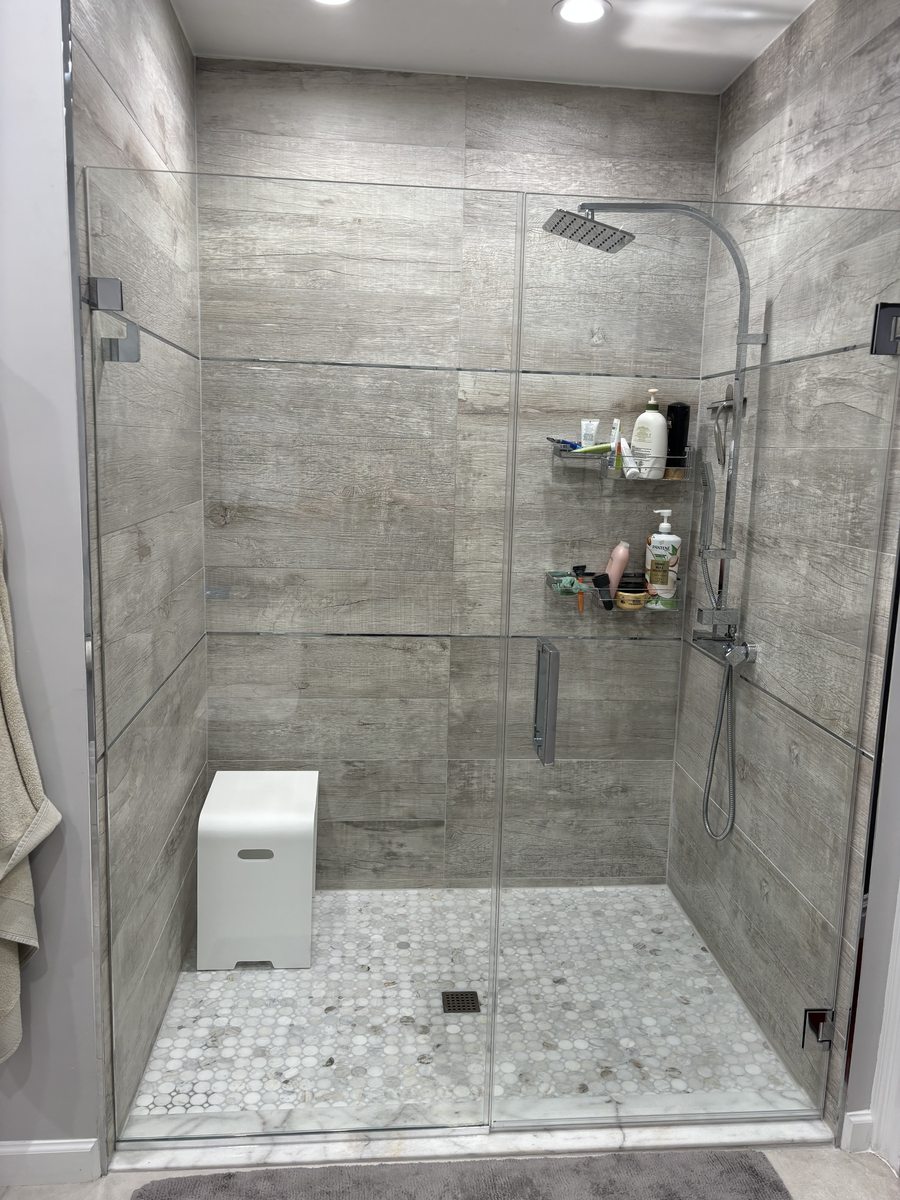
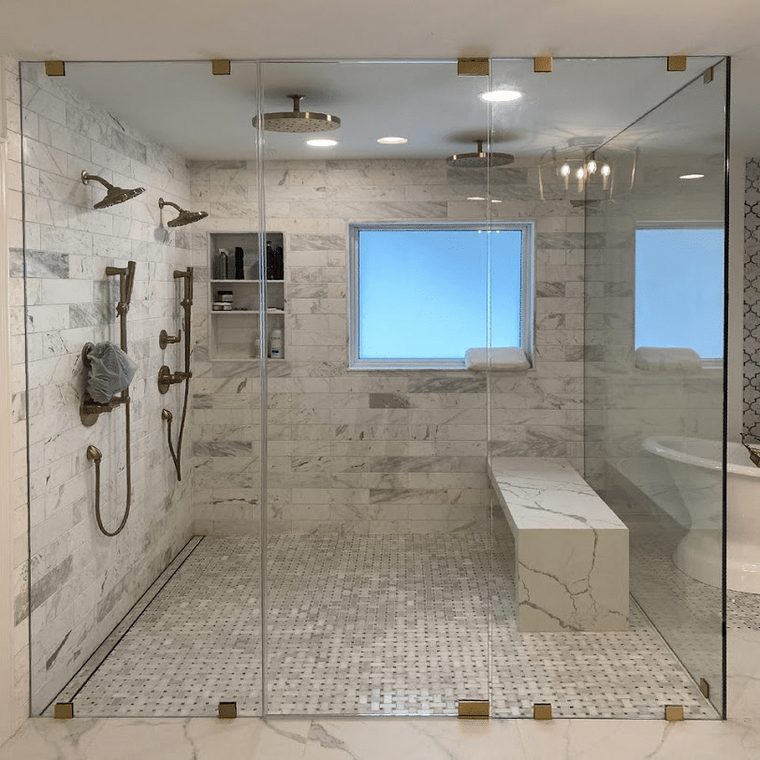
A regular frameless door is built to keep splashing water in. A steam enclosure has a different job: it has to keep vapor in. That sounds like a small difference, but it changes almost every part of the build.
We start with a fixed glass transom panel that runs from the top of the door to the ceiling — that's the cap that turns your shower stall into a sealed steam chamber. Continuous gasket seals run the perimeter of the door and at the strike. The hinges are heavy-duty, and we spec stainless or vapor-rated hardware that won't pit or discolor under constant humidity.
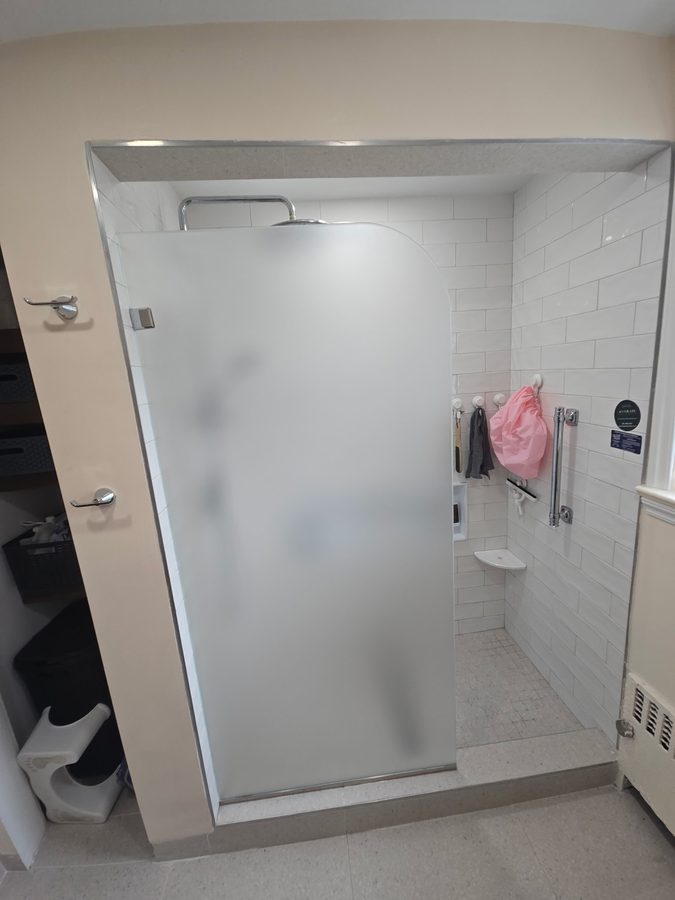
Most steam enclosures we build in North Jersey aren't textbook rectangles. Old houses have plaster ceilings that aren't flat. New construction has bulkheads or sloped lids over the stall. The door opens onto a vanity. The curb isn't perfectly level.
Those are all solvable — but only if the person measuring the opening understands what to look for. We field-template every steam job by hand, on-site, before any glass is ordered.
A true steam enclosure is sealed all the way to the ceiling with a fixed glass transom panel and gasketed hinges, so vapor can't escape. The door uses continuous edge seals and a top sweep, the walls and ceiling get tile plus a proper vapor barrier, and we use stainless or steam-rated hardware that won't pit or corrode under constant moisture.
A transom is a horizontal piece of glass that sits between the top of your door and the ceiling, capping the enclosure. For a working steam shower, yes — you absolutely need it. Without a transom the steam vents into the bathroom and the room becomes the sauna instead of the shower.
Often we recommend an operable vent — a small section of the transom that pivots open after your steam session to let the enclosure dry out. An operable vent helps cut down on lingering humidity and keeps the glass cleaner long term. Fixed transoms are simpler and also a totally valid option.
3/8" or 1/2" heavy tempered safety glass — same premium standard as a frameless cold shower. Steam doesn't change the glass spec; it changes the seals, the hinge type, the transom geometry and the way the door meets the curb.
Both happen. If you already have a tiled stall with a steam generator roughed in, we can build the glass enclosure to seal it correctly. If you're remodeling, we'd rather come field-measure before tile goes up so the curb height, ceiling slope and rough opening are all dialed in for a steam-tight result.
About 2–3 weeks from the field measure, because of the transom and the extra hardware. Installation is typically completed in a single visit once all pieces are on hand.
A steam enclosure that leaks vapor is worse than no steam enclosure at all — it ruins paint, soaks drywall and short-circuits the experience. We use heavy tempered glass, vapor-rated hardware, precise field measurements and our own in-house installation team. No subcontractors. No guesswork. No vague pricing.
Steam enclosures cost more than a standard frameless because of the transom, the gasketing and the upgraded hardware. We give you a firm, itemized quote after a free in-home measure — and offer monthly payment options so you don't have to choose between quality and budget.
Tell us about your project — we'll schedule your free in-home measure with no obligation, and you'll have a firm written quote in hand within a couple of days.
Call, text or fill out the form — we'll get back to you with a free estimate, typically within one business day.
Text Jessica directly and she'll get right back to you. To speed things up, include: