
Glass is one of the hardest surfaces in your home, but it isn't scratch-proof. A ring on a tabletop, a tool dropped on a railing panel, a misplaced abrasive sponge — and suddenly there's a mark that catches the light from across the room. The question is always the same: is this fixable, or do I need a new panel?
This post walks through the diagnosis, the DIY options that actually work, the ones that don't, and the situations where replacement is the only real answer. For broader care context, see our year-round glass care pillar.
First: the fingernail test
Every glass-scratch decision starts here. Run a clean fingernail across the scratch, perpendicular to its direction.
- Fingernail glides over with no catch. The scratch is under about 25 micrometers deep — within the polishable range. It may be a candidate for cerium-oxide polishing.
- Fingernail catches lightly. The scratch is borderline. A professional polish may help but won't fully remove it. Worth a photo to us before deciding.
- Fingernail catches firmly or gets snagged. The scratch is deeper than 25 micrometers. In tempered glass, this is past the polishable layer. Replacement is the right call.
- Visible crack or chip, any depth. Always replacement in tempered glass. Polishing is not on the table.
The fingernail test isn't perfect, but it's the right first filter. If you're not sure after the test, that's exactly the situation to text us a photo. We see these all the time and can usually tell from a clear photo whether you're a polish candidate or a replacement candidate.
Why tempered glass has special rules
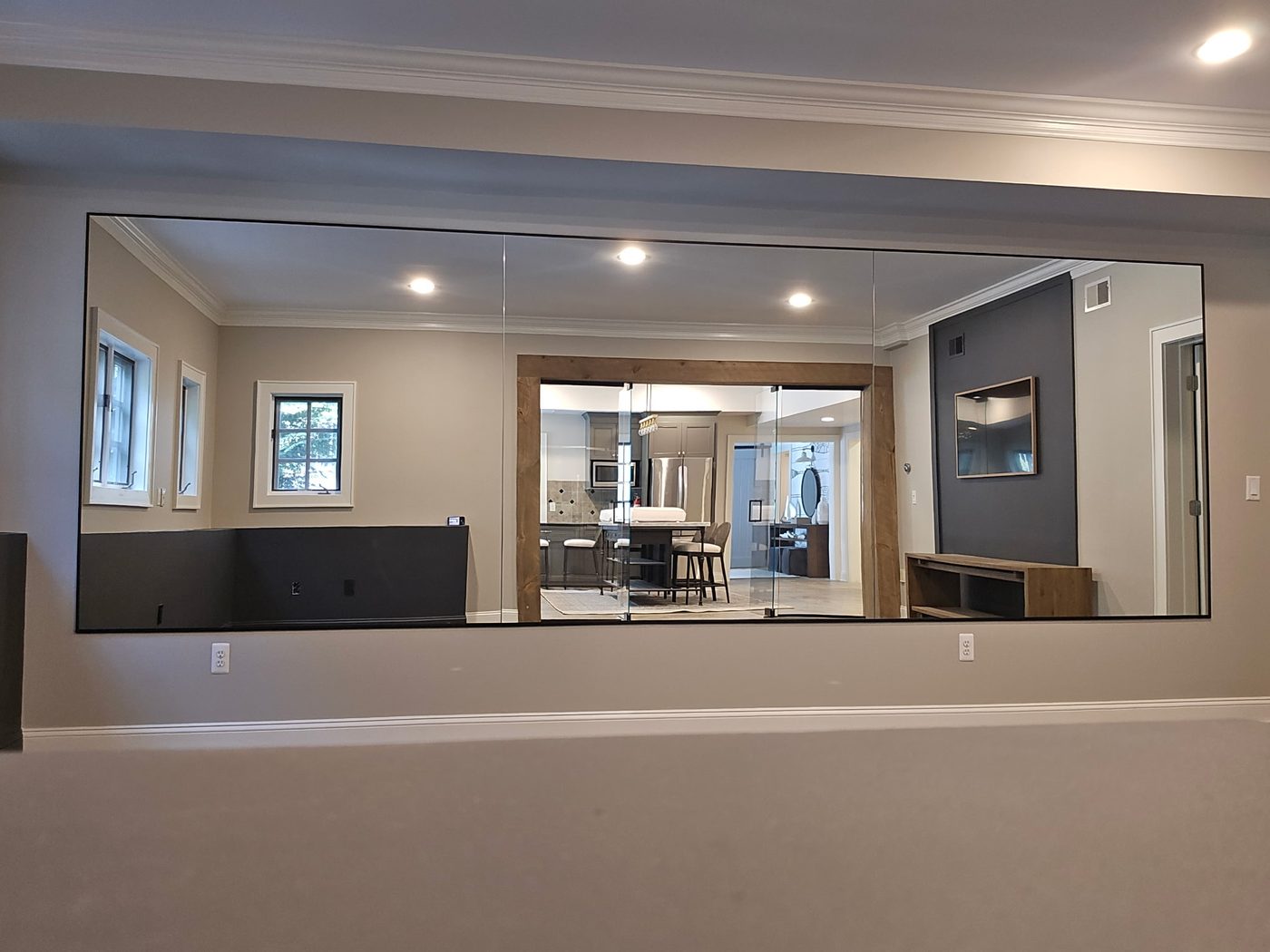
Most custom glass we install is tempered — shower enclosures, railings, tabletops, and most modern mirror installations all use tempered or laminated tempered glass. Tempered glass is created by heating standard glass to ~620°C and then cooling the surface rapidly. This creates a thin compressed outer layer (~20% of the total thickness) and a tensile-stressed core.
That structure is what makes tempered glass 4–5 times stronger than annealed glass and what makes it shatter into small pebbles instead of large shards when it does fail. But it also creates two constraints for scratch repair:
- The polishable depth is limited. Removing too much material from the compressed outer layer weakens the panel. Professional polishers stay well within the safe range, typically under 25 micrometers.
- Any chip or crack compromises the surface tension. Once the compressed layer is breached, the internal stress can release catastrophically — minutes later or months later. There's no way to "fix" this without rebuilding the panel from scratch, which means starting with new glass.
So in tempered glass, scratch repair is shallow polishing only, and any deeper damage is a replacement situation. This is non-negotiable from a safety standpoint, particularly on glass railings, where panel failure is a guardrail failure.
What's polishable: the cerium-oxide method
The only abrasive that meaningfully moves material off a glass surface in a useful way is cerium oxide — a rare-earth compound finer than typical mineral abrasives, slurried with water, and applied with a felt buffing wheel at controlled speed.
Cerium-oxide polishing can reduce or remove:
- Shallow surface scratches (under 25 micrometers, fingernail-glide range)
- Light hard-water etching in early stages
- Scuff marks from abrasive cleaning pads
- Light wiper-blade scratches on automotive glass (same chemistry, different setting)
It cannot remove:
- Anything a fingernail catches on
- Cracks or chips of any size
- Deep gouges
- Etching deeper than the top few micrometers
Professional glass polishers use variable-speed rotary tools with cooled felt wheels, water-mist slurry, and pressure control to avoid heat-distortion of the panel. Done by hand with retail products and a hardware-store buffer, you can get a partial result on the lightest scratches; you can also create a wavy area of distortion that looks worse than the original scratch did.
Retail scratch-repair kits — honest assessment
Hardware stores sell DIY glass-scratch repair kits. They typically include a small tube of cerium-oxide compound, a felt pad, and instructions. We've used them. We've also had homeowners bring us glass that's been "fixed" with them.
| What retail kits can do | What retail kits can't do |
|---|---|
|
|
If you want to try a kit, our advice: pick a scratch that is barely visible, work in a well-lit area, and stop the moment you see any distortion in the surrounding glass. If the result isn't satisfying, don't keep working — at that point you're risking visible distortion and a panel replacement becomes a better call.
Mirrors: the desilvering problem (which scratch repair can't fix)
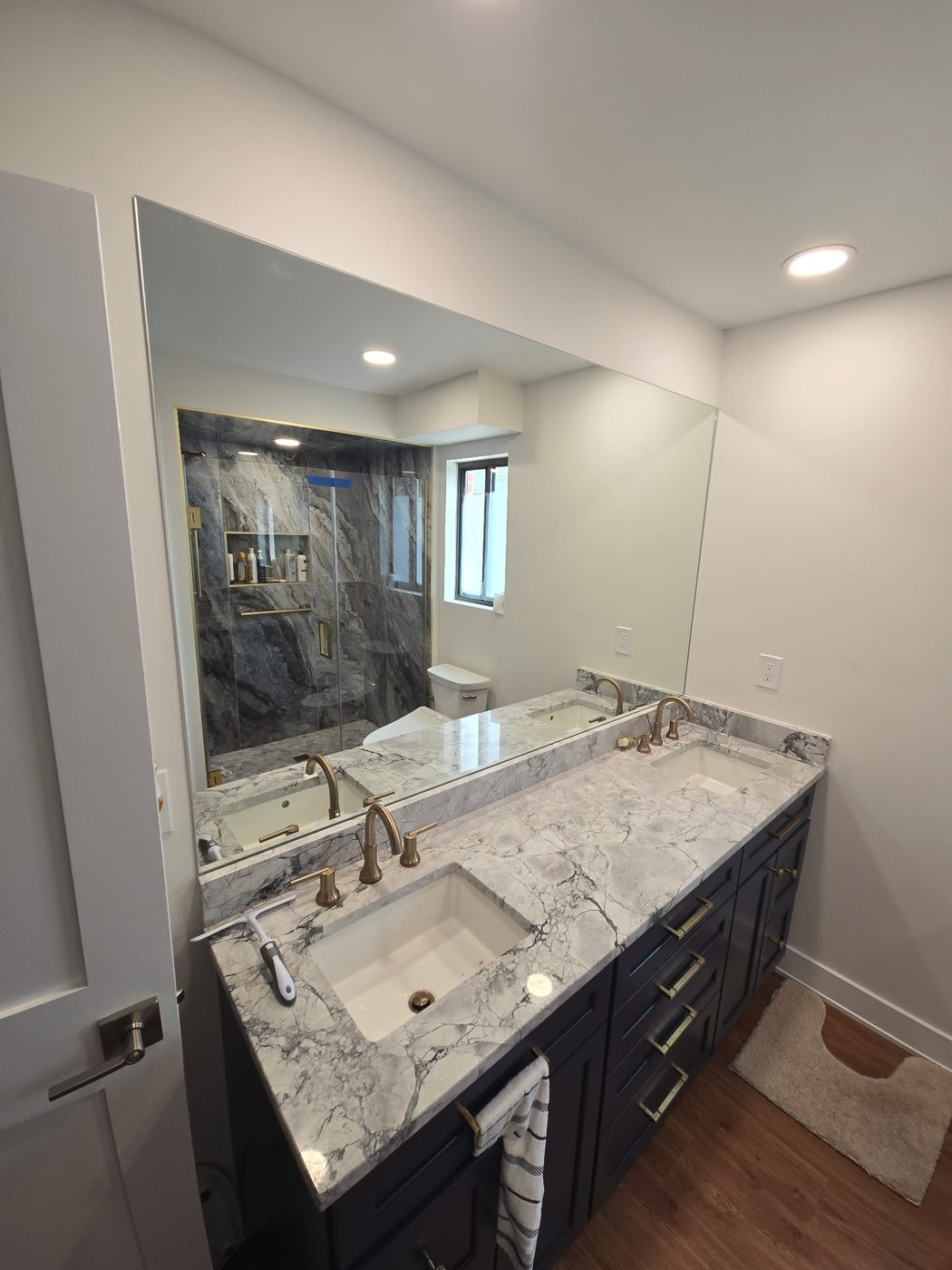
Mirrors are a special case. A custom mirror is a sheet of glass with a thin silver coating on the back, sealed under a black or copper paint backer. The reflective surface is behind the glass, not on top of it.
Front-of-mirror scratches — on the glass surface itself, what you see and touch — follow the standard tempered-glass rules above: shallow scuffs may polish, deeper scratches don't.
The more common mirror problem isn't a front scratch. It's desilvering: dark black or copper spots that appear at the edges of older mirrors. These are silver-coating oxidation, and they happen when moisture (or harsh ammonia-based cleaners that pool at the bottom edge) seep behind the paint backer and react with the silver.
Desilvering can't be repaired. The silver coating is sealed behind paint, paint behind drywall or wall mount, and there's no path to restore it. The spots will spread over months to years. The fix is mirror replacement, ideally with two adjustments going forward:
- Don't spray cleaner directly onto the mirror. Mist onto a microfiber, then wipe. Overspray that pools at the bottom edge is the leading cause of desilvering.
- Avoid ammonia on coated or specialty mirrors. On standard front-surface, uncoated mirrors, ammonia is fine for the glass face. But never let it sit at the bottom edge.
If you have a mirror with creeping black edge spots, see our custom mirrors page for replacement options. The good news: a new mirror with proper cleaning habits will last 15–25 years before any desilvering risk.
The chip-and-crack rule (read this twice)
Three categories of damage on tempered glass are always replacement, never repair:
- Chips of any size — including the small "edge chips" near hardware that look cosmetic. The compressed outer layer is breached and the panel can fail later.
- Cracks of any length — including hairline cracks visible only at the right angle.
- "Spider" patterns — any radiating crack pattern indicates active stress release.
This rule applies regardless of where the glass is. On a glass tabletop, the failure risk is dropping the panel onto someone's foot when it lets go. On a glass railing, the risk is guardrail failure — which is a code violation and a serious safety issue. On a shower door, the risk is shattering during use.
Tempered glass that has chipped or cracked may sit for months before it fails. The thermal cycle of a sunny window or the vibration of a slammed door can trigger release at any point. Don't gamble with it — replace the panel.
Use vs. avoid: scratch-treatment chemistry
| Use (where appropriate) | Avoid entirely |
|---|---|
|
|
When to call AGM
Send Jessica a photo when:
- You're not sure whether a scratch is in the polishable range — we can tell from a clear close-up.
- The fingernail test catches and you need a panel replacement quote.
- There's any chip, crack, or spider pattern in tempered glass — replacement is urgent.
- A mirror has begun showing dark edge spots and you want to plan a replacement.
- You've tried a retail kit and the result isn't satisfying — we may be able to professionally polish further, or recommend replacement.
- You're dealing with multiple scratches on a single panel — usually a sign that something abrasive is in the cleaning routine and we can advise on prevention.
For tempered shower glass, mirror, railing, or tabletop replacements, we typically schedule within 2–3 weeks across Bergen, Passaic, Hudson and Essex counties. Glass orders are made-to-measure, so a clear photo plus dimensions accelerates the quote process.
Send Jessica a photo of the scratch
We'll tell you honestly whether it's a polish, a replacement, or just fine to leave alone. No pressure, no upsell — just a straight answer.
Text Jessica a Photo →Prevention: how scratches happen in the first place
Most of the scratches we see on residential glass come from three sources:
- Abrasive cleaning pads. "Magic erasers" (melamine foam), green scrub pads, and steel wool will all leave fine scratches. Use only soft microfiber cloths.
- Razor-blade overcleaning. Razor blades are sometimes used to remove paint or sticker residue from windows. On uncoated commercial glass this is acceptable; on coated residential glass it strips the hydrophobic coating and can scratch the surface.
- Mechanical contact. Ring caught against a shower door handle, a tool slipping on a tabletop, a dog's claws on an interior railing. These are unavoidable accidents — but for high-traffic surfaces, a hydrophobic coating doesn't just shed water; it slightly increases scratch resistance to incidental contact.
For the broader care routine that minimizes scratches over the long run, see our glass shower care guide and our pillar post on year-round glass care in NJ.
Need a single panel replaced — not the whole enclosure?
For most shower, mirror, railing, and tabletop installations, we can replace one damaged panel rather than rebuilding the system. Faster, less expensive, and made to match the originals.
Get a Replacement Quote