
Quick answer: Custom glass holds up beautifully for decades if you do four things: squeegee shower glass after every use, wipe surfaces weekly with a pH-neutral cleaner and microfiber, never use abrasive pads or harsh ammonia on coated or tinted glass, and reapply the hydrophobic coating every 3–5 years. North Jersey's hard water makes those habits more consequential than in other regions — untreated mineral buildup can permanently etch glass within one to three years.
This post is the umbrella guide for our care-and-maintenance series. It covers every type of custom glass we install, organized by season. If you only own a shower enclosure, the glass shower care guide is a tighter read. If you want the full picture for the whole house — mirrors, railings, tabletops, painted glass — read on.
Why care matters more in NJ
New Jersey is a hard-water state, and Bergen and Passaic counties are at the high end of that scale. The municipal water supply in much of North Jersey runs 120–180 mg/L of total dissolved calcium and magnesium — classified as "hard" to "very hard" on the USGS scale. That mineral content is invisible in the water itself, but every droplet that dries on glass leaves behind microscopic mineral deposits. Over months and years, those deposits chemically bond to the silica surface and create the cloudy haze that older shower glass develops.
Add to that humid summers, storm-driven moisture in fall, and — for towns along the Hudson, like Edgewater, Cliffside Park and Fort Lee — salt-laden air carried inland by river breezes, and NJ glass faces a more demanding environment than glass in dry-climate states. The good news: a few simple habits and one optional pro upgrade (the hydrophobic coating) neutralize almost all of it.
Here's how the four chemistry/environment factors interact:
| Factor | NJ impact | What it does to glass | The fix |
|---|---|---|---|
| Hard water | 120–180 mg/L Ca+Mg | Mineral spotting → permanent etching | Squeegee + weekly wipe + coating |
| Humidity | 70%+ summer, 50%+ winter | Surface condensation, mildew at seals | Run bath fan, ventilate |
| Pollen / dust | Heavy April–June, August–September | Surface haze on exterior glass | Rinse + microfiber seasonal wipe |
| Salt air | Hudson-corridor towns | Faster hardware corrosion | Rinse hardware quarterly |
Daily & weekly habits
The single most consequential habit you can build, by a wide margin, is squeegeeing shower glass after every use. It takes 30 seconds, it costs nothing, and it prevents 90% of the long-term damage we see on uncared-for enclosures.
- Squeegee after every shower. Hang a silicone-blade squeegee on a suction hook inside the shower so it's there when you turn off the water. Pull top to bottom in overlapping strokes. The goal is to remove the water before it dries, not to dry the glass to streak-free perfection.
- Wipe down weekly. Once a week, mist the glass with a pH-neutral cleaner or a 1:1 white-vinegar-and-water mix. Wipe with a clean microfiber cloth, then rinse with fresh water if you used vinegar.
- Use the bath fan. Run it during every shower and for 15–20 minutes after. Most NJ bathrooms over-humidify because the fan gets turned off too early.
- Keep hard surfaces around hardware dry. Wipe water off the bottom of door sweeps, the inside corners where panels meet, and any horizontal hinge surfaces. Standing water at those points shortens hardware life.
For mirrors, the weekly habit is even simpler: a dry microfiber wipe most weeks, plus a damp microfiber with a pH-neutral cleaner once a month. Avoid letting any liquid pool at the bottom edge of a mirror — that's where the silver backing fails first.
What NOT to use
This is the part that surprises homeowners. Many of the cleaners marketed for "tough bathroom soap scum" are actively damaging to coated, tinted, or painted glass. Here's the cheat sheet:
| Use freely | Use with caution | Avoid entirely |
|---|---|---|
|
|
|
A few specific don'ts that matter:
- No ammonia on tinted, low-iron-coated, or painted glass. Ammonia attacks the optical coatings and the paint backer.
- No abrasive pads on any custom glass. Tempered glass is hard, but the coatings and the silver backing on mirrors are not. A "magic eraser" or a green scrub pad will leave fine scratches.
- No harsh degreasers near aluminum hardware. Many degreasers are alkaline enough to corrode anodized aluminum finishes over time. If you must spot-clean grease on a kitchen backsplash, use diluted dish soap.
- No razor blades on coated glass. Razor blades will shave off the hydrophobic coating in a single pass. They're fine on uncoated commercial windows, but never on a coated residential shower or backsplash panel.
Hard water in North Jersey (why your shower glass etches)
The chemistry of glass etching is straightforward. Tempered glass is silica with trace metal oxides — chemically stable in most environments. But when calcium and magnesium ions (the "hard" in hard water) dry on the glass surface, they crystallize. Each individual crystal is tiny, but over months, hundreds of thousands of them accumulate, layered over each other. They eventually bond to the silica through a slow process called silicate hydration. Once that bond forms, the mineral is no longer sitting on the glass — it's part of the surface.
This is the difference between soap scum (which wipes off) and etching (which doesn't). Soap scum is a surface deposit. Etching is permanent chemical alteration of the glass itself. In hard-water NJ, untreated glass starts showing visible etching within one to three years of regular use — earlier if the shower is used daily by multiple people, later if it's a guest bath used twice a month.
The three lines of defense, in order of effectiveness:
- Squeegee. Water has to dry on the glass for the minerals to crystallize. Remove the water and you remove 95% of the problem.
- Weekly wipe. Even with squeegeeing, some droplets sneak through. A weekly vinegar-water wipe dissolves any nascent crystallization before it bonds.
- Hydrophobic coating. A factory or professionally applied coating makes the glass surface so water-repellent that almost nothing dries on it in the first place. This is the only line of defense that works passively — no daily habit required.
Removing soap scum & mineral buildup
If you're reading this and your shower glass is already hazy, the right approach depends on how far the buildup has progressed.
Stage 1: Surface soap scum (wipes off with effort)
Spray 1:1 white vinegar and warm water. Let it dwell for 5–10 minutes. Wipe with a clean microfiber in firm circular motions. Rinse with fresh water. Repeat if needed. This works on any film that's less than a few months old.
Stage 2: Mineral buildup (vinegar alone doesn't move it)
Make a paste of baking soda and water. Apply with a microfiber, rub gently, let dwell, then rinse with vinegar-water and finish with fresh water. The baking soda is mildly abrasive on a microscopic scale but won't scratch the glass. For stubborn spots, commercial calcium-lime-rust dissolvers work — but test them on a small hidden area first, and never use them on tinted or painted glass.
Stage 3: Etched glass (nothing wipes it off)
If you've cleaned thoroughly and the haze remains, the glass has begun to etch. Two options: professional polishing (cerium-oxide-based abrasive systems that grind off the top molecular layer of glass, restoring clarity for a few more years) or panel replacement. Polishing works for light etching; deep etching is generally not worth polishing because the restored surface re-etches faster than the original.
For an AGM customer in this situation, send us photos and we'll tell you honestly which path makes sense. Polishing costs less but is a temporary fix. Replacement is permanent — and a good time to add a coating you didn't have before.
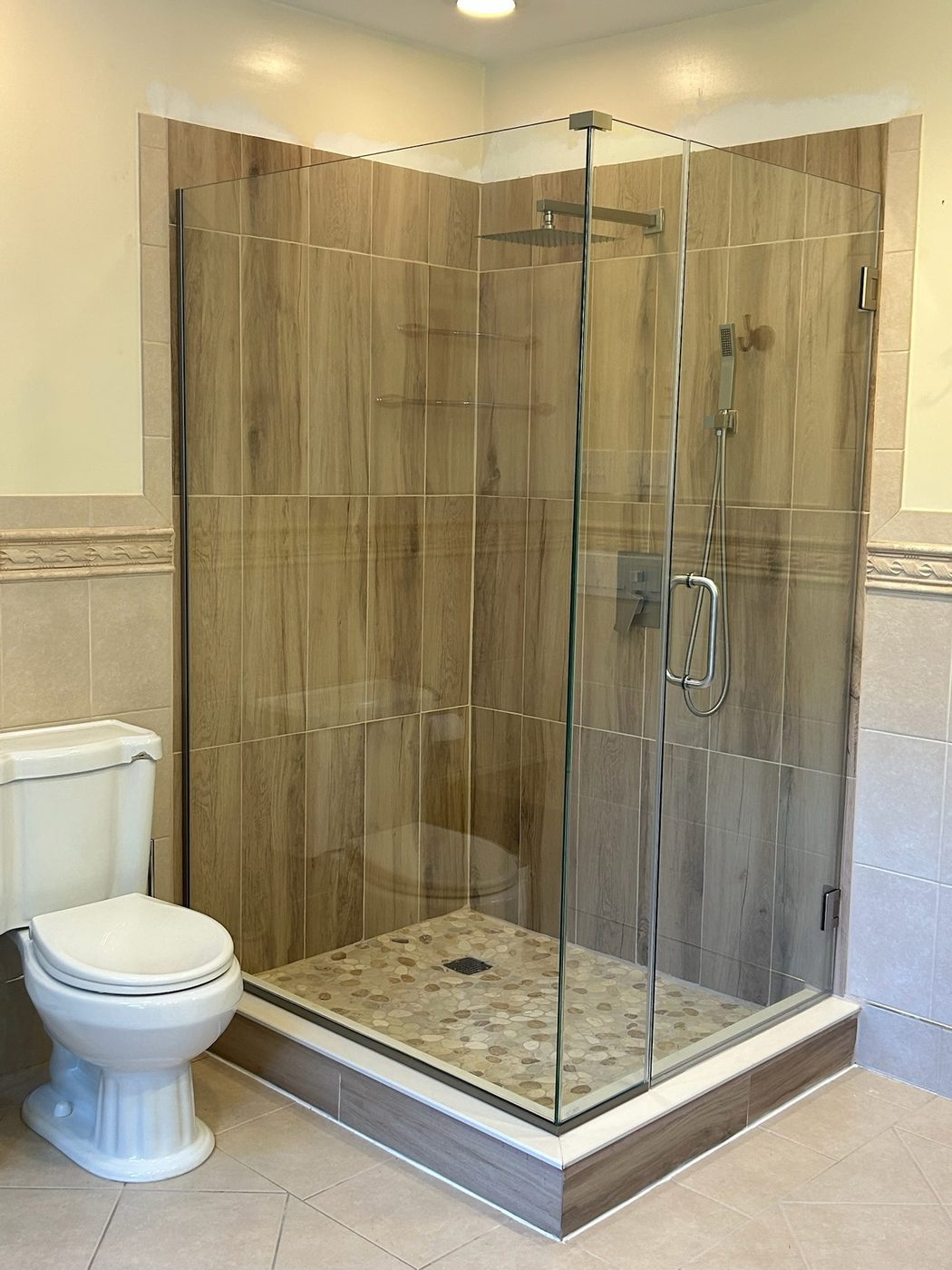
Hydrophobic coating maintenance
A hydrophobic coating is the single best preventive upgrade for NJ glass. Properly applied factory or pro-grade coatings last 3–7 years, depending on the brand and how heavily the surface is used.
How to tell when the coating is wearing off
- Water beads less aggressively. Fresh coating: water sits as nearly spherical beads that roll right off. Worn coating: water still beads, but flatter and slower.
- Soap scum sticks for the first time in years. If you've gone three or four years with the glass staying clear, and you start noticing film, the coating is probably the cause.
- Spotting after dryoff. Coated glass shouldn't show water spots even if you don't squeegee. When spotting returns, the coating is depleted.
Reapplying the coating
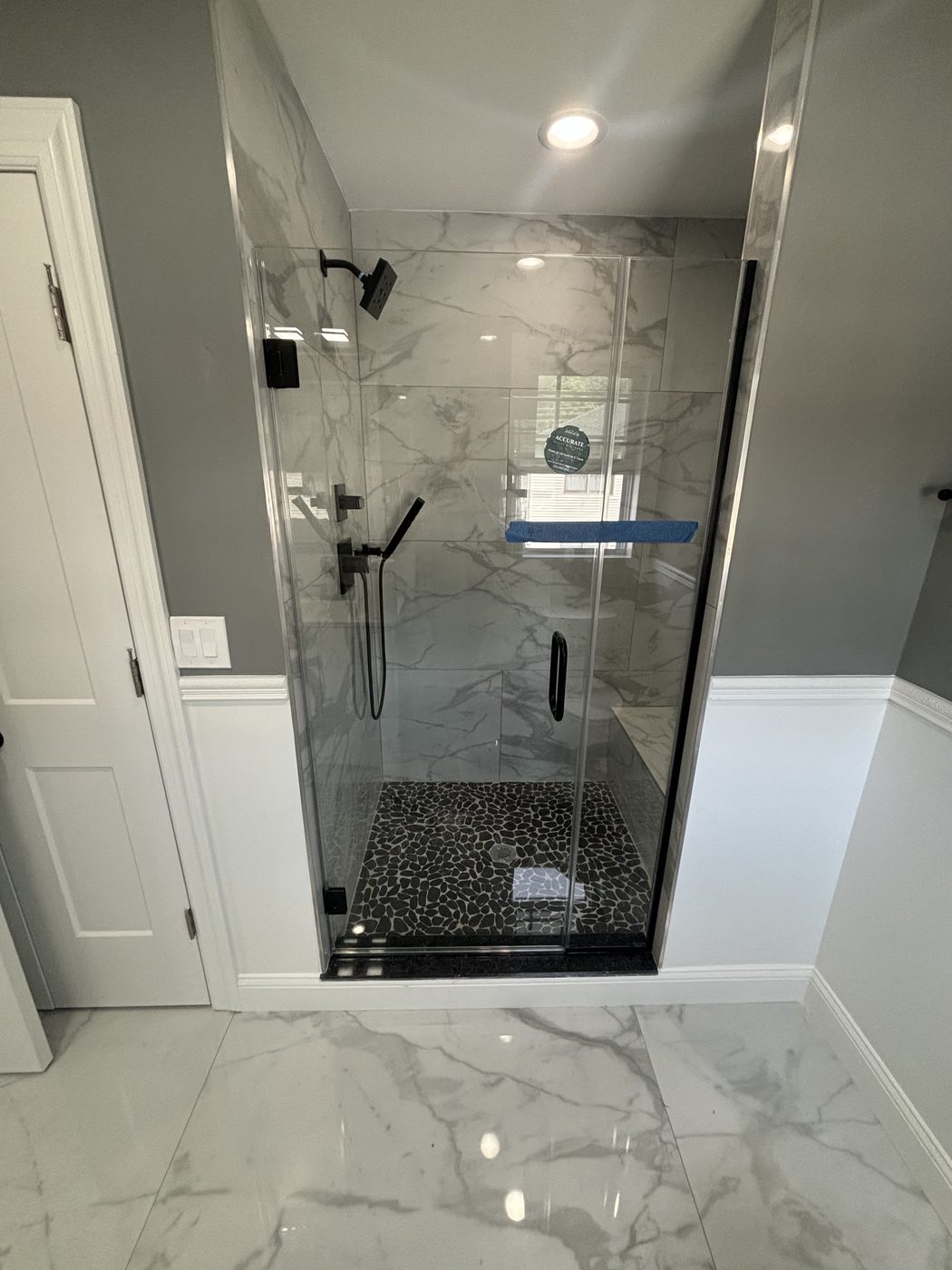
DIY spray-on coatings are sold at hardware stores, but they last weeks rather than years. The professional reapply process involves a deep clean, an acid prep, controlled-environment drying, and a different chemistry than retail. We offer coating reapplication for any existing AGM enclosure and for many enclosures originally installed by other shops. Pricing is significantly less than a new enclosure and the result is multi-year. Call (201) 460-1313 or text Jessica for current pricing.
Spring cleaning: mirrors, railings, tabletops
Spring is the natural deep-clean season for the rest of the custom glass in your home — the surfaces that don't get the daily attention a shower does.
Custom mirrors
A spring mirror routine: dry-dust the entire surface with a clean microfiber, then mist a pH-neutral cleaner onto a second microfiber (never directly onto the mirror — overspray pools at the bottom edge and seeps under) and wipe in straight horizontal then vertical strokes. Pay attention to the perimeter; any liquid that sits at the bottom edge for hours can attack the silver backing over years. If a mirror has begun to show black spots at the edge — "silvering breakdown" — that mirror is past saving and needs replacement. See our custom mirrors page for replacement options.
Interior glass railings
Interior railings collect fingerprints, hand oils, and dust at the standoff connectors. Wipe both sides with a microfiber and a pH-neutral cleaner; use a cotton swab dipped in the cleaner to get into the corners around stainless connectors. Inspect each standoff for any looseness in the wood handrail attachment — this is the one structural item worth checking annually. See our glass railings page if a standoff connector ever needs replacement.
Glass tabletops
Glass tabletops collect a different kind of grime — food residues, hand oils, and the occasional ring from a wet glass. Spring routine: clear the top entirely, wipe with a pH-neutral cleaner, dry with a microfiber, and inspect the underside for any chips at the edges (which on a tempered tabletop is the warning sign for future failure). See our glass tabletops page if you find one.
Summer: outdoor glass railings & patio tables
Summer is when outdoor glass earns its keep — and gets the most punishment. UV, pollen, summer thunderstorm grit, and occasional bird strikes all happen between May and September.
Cleaning frequency
Once a month during peak summer is plenty for most homes. Heavy pollen periods (late April through June for trees, late August through September for ragweed) may warrant a hose rinse weekly to keep the glass clear.
The method
Hose-rinse first to flush off loose debris. Then wipe both sides of each panel with a microfiber on a long-handled mop, using a pH-neutral outdoor glass cleaner. Avoid pressure-washing close range — within 18 inches, a pressure washer can drive grit under the base channel seals and accelerate corrosion of the structural hardware. A hose with a thumb-spray nozzle has plenty of pressure for normal summer cleaning.
Pool-deck railings specifically
Pool chemistry (especially chlorine and bromine vapor) is corrosive to most metals. Inspect stainless point fittings around pool railings quarterly during the pool season. Wipe them dry after pool maintenance and rinse them with fresh water periodically — the chlorine-vapor exposure to pool-deck hardware is the leading cause of premature railing-hardware wear.
Fall: pre-winter inspection
Fall is the season to inspect — not just clean. The transition from humid summer to dry winter is when seal failures show themselves, and you want to catch them before winter humidity locks moisture inside an enclosure.
Shower sweep and gasket check
The plastic sweep at the bottom of your shower door and the soft vinyl gaskets between panels are the highest-wear parts of any enclosure. They typically last 5–10 years. Inspect for cracking, hardening, or gaps that let water through. Replacement sweeps and gaskets are inexpensive and we can ship them or install them on a service call.
Hinge and clip inspection
Wiggle each hinge gently. Any looseness should be addressed — usually a 5-minute tightening with the proper allen key. A loose hinge accelerates wear on the door panel because the panel begins to flex with every open and close.
Commercial: pre-winter for storefronts
For our commercial customers — storefronts, restaurant glass, office partitions — fall is the time to inspect every weatherstrip, every silicone joint, and every threshold seal before the freeze-thaw cycles of January. Failed silicone is the leading cause of winter storefront leaks. See our storefront glass care guide for the full commercial protocol.
Winter: indoor glass care
Winter is a quieter season for glass, but indoor humidity does interesting things to seals and hardware.
The humidity inversion
Most homes are more humid indoors in winter than in spring or fall, because the doors and windows stay closed and the HVAC recirculates moisture from cooking, showering, and breathing. If you see fog forming on a cold mirror or window-side glass panel even when no one's in the bathroom, your indoor humidity is over 50% and ventilation is too low. Run the bath fan longer; consider a humidity-controlled exhaust switch that runs the fan automatically when humidity rises.
Cold-edge condensation
In rooms with exterior glass walls (sunrooms, three-season rooms, glass railings on indoor stair landings near a cold window), winter condensation can form along the edges of glass. Wipe it off promptly. Standing water at panel edges over months will eventually attack any metal channels or wood substrates the glass meets.
Hardware tightness check
Winter is also the season when the wood substrate around shower hardware can shrink slightly — the dry indoor air contracts the studs and door framing. A hinge that was perfectly tight in October may need a quarter-turn of the allen key in February. Quick check, easy fix.
When small damage becomes big
Some damage to custom glass is cosmetic. Some is structural. Knowing the difference matters.
| Damage | Severity | What to do |
|---|---|---|
| Small chip in a glass railing | High — tempered glass with a chip can fail catastrophically | Replace the panel |
| Surface scratch on a mirror | Low to moderate (depends on depth) | Pro polish if shallow, replace if deep |
| Crack in a glass tabletop | High — replace immediately | Stop using, replace the top |
| Cloudy hazing on shower glass | Cosmetic | Vinegar wipe; polish or replace if etched |
| Black edge spots on mirror | Cosmetic, irreversible | Replace when ready; no urgency |
| Soft sweep or torn gasket | Moderate — water can damage substrate | Replace the sweep/gasket promptly |
| Loose hinge on shower door | Moderate — accelerates panel wear | Tighten or service call |
| Failed silicone at storefront joint | High — winter leak risk | Re-seal before freeze season |
The general rule: any chip or crack in tempered glass is a replacement, not a repair. Tempered glass is under internal tension by design, and any compromise to its surface integrity can trigger catastrophic shatter days, weeks, or months later. This is especially important for glass railings, where a chipped panel becomes a guardrail-failure risk.
Time for a coating refresh — or a damaged-panel replacement?
Send Jessica a photo of the issue. We'll tell you honestly whether it's a clean, a coating reapply, or a panel replacement — and quote it on the spot.
Text Jessica a Photo →When to call a pro at AGM
Most of what's in this guide you can do yourself, with a microfiber and a spray bottle. Call us when one of the following happens:
- The glass haze doesn't wipe off with vinegar — likely etched, may need polishing or replacement.
- The hydrophobic coating has worn off (3–7 years post-install) — we can reapply.
- A panel is chipped or cracked — replacement, not repair.
- Mirror silvering has started to show black at the edges — replacement.
- A hinge feels loose and tightening doesn't hold — hardware service.
- A sweep or gasket is torn — we'll ship parts or schedule a service call.
- You're seeing winter leak signs on commercial glass — re-seal before next freeze.
For any of the above, the fastest path is to text Jessica a photo from the spot in question. She can usually diagnose from the photo and quote the service on the spot. Most service calls in Bergen, Passaic, Hudson and Essex counties are scheduled within a week. Glass replacement projects follow the standard two-to-three-week timeline.
Putting it all together
Custom glass is one of the most durable surfaces in your home. Treat it gently, address hard water before it bonds, and refresh the protective coating every few years, and your shower enclosure will outlast every other component in the bathroom. The two most consequential habits are squeegee-after-every-shower and a weekly pH-neutral wipe. Everything else in this guide is incremental improvement on top of those two.
For shower-specific deep-dives, see our glass shower care guide. For the protective coating specifically, see the protective glass coating page. And if you have a coating, a chip, or a haze you're not sure about — text Jessica a photo and we'll tell you straight.
Want the hydrophobic coating on your existing enclosure?
If your shower glass is starting to show hard-water haze and the coating has worn off — or if it was never coated to begin with — we can reapply professional-grade hydrophobic coating to most existing enclosures, AGM-installed or not.
Get a Coating Quote