
A frameless shower door installed in a Bergen County home should give you 15 to 20+ years of service before the glass itself ever needs to be replaced. The hardware and seals around the glass, though, are wear parts — they have predictable lifespans and predictable failure modes. Knowing what is normal wear and what is a sign of a deeper issue is the difference between a quick service call and a full shower door replacement.
If you are starting from scratch on a new door, read the complete guide to custom shower doors first. If you are troubleshooting an existing door, here are the eight most common issues we see on service calls and how each one is fixed.
Why is my frameless shower door leaking?
Water on the bathroom floor after a shower is the single most common reason homeowners call us. The cause is almost always one of four things, and you can usually diagnose it yourself in a few seconds:
Water along the curb edge. If you see water on the outside of the curb directly below the door panel, the bottom sweep is the problem. Sweeps are clear vinyl strips that seal the gap between the bottom of the glass and the curb. They compress and harden over 5 to 8 years of daily use, especially in hard-water North Jersey. Swap the sweep — same-visit fix.
Water at the hinge side. Vertical water trails along the hinge-side wall typically mean the hinge or clip has shifted, or the side gasket between the glass and the wall has dried out. The gasket is a 5-minute replacement. A shifted hinge needs a re-true, which is a 15-minute job with the right Allen keys.
Water at a glass-to-glass joint. On a door with a fixed return panel, the vertical silicone bead between the two glass panels can crack with age. Re-siliconing the joint — cleaning out the old bead, taping both sides, and laying a fresh bead — is a 30-minute job.
Pooling at one corner of the curb. If water consistently pools at the same spot, the curb itself may have settled out of level. A bead of silicone, a custom sweep, or a beveled threshold strip handles small amounts of curb settlement. Larger settlement may need tile work.
Sweep wear — the most common wear part
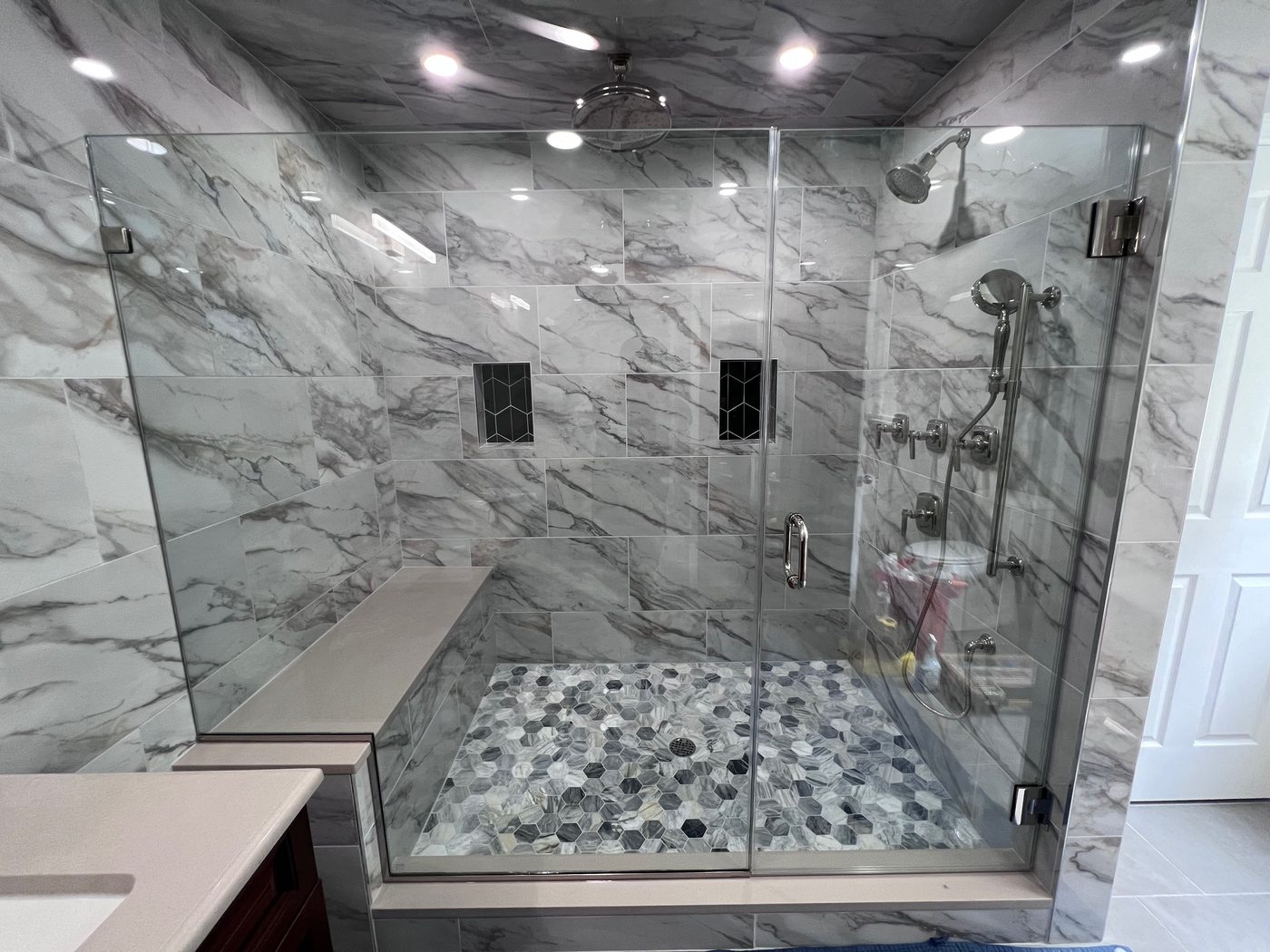
The bottom sweep deserves its own section because it is responsible for at least half of all shower door service calls. Three signs your sweep is at the end of its life:
- Visible compression. The sweep is hard, flat, or has lost its springiness. A new sweep is flexible and rebounds when you press it.
- Discoloration. Clear vinyl that has yellowed, hazed, or developed mineral spots is past its service life.
- Visible gap. Daylight visible between the bottom of the sweep and the curb at any point along the door width.
Sweep replacement is the easiest service call we run. Slide the old sweep off the bottom of the glass, slide a new one on, trim to the door width with a utility knife, and re-set. Most door brands use one of three sweep profiles, and our service truck carries all of them.
Hinge sag and alignment drift
A frameless door is heavy — typically 50 to 90 pounds of tempered glass — and that weight is carried by two or three hinges bolted into the wall. Over years of opening and closing, hinges can shift or loosen. The result is a door that:
- Drags on the curb when opened
- Will not stay open at 90 degrees (or will not stay closed)
- Has a visible wedge-shaped gap at the top or bottom of the latch side
On most modern frameless hinges, height and alignment can be adjusted at the hinge itself with a small set screw. A glazier with the right Allen keys can re-true a sagging door in 15 to 30 minutes. The hinge does not have to be removed from the wall — the adjustment is internal.
If the hinge has actually pulled out of the wall — the anchor is loose, the screw spins, or you can see a gap behind the mounting plate — that is a more involved repair. The hinge has to be removed, the failed anchor extracted, a fresh anchor installed (usually a longer or beefier one), and the hinge re-mounted with a fresh silicone bead. This is still a same-day fix in most cases.
Mineral etch and cloudy glass
Bergen County water is moderately hard — the mineral content in the water leaves deposits on the glass over time. There are three stages of buildup, and they are dramatically different in how recoverable they are:
| Stage | What you see | Recoverable? |
|---|---|---|
| Fresh film | Visible spots that wipe with a daily cleaner | Yes — daily squeegee + weekly cleaner prevents it |
| Hard-water film | Hazy areas that resist daily cleaner; visible when dry | Yes — dedicated mineral remover + non-abrasive scrub |
| Mineral etch | Permanent cloudy patches; the glass surface feels rough | No — etched glass needs replacement |
The difference between recoverable hard-water film and permanent etching is the chemistry — film sits on top of the glass; etching has chemically reacted with the silica. The test is simple: clean the glass thoroughly with a mineral remover. If the cloudiness clears, it was film. If a patch remains after careful cleaning, that patch is etched.
Etching is preventable. A factory-applied or aftermarket protective coating bonded to the glass shed water and prevents mineral deposits from sticking. Coatings have to be re-applied periodically (typically every 1 to 3 years) but they extend the life of the glass dramatically. We cover prevention in detail in the glass shower care guide.
Fogging, haze, and coating failure
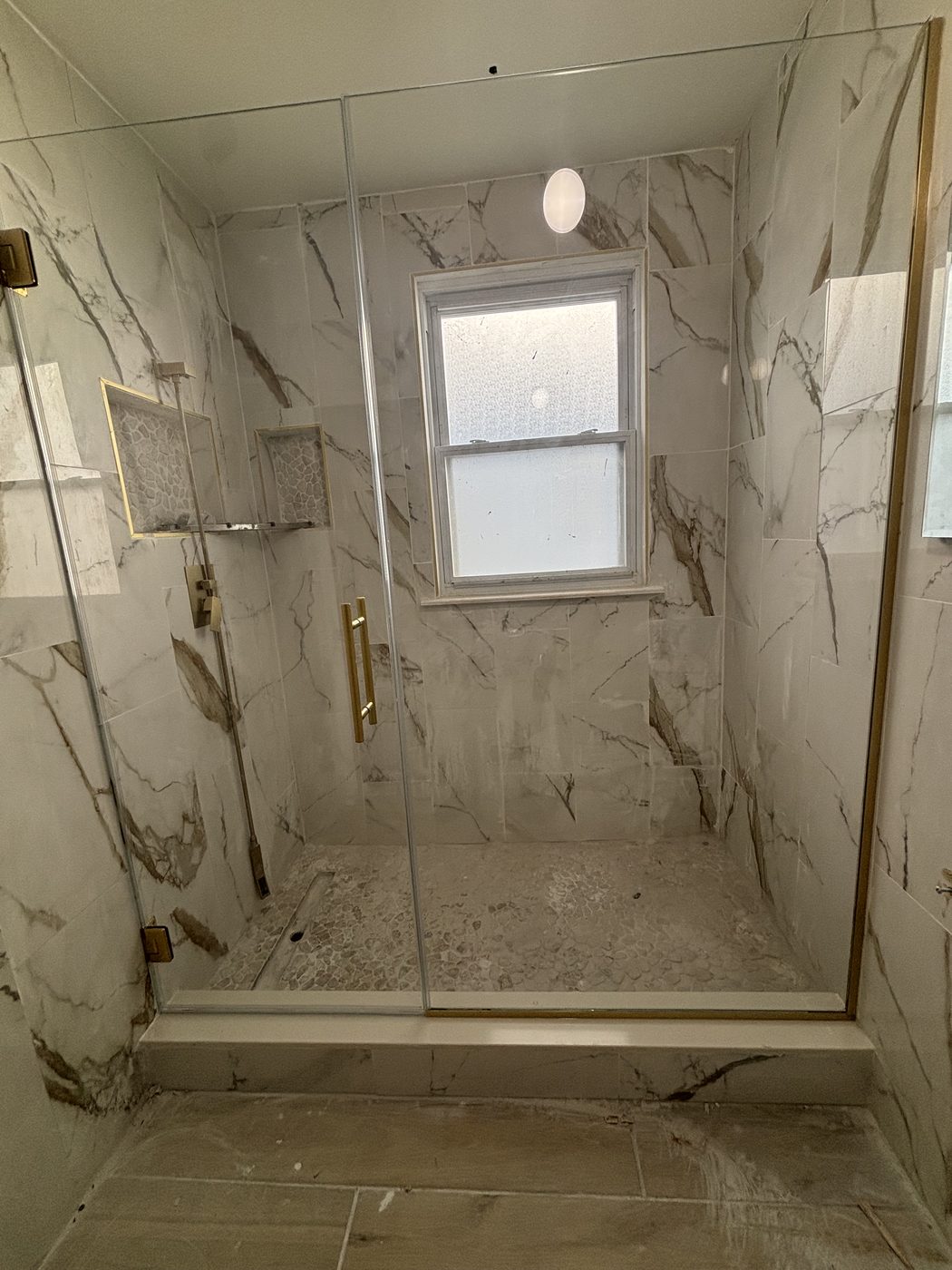
Most shower glass is single-pane tempered, so true "fogging between the panes" (the failure mode you see on insulated windows) does not happen. What homeowners often describe as fogging on a shower door is one of three things:
Surface mineral haze — recoverable with cleaning, as covered above.
Coating wear — a factory or aftermarket protective coating that has thinned in certain spots, often where the glass gets rubbed regularly (around the handle, the corner where someone leans, the area below the showerhead). Coatings can be re-applied to spot-treat worn areas.
Glass-on-glass condensation — on doors with a glass-on-glass joint or a stacked-glass detail, a tiny film of moisture can show in the gap. This is cosmetic, not structural, and usually clears with the next shower.
Loose hardware
Clips, towel bars, hinge covers, and handles can all loosen over years of use. The fix in nearly every case is the same: locate the set screw (often hidden behind a decorative cap), snug it with the appropriate Allen key, and check that the part is firmly seated.
Two warnings on this one. First, do not overtighten — hardware that mounts through the glass uses a controlled torque to clamp the glass between gaskets, and excessive pressure can crack the glass right at the mounting hole. Snug is correct; "really tight" is wrong. Second, if a screw spins freely with no resistance, the anchor in the wall has failed and the part needs to be re-mounted rather than just tightened.
Need a service call on an existing door?
We service doors we did not originally install — sweep replacement, hinge re-true, hardware tightening and re-silicone are routine same-visit jobs. Most service calls are scheduled within 3 to 5 business days.
Get a Free In-Home MeasureCracked or chipped glass
Tempered glass is strong, but it is not invincible. The two ways a tempered shower door fails are edge chips — a small ding on the edge of the panel, often from a hardware shift or accidental impact — and full spontaneous shatter, which is rare and typically happens within the first two years if it happens at all.
A chip on the edge of tempered glass weakens the panel and is technically grounds for replacement. The chip itself can be smoothed cosmetically with a fine abrasive, but the panel's strength is compromised. For a panel that is otherwise sound and not in a high-impact location, a chip can sometimes live with — but we always recommend replacement on chipped panels in heavily-used family bathrooms.
A full shatter — tempered glass crumbling into the characteristic small blunt pieces — is always a full panel replacement. The new panel is templated, fabricated, and installed; lead time is typically 1 to 2 weeks.
The repair vs replace decision
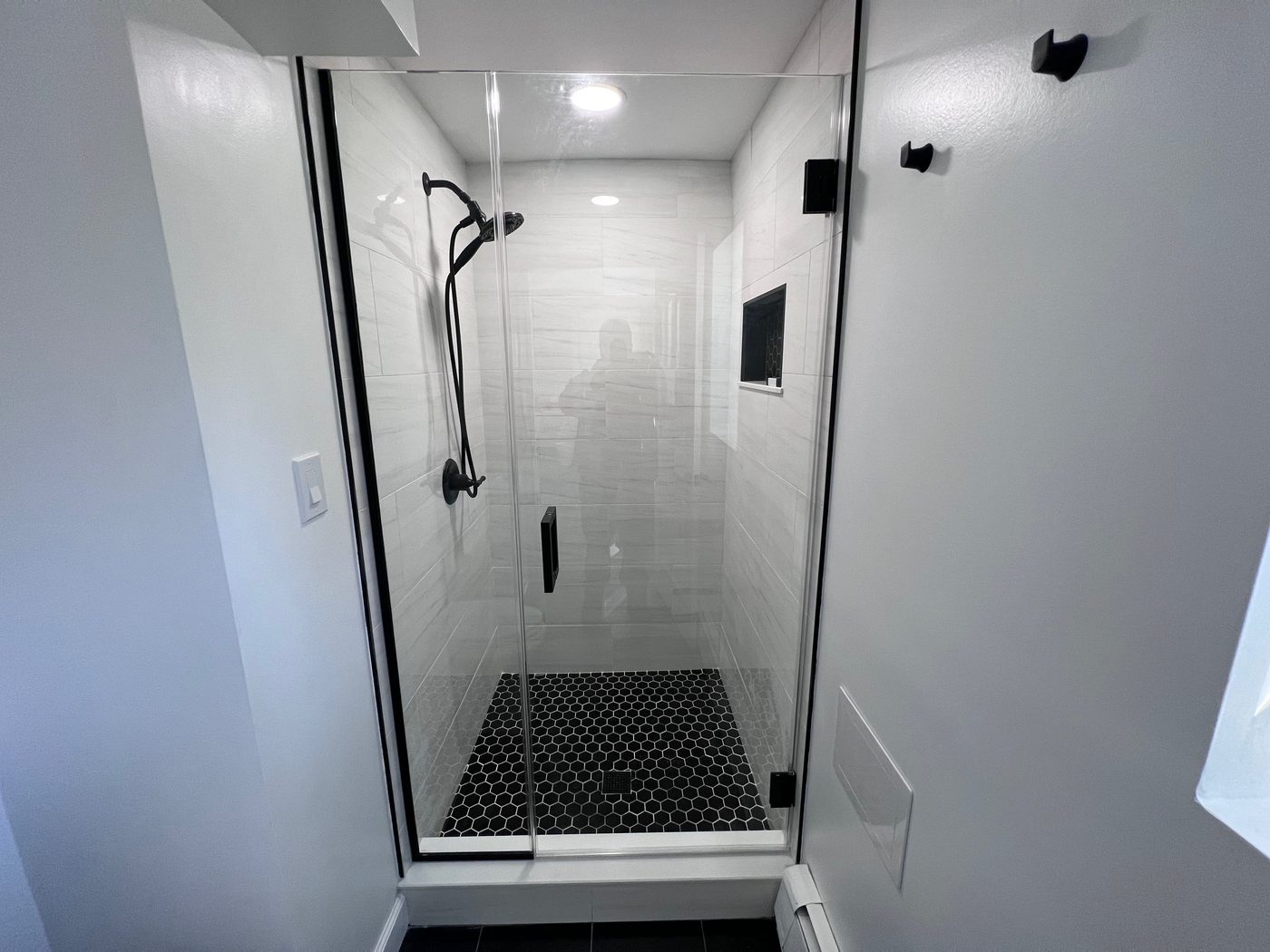
Use this framework. Most issues fall clearly into one column or the other:
| Issue | Repair | Replace |
|---|---|---|
| Leaking at curb | New sweep — yes | — |
| Leaking at hinge side | New gasket, re-true hinge | — |
| Door sag | Re-adjust hinge | — |
| Hard-water film | Cleaner + coating | — |
| Mineral etching | — | Panel replacement |
| Edge chip (small) | Cosmetic smoothing — case by case | Replacement if structural |
| Cracked or shattered panel | — | Full panel replacement |
| Loose hardware | Re-tighten set screws | — |
| Failed wall anchor | Re-mount with new anchor | — |
| Door style was wrong from day one | — | Full enclosure redesign |
A useful rule of thumb: if total repair cost would exceed roughly 40 percent of a new door, replacement is usually the better long-term decision. The new door comes with a full warranty, fresh hardware, and the latest glass coatings.
Tip: If your door is more than 12 years old and you are facing a meaningful repair, get a replacement quote at the same time. Hardware finishes, glass coatings and frameless design have all moved forward since then, and the cost gap between a deep repair and a new door is often smaller than you would expect.
When to call us
Call for a service visit when the issue is anything more than a sweep swap or a handle tighten. We come out, diagnose, and quote on the spot — most service calls are completed in the same visit. For a leak you can not isolate, send us a photo or video by text, and we will tell you over the phone whether it is a same-visit fix or whether the panel needs replacement.