An optional hydrophobic treatment that bonds to your shower glass so water beads up and rolls off instead of leaving spots, soap scum and mineral etch. Recommended in all hard-water North Jersey homes.
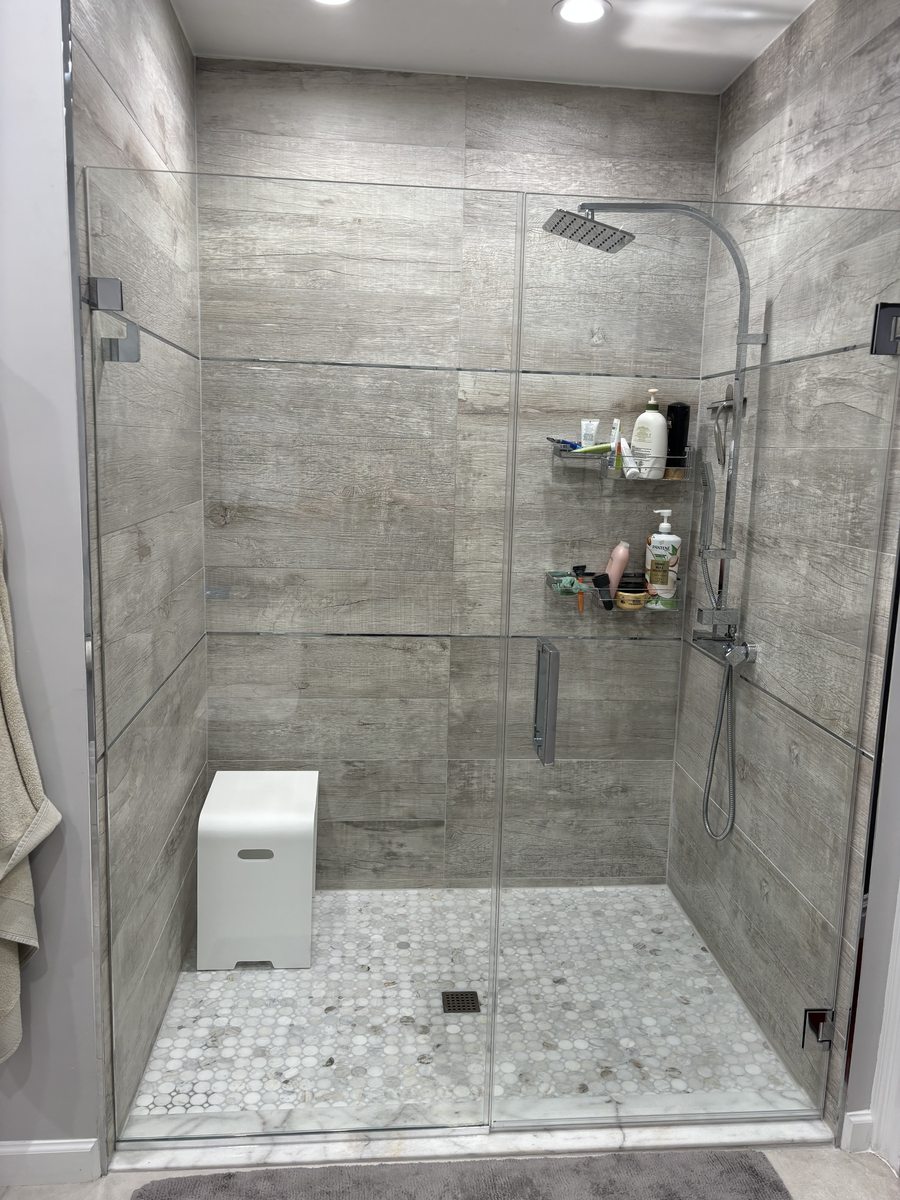
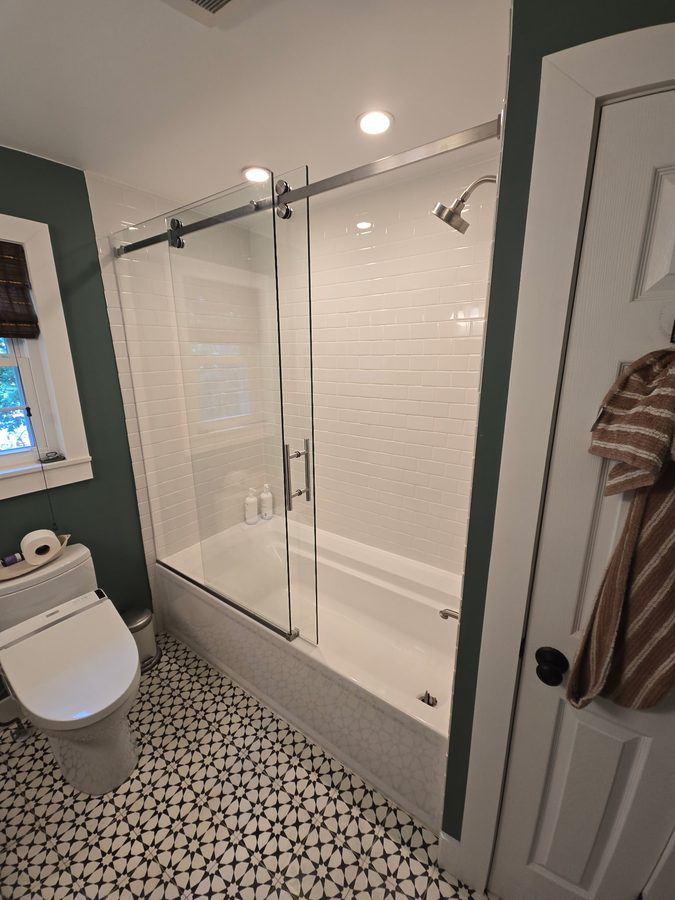
Glass looks smooth, but at the microscopic level it's full of tiny peaks and valleys — and that texture is exactly where water spots, soap scum and minerals love to settle. The longer water sits in those crevices, the more it dries and bakes calcium and soap residue into the glass.
A hydrophobic coating fills in that microscopic texture and bonds to the glass at the molecular level. The surface becomes uniformly water-repellent — so instead of pooling and drying, water beads up and sheets off. Dramatically less of anything has the chance to stick.
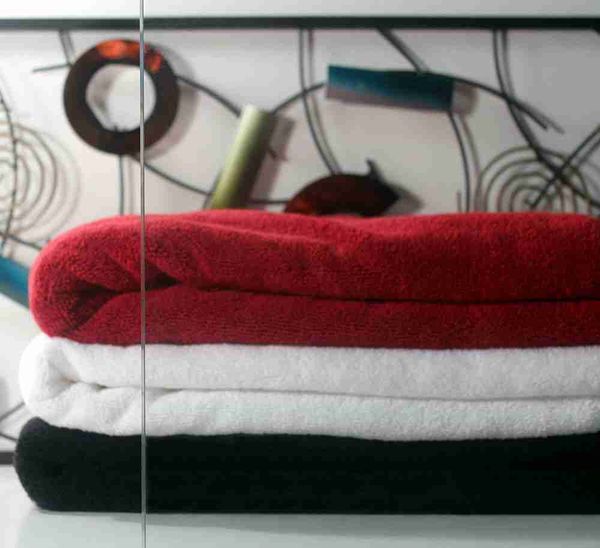
Bergen and Passaic Counties have some of the hardest water in the state — Passaic Valley Water Commission and the other local utilities draw from sources that carry a high mineral load. Every shower you take, those minerals get deposited on the glass. They look like spots at first, then a milky film, and eventually they actually etch the glass — a permanent change to the surface that no cleaner can reverse.
Most untreated shower glass in a hard-water home shows visible etch within 1–3 years. The coating won't change your water — but it dramatically slows the cycle, so the glass keeps the look it had the day we installed it. It's an especially smart pairing with low-iron glass, where every water spot reads more visibly because the glass is so clear to begin with.
If you're already pricing a new shower door, this is the upgrade we recommend most often — because in three years, you'll still love how the glass looks.
Read Our Glass Care GuideHydrophobic glass coating is a liquid sealer that chemically bonds to the surface of shower glass at the molecular level. Once it's cured, water beads up and sheets off the glass instead of pooling and drying in place. Because soap scum and mineral deposits need water to cling to the glass, you end up with dramatically less buildup — and the glass keeps its just-installed clarity for years instead of months.
In a hard-water market like Bergen County, almost always yes. Untreated shower glass starts collecting calcium and soap deposits the first week it's used and can permanently etch within 1–3 years. Once the glass is etched, the only fix is replacement. A coating up front costs a small fraction of replacement glass and protects the look of the door for years. The customers who skip it are the ones who call us back asking how to get the glass clear again.
It does gradually wear with use, but a factory-applied coating typically performs for several years with normal cleaning. The wear is gradual, not sudden — water just starts beading a little less aggressively over time. Avoiding harsh acidic or abrasive cleaners is the single biggest thing you can do to extend its life. When the time comes, the coating can be re-applied to extend protection further.
Both are possible, but the results aren't equal. We apply the coating during fabrication, on clean, untouched glass — that's where it bonds best and performs longest. Retrofit application on an existing door requires the glass to be thoroughly stripped of any soap scum, mineral deposits and old residue first. If the glass is already lightly etched, no coating will reverse that — it can only stop further damage. We'll tell you honestly whether retrofit is worth it for your door.
The best routine is dead-simple: a quick squeegee after each shower and a wipe with a soft microfiber cloth weekly. For deeper cleaning, plain water or a pH-neutral glass cleaner is all you need — the coating does most of the work. Avoid anything acidic (vinegar, lime-removers, CLR-style products) and anything abrasive (scrub pads, powder cleansers) — those strip the coating prematurely.
Yes — and it's an especially good pairing. Low-iron glass is so clear that any water spot or soap scum is far more visible than on standard glass. Coating the glass during fabrication preserves that crystalline look and keeps the upgraded clarity you paid for, instead of watching it slowly disappear under mineral deposits.
The coating is a small upgrade on top of a custom shower door — but it's only as good as the glass underneath. We use heavy tempered safety glass, premium hardware, precise field measurements and our own in-house installation team, and we apply the coating during fabrication on clean glass for the strongest possible bond. No subcontractors. No guesswork. No surprise etch in two years.
The coating is priced per shower door as an upgrade — it varies with the size of the enclosure and whether it's added to a new door or applied as a retrofit. We give you a firm, itemized line for the coating in your shower door quote, alongside everything else — and offer monthly payment options on the project as a whole.
Tell us about your shower door — we'll line out the coating as a clear, optional upgrade in your quote so you can decide with all the numbers in front of you.
Call, text or fill out the form — we'll get back to you with a free estimate, typically within one business day.
Text Jessica directly and she'll get right back to you. To speed things up, include: